Parliaments & Representatives

The Speaker of the House of Representatives, Hon. Tajudeen Abbas, has declared that the persistent issue of women’s underrepresentation in Nigeria’s political space will soon become a thing of the past, as renewed efforts are underway to address it through collective action and legislative reform.
Speaking at the 9th Voice of Women Conference and Awards (VOW2025) themed ‘Nigerian Women and the Power of Collective Action’, Abbas reaffirmed the National Assembly’s commitment to the passage of the Reserved Seats Bill for Women.
Represented by the Chairman, House Committee on Women Affairs, Kafilat Ogbara, Abbas stated that: “The issue of women’s underrepresentation will soon be the tale of the past. We are engaging with our colleagues one-on-one. Whether in Abuja or in their constituencies, we are making sure they understand that the time is now. There is no better time than now.”
The speaker emphasized the importance of collective advocacy and legislative reform, saying: “The Reserved Seats Bill, which I am proud to co-sponsor, seeks to create 37 additional seats for women across the National Assembly, including three seats per senatorial district at the state level.”
He highlighted the recent national public hearing on the bill held on September 22, where Nigerian women turned out in overwhelming numbers to show solidarity.
Full article here.
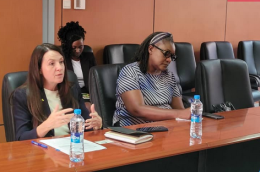
CANADIAN High Commissioner to Zambia Emily Burns says some women in politics whom the Canadian government supports have been expressing concerns about some of the proposed constitutional reforms. Burns also says Canada is upgrading its presence in Zambia to a full High Commission. Speaking during a courtesy call to the Ministry of Justice, Thursday, Burns said she wanted the government’s thoughts on the concerns of women in politics. “I will be going to Chipata. It will be my first visit to announce winners and support women who are aspiring or in active political leadership so that they can develop projects in the municipality.
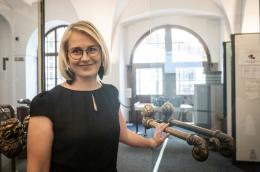
Czech lawmaker Martina Ochodnicka is quitting after a single term, upset with hateful, misogynistic comments and a general lack of support for women politicians.
The 41-year-old deputy head of the right-wing coalition party TOP 09 is one of several women leaving parliament after serving four years, ahead of this weekend's general election.
"Women in Czech politics face unnecessary obstacles," Ochodnicka, who has looked to raise awareness of the attitudes and other issues women face, told AFP.
Rather than over her role as a lawmaker, she was under public scrutiny as a mother of three, said Ochodnicka, who had worked as a village mayor before becoming a lawmaker in 2021.
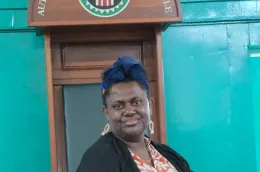
Theonila Roka Matbob, one of the most prominent female candidates in the Bougainville election, has lost her seat.
Matbob, the member for Ioro in Central Bougainville - a region encompassing Panguna - was "very confident" of holding the seat despite being up against ten male candidates.
She was one of 34 women out of a field of more than 400 candiates contesting seats in the Bougainville House of Representatives.
In 2020, she was one of only two women to win an open seat.
Matbob was a vocal advocate who led a successful campaign to have Rio Tinto, a mining multi-national, to consider the damage caused by the mine it used to own.
She was at the forefront of the push for an assessment into the damage caused by the troubled Panguna gold mine - one of the world's largest copper and gold mines - in the autonomous Papua New Guinea region.

Women face an uphill battle to political election, and they continue to confront barriers to success afterward. But the type of legislature in their states can make a difference.
A new study from Virginia Commonwealth University researcher Jatia Wrighten, Ph.D., and colleagues finds that women are more effective lawmakers than men when serving in professional state legislatures, which are generally in session full-time, than when serving in part-time legislatures that have lower barriers to entry, lower salaries and fewer staff.
Once elected, women in professional legislatures are often more effective even when given less notable committee assignments, Wrighten finds. She said that means that voters in general are better served by professional legislatures, where more diverse voices, including those of women, are represented. Wrighten, an assistant professor in VCU’s Department of Political Science in the College of Humanities and Sciences, recently spoke about her findings, which were published in The Journal of Politics.
What does it mean for a state legislator to be effective?
Legislative effectiveness can be measured in several ways. In our article, we measure legislative effectiveness by the lawmaker’s ability to “act for” their constituents in policymaking. In other words, are women able to have their voices heard in legislatures, does their committee work matter, and do resources constrain them due to the level of professionalism in the legislature?
What roadblocks do women face before and after election?
As one can imagine, living in a patriarchy, women who run for office face sexism, which manifests in many ways. Many voters hold women to a higher standard than men who run for office and do not see them as leaders. Women running for office have been critiqued on their physical appearance, criticized for their voices being “too high” or “annoying,” questioned for their ability to both run for office and manage their families, and questioned when they do not have families. Once women are elected, they face much of the same from their male peers. They are also placed on lower-ranked committees, which have fewer resources than other committees, and are relegated to those labeled as focusing on “women’s issues,” such as education, criminal justice or health.

An apparent bottleneck exists in women’s participation in politics: the number of female party members exceeds the number of female candidates, which in turn is almost double the number of women elected, who, on average, account for less than one-fifth of all winners at the polls. This is shown by a survey conducted by Valor based on data from the Superior Electoral Court (TSE).
This pattern, repeated in every election, is not restricted to a particular ideology. It occurs in parties on both the right and the left and is unrelated to party size; from the largest to the smallest, the funnel phenomenon remains.
To become a candidate, a woman must first be a party member. Gender inequality in politics begins there. Women account for an average of 46.4% of party members—a figure that may seem high but does not reflect the reality of Brazil’s population. According to the 2022 Demographic Census, 51.5% of the population is female.
By Akshi Chawla
As women elected officials move from local politics towards the subnational and national levels, they begin to be replaced by more and more men.
Women comprise just over one-third (36 percent) of the over 6 million elected members in deliberative bodies of local governments globally, according to a new working paper released by U.N. Women last month. Although far from parity, this is the best representation women seem to get across levels of government: As they move towards the subnational and national levels, they begin to be replaced by more and more men, data shows.
Click here to read the full article published by Ms Magazine on 15 February 2022.

One potential consequence of increasing women’s numeric representation is that women elected officials will behave differently than their men counterparts and improve women’s substantive representation. This study examines whether electing women to local offices changes how local government expenditures are allocated in ways that benefit women. Using compositional expenditure data from more than 5,400 Brazilian municipalities over eight years, we find significant differences in the ways men and women mayors allocate government expenditures. Our findings indicate that women mayors spend more on traditionally feminine issues, and less on traditionally masculine issues, relative to men mayors. In regard to specific policy areas, we find that women spend more on women’s issues, including education, health care, and social assistance, and less on masculine issues, including transportation and urban development, relative to men mayors. We further find that women’s legislative representation significantly influences the allocation of expenditures as a larger percentage of women councilors increases spending on traditionally feminine issues, as well as education, health care, and social assistance, relative to other policy issues. These findings indicate that women local elected officials improve women’s substantive representation by allocating a larger percentage of expenditures to issues that have historically and continue to concern women in Brazil.
Click here to read the full article published by Sage Journals on 16 May 2018.
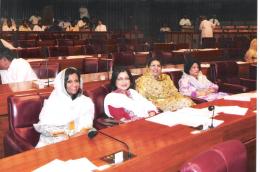
Pakistan’s constitution makes no distinction between genders but women in parliament know that’s not the reality in politics. Despite impressive records of women in the legislative assembly, female parliamentarians still face barriers to entry that their male colleagues don’t - keeping many women, save for a few with family members in politics, out of these positions.
The current makeup of Pakistan’s parliament is only 21 percent female. In the National Assembly, which consists of 342 members, female representation is only around 3 percent if reserved seats are excluded; There are 60 seats reserved for women. These numbers are emblematic of a male-dominated political culture which - along with other socio-economic factors - creates a glass ceiling for women’s political advancement.
Click here to read the full article published by the Tribune Magazine on 6 February 2022.

How do quotas for women in Sri Lanka’s local government institutions affect key governance indicators such as perceived fairness, institutional trust, and perceived performance? These dimensions of governance are underexplored in the context of gender quota policies in patriarchal societies like that of Sri Lanka. The study hypothetically varied the quota provision for women (decrease to 10%, increase to 45%, or keep at the current 25%) in local government, and then tried to understand people’s opinions about the three governance indicators. When examining the results of the experiment (around 1,200 samples), it was found that perceived fairness, institutional trust, and perceived performance increased along with the greater quota provision. Possible mechanisms for the increases in institutional trust and perceived performance may be associated with the signal of fairness generated by the increase of quota provision for women.
Click here to download the report.

This working paper presents data and analysis on women’s representation in local government by UN Women as the sole custodian agency for Sustainable Development Goal (SDG) indicator 5.5.1b. It provides a comprehensive overview of women’s political participation at the local level for the first time, helping to shift the global narrative from national to local decision-making power, a less known but critical level of governance.
Data available for 133 countries and areas indicate that women’s representation in deliberative bodies of local government is higher than in parliament, but still not on equal terms with men. The paper also analyses the use of legislated gender quotas and types of electoral systems in local elections as factors impacting women’s political participation.
Remaining data gaps on women’s political participation at local level, including data disaggregation issues, underused electoral data, and the need for new data collection tools to capture women’s full and effective participation in local government are also discussed.
Click here to access the report.
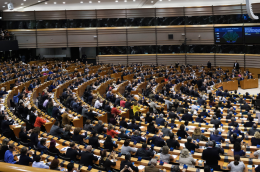
Representing more than 447 million people across 27 countries, the European Parliament should be the poster child for the European Union’s “united in diversity” motto. However, the representation of women in the parliament and its key positions remains weak and change is slow. While the parliament has seen a steady increase in the proportion of female members (MEPs) over the years, from 16% in 1979 to 39.5% in 2021, this is far from the whole picture when it comes to women’s representation.
Click here to download the paper.