Parliaments & Representatives
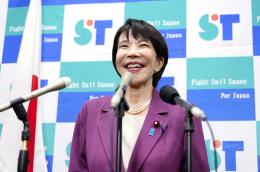
Japan could soon see its first female prime minister, with Sanae Takaichi emerging among the front runners in the ruling Liberal Democratic Party’s leadership race, a significant achievement in a country where women leaders remain a rarity.
Hardline conservative Takaichi has consistently been a public favorite, along with agriculture minister Shinjiro Koizumi, ahead of the LDP’s leadership vote on Oct. 4. Last year, Takaichi narrowly lost to outgoing Prime Minister Shigeru Ishiba in the runoff round of the LDP leadership race.
If Takaichi wins both party and parliamentary votes, she will make history as Japan’s first female premier. For a country that has seen limited progress on gender equality, especially in politics, that could represent a watershed moment.
“Having a woman become prime minister could really shift how the world sees Japan,” said Hiroko Takeda, a professor at the Graduate School of Law, Nagoya University, who has researched politics and gender issues.
Japan ranks 118th out of 148 countries in the World Economic Forum’s Gender Gap Index, trailing behind nations such as Senegal and Angola. The Asian country scores especially poorly in political and economic participation, having never appointed a female prime minister, finance minister or central bank governor.
Female representation in parliament also remains limited. As of August, women make up just 15.7% of the more powerful lower house, well below the global average of 27.1% and the Asian regional average of 22.1%, according to the Inter-Parliamentary Union.
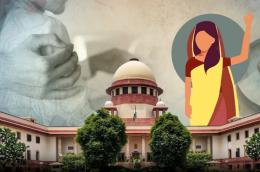
On Monday, the Supreme Court declined to entertain a plea seeking to expand the scope of the Protection of Women from Sexual Harassment at Workplace (POSH) Act, 2013, to include political parties. The court observed that such organisations cannot be classified as workplaces under the law. The plea was filed by Advocate Yogamaya M G, seeking recognition of political parties as workplaces in order to bring them under the POSH framework.
“How can you include political parties as a workplace? Joining a party is not a place of employment,” remarked Chief Justice Gavai during the hearing. The bench further stated that "It will open a Pandora's box... there will be blackmail." The CJI further added that political engagement does not constitute employment as there is "no payment."
Full article here.

Abstract
Nonconsensual synthetic intimate imagery (NSII)—content depicting an individual that is digitally altered to be sexual or nude without their consent—targeting women in politics is underreported and underresearched. This report examines how NSII is weaponized against public officials through an exploratory analysis of 100 documented cases across 14 countries between 2017 and 2025. The findings show that women comprise the vast majority of victims, spanning from presidential candidates to local commissioners, with attacks often strategically timed during critical pre-election moments. NSII inflicts individual trauma, including psychological damage, reputational harm, and significant legal and administrative burdens on candidates and public officials. Current legal and technical approaches are limited in countering NSII creation and distribution due to complexities in defining NSII and related technical concepts, enforcement gaps, and insufficient technical remedies for addressing the core harms of professional delegitimization and psychological damage. The report concludes with recommendations for civil society, governments, and technology companies to prevent NSII creation and limit its distribution, emphasizing that addressing this threat is essential not only to protect individual victims but also to preserve the integrity and inclusiveness of democratic institutions.
Full article here.
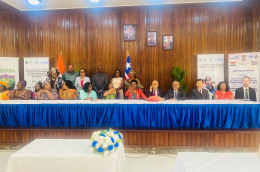
Monrovia – Liberia, in partnership with India, Brazil, South Africa, and UN Women, has launched a $1 million initiative aimed at strengthening women’s leadership and promoting gender-responsive governance. The launch took place Tuesday at the Ministry of Foreign Affairs Conference Room in Monrovia.
The project, titled “Women Legislators in Liberia: Promoting Voice, Leadership, and Gender-Responsive Governance for Sustainable Development (2025–2027),” is funded by the India-Brazil-South Africa (IBSA) Fund and coordinated by the United Nations Office for South-South Cooperation. It will be implemented over 18 months by UN Women Liberia in partnership with the Women’s Legislative Caucus of Liberia (WLCL).
Speaking at the ceremony, UN Women Representative to Liberia, Comfort Lamptey, praised the Women’s Legislative Caucus for its continued advocacy and commitment to advancing gender equality. She stated that the initiative will not only strengthen the Caucus but also extend its reach to communities, helping to ensure that legislative work results in inclusive laws, policies, and budgets.
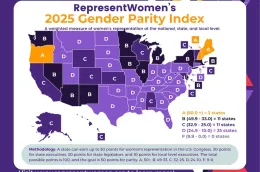
Aug. 26, Women’s Equality Day, marks the anniversary of the 19th Amendment’s certification—a milestone that granted American women the right to vote and expanded democracy in unprecedented ways. While it’s a victory worth celebrating, full enfranchisement happened later with the adoption of the Voting Rights Act in 1965, but it was never intended to be the end of the struggle.
One hundred and five years later, RepresentWomen’s new 2025 Gender Parity Index shows just how unfinished that work remains: Despite some gains for women in state legislatures, half of U.S. states still earn a “D” grade for women’s representation.
Those words resonate powerfully today. The 2025 Gender Parity Index shows that while strides have been made—with Maine, New Hampshire and Oregon earning an “A” this year—the U.S. is still far from true equality. More work is necessary.
Women’s participation in politics has significantly increased over recent decades, with many countries introducing gender quotas, anti-discrimination laws, and policies aimed at protecting women’s rights. Despite these advances, women’s underrepresentation in politics remains a systemic issue and barriers to their full participation in political life are still significant.
One of the most persistent obstacles growing at an alarming rate is the onslaught of sexism as well as violence against women in politics. These deter women from entering or remaining in politics and form a daunting barrier to achieving gender equality in political decision-making. Additionally, new and emerging threats, including technology-facilitated violence, are deepening existing inequalities and silencing women, including in political spaces and public debates, further weakening democratic discourse and inclusive governance.
The 2025 Annual Conference of the Gender Equality Commission of the Council of Europe addresses the pressing issue of violence and sexism against women in politics. We are focusing on combating these challenges within political parties and institutions.
From navigating backlash and countering violence, to addressing structural inequalities and the role of political institutions, the 2025 Annual Conference explores the ups and downs of women’s equal participation with a broad range of international experts.

Political decisions get better the more diverse the people are who make them. That is especially true in deeply divided societies, in countries that want to move from war to peace. Yet, women and marginalised groups are often absent from tables where key decisions are made. The same applies to our own EU and national institutions. Foreign and security policy often remains a closed circle of “people with badges talking to people with badges”. And the higher the level, the “harder” the security, the fewer women. This shouldn’t be news, but it is important to have data on the subject matter to push for real change. And that is why I set out, in 2020, to build the #SHEcurity Index; together with a growing team of supporting organisations and individuals.
This is the 2nd edition of the #SHEcurity Index. The index for the first time gave a comprehensive overview of how far we have come with regards to gender equality in Peace & Security and UN resolution 1325.
Click here to read the full report published by SHEcurity.
Women’s political leadership is important for ensuring that women’s perspectives and experiences are included in political decision-making. Over the past 25 years, the overall percentage of women in parliaments has more than doubled. However, the pace of progress has slowed in the past five years and women still make up less than a quarter of representatives in legislatures worldwide. Whilst theories that explore women’s political recruitment are well developed, we need more research on how women get selected. We need to know more about how they win positions as political representatives and how they adapt to the realities of political life.
This report focuses on women’s experience of candidate selection and elections and their experience of political leadership. It asks:
- How can women political leaders build their profile?
- What factors support and hinder women’s candidate selection and election success?
- How do women cope with, and adapt to, the realities of political leadership?
- How can programmes and policies effectively support women in political leadership roles?
Click here to read the report.
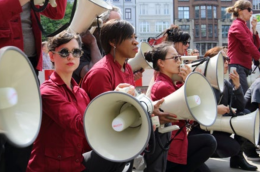
Systemic and legal barriers to equal political participation persist at all levels and take different forms, including unfavourable electoral systems, lack of support from political parties, socio-economic, and cultural.
Women, people with disabilities, indigenous people, LGBT+ individuals, and young people face all of these barriers, particularly insufficient access to political finance. Campaigning has become an expensive affair, and political aspirants and candidates from these groups find it challenging to secure the substantial sums of money usually required to run a campaign and win an election. In order to address these barriers and level the playing field, several targeted political finance measures have been designed and adopted by some governments, political parties, and private initiatives, although they vary in their target and effectiveness.
This paper explores the challenges facing different groups in accessing political finance and it provides a set of recommendations to ensure that the quest for more accessible political finance includes consideration of other important aspects that are indispensable to more inclusive and representative politics.
Although significant progress has been made with regard to the participation of women in political and public decision-making in Europe, such progress is too slow and uneven. In addition, there is still a lack of participation and representation in political and public decision-making of women with disabilities, young women, LBTI women, Roma women, women of colour, women with an immigration background, women belonging to minorities and indigenous women, rural women and women with a lower socio-economic background.
Adopting a draft resolution based on the report prepared by Eglantina Gjermeni, (Albania, SOC), the Equality Committee called on member States to promote the participation of women from under-represented groups in political decision-making by acting at several levels, with particular emphasis on combating stereotypes, access to public decision-making and participation in political party structures. According to the committee, “an intersectional approach to decision-making as well as targeted measures can help to leaving no one behind”. Men are also called upon to further promote gender equality and the fight against violence against women, especially in politics.
Click here to read the full article published by the Parliamentary Assembly of the Council of Europe on 15 March 2021.
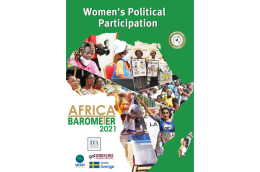
African countries are still far from achieving women’s equal and effective participation in political decision-making.
Women constitute only 24 per cent of the 12,113 parliamentarians in Africa, 25 per cent in the lower houses, and 20 per cent in the upper houses of parliament. While local government is often hailed as a training ground for women in politics, women constitute a mere 21 per cent of councillors in the 19 countries for which complete data could be obtained.
The Barometer is a key resource of the consortium Enhancing the Inclusion of Women in Political Participation in Africa (WPP) which aims to provide legislators and policymakers with data to assess progress in women’s political participation over time.
Source: International IDEA

The IPU-UN Women map, which presents global rankings for women in executive and government positions as of 1 January 2021, shows all-time highs for women heads of state and heads of government, women Speakers of parliament and women MPs and ministers.
Source: IPU