Parliaments & Representatives

In the fight for better policies for mothers and families, Rep. Brittany Pettersen (D-Colo.) has also had to fight to have her own voice heard on Capitol Hill.
Last October, five months pregnant with her second child, Pettersen proposed a change to the House Rules Committee for “a narrow exception to the prohibition on proxy voting” that would allow members of Congress to vote by proxy while on parental leave, a push begun by Rep. Anna Paulina Luna (R-Fla.) after giving birth to her first child in 2023. This would have ensured, Petterson said in a recent interview with Ms., that as a member of Congress “you’re able to have your voice, your constituents’ voices represented” during a critical time for your family and health.
Despite Republicans’ stated opposition to proxy voting, Pettersen and Luna scored a rare bipartisan win to move forward with the measure on April 1, representing an embarrassing defeat for House Speaker Mike Johnson (R-La.). In response, Johnson “adjourned the entire House for the rest of the week,” buying himself time to broker a deal to kill the effort that would have enabled remote voting for new moms in Congress.
Full article published by Ms. Magazine.
Image by Ms. Magazine

One of the challenges facing local governments—and institutional politics in general—is reversing the historically negligible presence of women in political parties and administrations. Although the number of women on electoral lists and in council and mayoral positions has multiplied over the last decade, significant gaps still exist in the types of responsibilities men and women assume in city councils, and parity has not been achieved in the mayoral positions.
According to data from the Catalan Women's Institute (ICD), the portfolios of Social Services, Education, Health, and Community Welfare are typically headed by women. Social Services is particularly notable: in 75.3% of Catalan city councils, a woman holds the portfolio. In the case of Education, Health, and Community Welfare, the percentage of women is 65%.%. In contrast, in Security, Sports, Housing and Urban Planning, Infrastructure, and Agriculture, Livestock and Fisheries, there is a man in charge in two out of three cases.
Full article published by ARA.
Image by ARA

A heated debate on affirmative action versus merit-based appointments to increase women’s participation, including in the media, took centre stage at a BBC World Questions episode recorded live in Petaling Jaya last night.
The episode featured seven questions from the audience, including one that asked: “We can observe now most bosses in Malaysian media corporations are men. Where are the women?”
Full article by Malaysia Kini
Image Malaysia Kini

What you need to know:
-
Aritua called for a multi-stakeholder approach, urging the Uganda Communications Commission and other regulatory bodies to crack down on digital abusers.
As Uganda prepares for the 2026 general elections, women in politics are raising concerns over persistent online violence, which they say is silencing them and deterring participation in public life.
Speaking at a stakeholders' meeting organized by the Women’s Democracy Network Uganda Chapter in Kampala, former Leader of the Opposition Ms Winnie Kiiza noted that many women continue to lag behind in digital adaptation, leaving them vulnerable.
“Most women in leadership lack adequate knowledge and tools to use technology effectively, yet it's the way to go. This gap is affecting our participation in decision-making,” Ms Kiiza said.
Full article published Monitor Uganda.
Image by Monitor Uganda

Over 50% of female local assembly members in Japan have been troubled with harassment, more than double the proportion of such male members, according to a Cabinet Office report.
The report on barriers to women's participation in politics, released Friday, said that 53.8% of local assemblywomen answered in the government agency's latest survey that they themselves, their family members, or their supporters have been harassed by others while 23.6% of assemblymen made similar answers.
Specifically, "verbal abuse" was cited by both male and female members as the leading form of harassment. "Insulting behavior and remarks based on unconscious gender bias" and "physical contact and stalking" were complained much more strongly by women than men.
On harassers, 65.7% of female members pointed the finger at election rivals and their supporters as well as peer assembly members, while 64.0% mentioned voters.
Full article published by The Japan Times here.
Image by The Japan Times
ABSTRACT
While gender quotas in politics have received considerable scholarly debate, much of the focus remains on whether quota-elected women are less qualified due to their pre-election background. Far less attention has been given to their actual parliamentary performance and how it compares to their non-quota peers. This study uses UK parliamentary records between 2005 and 2017 to compare the parliamentary activity of Labour women selected via All-Women Shortlists (AWS) with those selected via the traditional Open-List. Parliamentary activity is measured through contributions in spoken debate, rebellion rates, submission of written questions, and vote attendance, alongside an examination of AWS women’s commitment to women’s substantive representation. The results show that AWS women were equally active in most parliamentary channels, but they were more active in submitting written questions and speaking about women’s issues during debates compared to their Open-List counterparts. Consequently, the findings refute claims that AWS women are less active or underperform in Parliament, demonstrating that they perform as well as, or better than, their Open-List counterparts across all measures. These results should encourage the broader adoption of quotas in other UK political parties.
Full article published by Taylor & Francis here.

Journeys from Exclusion to Inclusion: Marginalized Women’s Successes in Overcoming Political Exclusion identifies critical factors preventing marginalized women’s inclusion in customary and democratic decision-making structures and describes how women have worked in overcoming barriers to their participation.
The report’s ten case studies gather knowledge and practical experience from around the world, drawing upon reform efforts to identify ways in which women can impact on political processes through their participation in politics. The report details specific strategies marginalized women and their supporters have adopted, ranging from direct action strategies in Somaliland to ‘soft’ advocacy strategies in Cambodia.
Gender quotas aim to increase women’s parliamentary representation. However, the effectiveness of quotas varies. This article explores this issue further by examining the case of Poland, where gender quotas were introduced in 2011. The Polish case presents an interesting puzzle. Although the overall number of women candidates increased almost twofold in comparison with the pre-quota period, this translated into only a slight increase in the number of women deputies in 2011 and 2015. Hence, the impact of quotas was limited. However, the partisan analysis shows that there was a significant variation among individual parties: whereas some parties promoted wholeheartedly women’s access to political office, other parties did not facilitate it. By drawing on rational choice institutionalism, this article shows that institutions and preferences of political parties matter for the effectiveness of gender quotas. In the case of ineffective gender quota policy, political parties have a final say in women’s parliamentary representation.
Click here to access the paper.
A new generation of young women is ready and willing to participate in politics.
The UK general election in June 2017 saw a rise in voter turnout among 18- to 24-year-old women, with participation up from 44 to 53 per cent compared with the 2015 general election. However, so far there is little evidence to suggest that this will translate into higher levels of party membership and political representation among women. Despite making up half of the population and voting in the same numbers as men, on average only 34 per cent of women are a member of a political party, typically the first step into participating into local politics.
This is the first in a ‘pattern of thirds’, which runs through candidate selection and election, and then thins out dramatically at the top of local government, with women entirely absent among directly elected mayors and representing just 4% of the leadership of England’s new devolved institutions – the combined authorities.
This report argues that political parties and institutions must seize the recent increase in voter turnout among young women to dramatically increase the numbers of women going into local politics. This must be complemented by a series of radical reforms to improve the pipeline of women rising to the top in local politics, and to correct the absence of women at the top of combined authorities.
Click here to access the report.
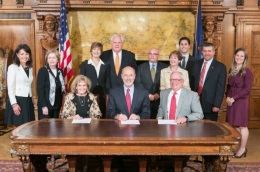
Throughout this report, the authors offer a look at the unique strengths that women bring to policymaking and their impact on government is examined. They start by examining women’s representation in government, highlighting the underrepresentation of women both in the Pennsylvania state legislature and national offices. The link between women’s representation and state policy is articulated, and areas of concern are addressed. Sponsorship, bipartisanship, collaboration, and legislative success are each explored. They address questions specific to the role of gender in patterns of bill sponsorship in the Pennsylvania General Assembly by drawing on bill sponsorship data from Pennsylvania’s 2013- 2014 legislative term, as well as insights from women who served in the General Assembly at that time.
Click here to access the report.
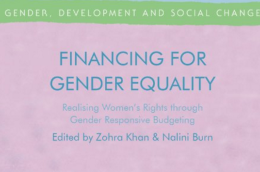
This collection of essays addresses the glaring gap between policy commitments and actual investments in gender equality, ranging across sectors and focusing on development aid, peace-building and climate funds. Casting a spotlight on the application of gender-responsive budgeting in public budgetary policies, systems and processes, the contributions to this volume explore the chequered trajectories of these efforts in Africa, the Asia-Pacific, Latin America and Andalucía. Critiquing systems of finance, from adherence to neo-liberal macroeconomic fundamentals which prioritise fiscal austerity, the book makes a compelling case for reframing and re-prioritizing budgets to comply with human rights standards, with a particular view to realizing women’s rights. The authors highlight the paltry funding for women’s rights organizations and movements and examine the prospects for making financing gender responsive. The specific policy, strategy and technical recommendations and the connections across silos which articulate the authors’ suggested operational levers will appeal to researchers, practitioners, students, policymakers, gender equality and human rights activists alike.
Click here to access the book.

A unique visual tool to capture women’s participation in executive government and in parliament on a given date – 1st January 2017. The map of Women in Politics not only provides a country ranking for both ministerial and parliamentary representation, but also statistics on women in political leadership positions – Heads of State or government, women Speakers of Parliament, as well as ministerial portfolios held by women throughout the world. Borders are depicted and used on the map in order to present data. They are not the expression of any opinion concerning the legal status of any country, territory, city or area, or concerning the delimitation of frontiers or boundaries.
Click here to download the map in English.