Parliaments & Representatives
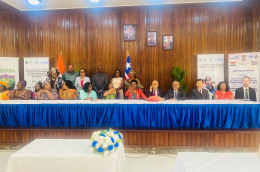
Monrovia – Liberia, in partnership with India, Brazil, South Africa, and UN Women, has launched a $1 million initiative aimed at strengthening women’s leadership and promoting gender-responsive governance. The launch took place Tuesday at the Ministry of Foreign Affairs Conference Room in Monrovia.
The project, titled “Women Legislators in Liberia: Promoting Voice, Leadership, and Gender-Responsive Governance for Sustainable Development (2025–2027),” is funded by the India-Brazil-South Africa (IBSA) Fund and coordinated by the United Nations Office for South-South Cooperation. It will be implemented over 18 months by UN Women Liberia in partnership with the Women’s Legislative Caucus of Liberia (WLCL).
Speaking at the ceremony, UN Women Representative to Liberia, Comfort Lamptey, praised the Women’s Legislative Caucus for its continued advocacy and commitment to advancing gender equality. She stated that the initiative will not only strengthen the Caucus but also extend its reach to communities, helping to ensure that legislative work results in inclusive laws, policies, and budgets.
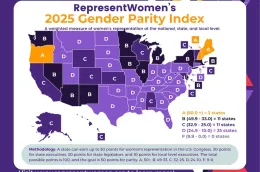
Aug. 26, Women’s Equality Day, marks the anniversary of the 19th Amendment’s certification—a milestone that granted American women the right to vote and expanded democracy in unprecedented ways. While it’s a victory worth celebrating, full enfranchisement happened later with the adoption of the Voting Rights Act in 1965, but it was never intended to be the end of the struggle.
One hundred and five years later, RepresentWomen’s new 2025 Gender Parity Index shows just how unfinished that work remains: Despite some gains for women in state legislatures, half of U.S. states still earn a “D” grade for women’s representation.
Those words resonate powerfully today. The 2025 Gender Parity Index shows that while strides have been made—with Maine, New Hampshire and Oregon earning an “A” this year—the U.S. is still far from true equality. More work is necessary.

Women’s participation in politics has significantly increased over recent decades, with many countries introducing gender quotas, anti-discrimination laws, and policies aimed at protecting women’s rights. Despite these advances, women’s underrepresentation in politics remains a systemic issue and barriers to their full participation in political life are still significant.
One of the most persistent obstacles growing at an alarming rate is the onslaught of sexism as well as violence against women in politics. These deter women from entering or remaining in politics and form a daunting barrier to achieving gender equality in political decision-making. Additionally, new and emerging threats, including technology-facilitated violence, are deepening existing inequalities and silencing women, including in political spaces and public debates, further weakening democratic discourse and inclusive governance.
The 2025 Annual Conference of the Gender Equality Commission of the Council of Europe addresses the pressing issue of violence and sexism against women in politics. We are focusing on combating these challenges within political parties and institutions.
From navigating backlash and countering violence, to addressing structural inequalities and the role of political institutions, the 2025 Annual Conference explores the ups and downs of women’s equal participation with a broad range of international experts.
Nepal is heading to the polls in less than two years. Voters will choose their representatives for three tiers of government – the local, provincial, and federal – which will shape Nepal’s political course until the early 2030s. As the election timeline approaches, Nepal’s political scene is slowly heating up, with political parties forming fluid alliances, striving to reclaim lost ground, and rolling out fresh campaign tactics.
This may seem like a regular democratic exercise for the Himalayan nation, but beyond the political hubbub, a pressing challenge looms large. Elections in Nepal are becoming increasingly expensive with each passing cycle, thereby threatening inclusive democracy and raising concerns about the future of political participation.
Political campaigning in Nepal, like all other South Asian countries, requires massive financial resources. Candidates must mobilize cadres, organize rallies, conduct door-to-door campaigns, arrange for media coverage, and now also compete in the fast-expanding digital sphere. All of this comes at a heavy price. This rising campaign cost does more than financially strain party resources and that of the individuals contesting elections. It has rather profound consequences, limiting the political participation of women and underrepresented groups.
Chișinău, 29 August 2025 - A new study by the Center Partnership for Development (CPD) shows that although women make up 44.5% of candidates in the 2025 parliamentary elections - almost achieving parity - this share has slightly decreased compared to the 2021 elections. The analysis confirms that compliance with the gender quota is essential to ensure such representation, as political parties take different approaches: some treat it as a formal obligation, while others regard it as a strategic objective. These findings provide important insights into the evolution of electoral competition.
The preliminary gender equality analysis of candidates, “2025 Parliamentary Elections: Analysis of an Electoral Competition”, was developed within the project “Strengthening Democratic Resilience in Moldova”, implemented by UNDP Moldova in partnership with UN Women Moldova and funded by Norway, Canada, Sweden, and Denmark.
Key findings of the study:
-
Although the numerical presence of women on candidate lists is relatively balanced, the analysis of their placement reveals certain fluctuations. In the first 10 positions - considered the most competitive and with the highest chances of securing a parliamentary mandate - women account for 40.7% of all candidates, while in the next decile (positions 11–20) their share slightly increases to 42%.
-
Although the gender quota is respected, men dominate the top positions on the lists, while women are concentrated in quintiles with lower chances of election.
-
Some parties limited themselves strictly to meeting the minimum mandatory quota, while others went beyond the legal requirements by including over 50% women among their candidates.
-
The average age of candidates running for parliamentary seats is higher than in previous elections. Parties tend to place older candidates in the top positions. In the first 10 positions, the average age is 50.5 years, while in the last 10 positions it drops to 39.1 years—a difference of over 11 years.
-
The detailed analysis shows that younger candidates are predominantly placed toward the end of the lists, where their chances of entering Parliament are lower.
-
Approximately 70% of candidates come from urban areas, with nearly half from Chișinău. More than half of the candidates (45.4%) are from Chișinău, while the next largest localities—Bălți, Ialoveni, Comrat, and Criuleni—each contribute less than 4%. The remaining districts provide very small fractions, mostly under 1% of the total. This urban concentration is explained by the greater resources available in cities, as well as the fact that rural populations are smaller and predominantly older.
This product was developed within the project “Strengthening Democratic Resilience in Moldova”, implemented by UNDP Moldova in partnership with UN Women Moldova and funded by Norway, Canada, Sweden, and Denmark.
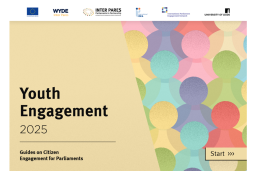
Youth engagement is key for a healthy democracy. Young people are the future generations that will lead our democracies. They are also often amongst the most disengaged people of our societies. It is therefore a democratic imperative that parliaments actively promote meaningful youth engagement, if we are to strengthen our democracies into sustainable political systems.
This Guide is aimed at parliamentary staff and Members of Parliament (MPs) who want to learn more about engaging young people in parliamentary business. We use a wide range of examples from parliaments across the world to indicate how to design, deliver and evaluate meaningful youth engagement activities.
This publication was produced with the financial support of the European Union as part of the Inter Pares I Parliaments in Partnership project, implemented by International IDEA. Its contents are the sole responsibility of International IDEA and the International Parliament Engagement Network (IPEN) and do not necessarily reflect the views of the European Union.
Explore the full suite of Citizen Engagement Guides for actionable tips and inspiration to strengthen your parliament's engagement with the public on the Inter Pares page
This collection of essays addresses the glaring gap between policy commitments and actual investments in gender equality, ranging across sectors and focusing on development aid, peace-building and climate funds. Casting a spotlight on the application of gender-responsive budgeting in public budgetary policies, systems and processes, the contributions to this volume explore the chequered trajectories of these efforts in Africa, the Asia-Pacific, Latin America and Andalucía. Critiquing systems of finance, from adherence to neo-liberal macroeconomic fundamentals which prioritise fiscal austerity, the book makes a compelling case for reframing and re-prioritizing budgets to comply with human rights standards, with a particular view to realizing women’s rights. The authors highlight the paltry funding for women’s rights organizations and movements and examine the prospects for making financing gender responsive. The specific policy, strategy and technical recommendations and the connections across silos which articulate the authors’ suggested operational levers will appeal to researchers, practitioners, students, policymakers, gender equality and human rights activists alike.
Click here to access the book.

A unique visual tool to capture women’s participation in executive government and in parliament on a given date – 1st January 2017. The map of Women in Politics not only provides a country ranking for both ministerial and parliamentary representation, but also statistics on women in political leadership positions – Heads of State or government, women Speakers of Parliament, as well as ministerial portfolios held by women throughout the world. Borders are depicted and used on the map in order to present data. They are not the expression of any opinion concerning the legal status of any country, territory, city or area, or concerning the delimitation of frontiers or boundaries.
Click here to download the map in English.
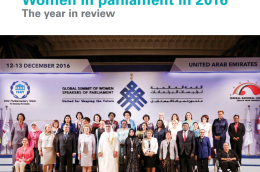
The annual brochure provides an overview and analysis of progress made and setbacks encountered by women in parliament further to elections and renewals held over a year. Produced every year on the occasion of International Women's Day (8 March), it presents data on women in national parliaments, regional and world trends, information on women presiding officers and women candidates. It also analyses mechanisms aimed at supporting women's access to parliament. The brochure is short and easy to read, providing a snapshot on the situation of women in parliaments worldwide.
Click here to access the brochure.
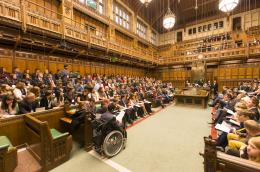
Gender quotas have emerged globally as a key solution for improving women's political representation. Yet in Britain—where they take the form of all-women shortlists (AWS)—they remain contentious, both within and outside political parties.
In this article, Mary K. Nugent and Mona Lena Krook identify and evaluate nine common criticisms of AWS in the British context, which—similar to predictions made in other cases—focus on dynamics of candidate recruitment and selection, party and voter support and the effectiveness of ‘quota women’ as politicians. The authors do not address purely principled objections (i.e., ‘quotas are unfair’), but rather focus on claims—including some principled arguments—referencing assumed realities that can be assessed using empirical data (i.e., ‘quotas are unfair because they undermine merit’). The nine claims emerged as common themes across extensive interviews and comprehensive searches of news coverage around AWS. The data used to evaluate these claims come from various sources, including qualitative interviews conducted in 2012 and 2013 with men and women from the three main parties; as yet unpublished data on candidate selection collected by the Labour Party; original quantitative datasets constructed from publicly-available sources; and existing quantitative studies by other scholars. The authors also include evidence from international studies, whenever possible, to situate these findings in relation to the conclusions reached in other contexts.
The authors find, in short, that criticisms against these measures do not hold when subjected to rigorous empirical analysis. AWS, much like gender quotas elsewhere, do not facilitate the entry of unqualified women, jeopardise a party's electoral fortunes or lead to the election of sub-par MPs. Rather, they reduce barriers for well-prepared women to stand as candidates, have neutral or positive effects on party vote shares and produce diligent and active MPs.
Click here to access the article.
This Issues Brief aims to clearly delineate the issues at stake by analysing the results of a first study specifically devoted to the subject of sexism, harassment and violence against women in parliament. It seeks to clarify what this phenomenon consists of, where, why and in what forms it occurs, who are the perpetrators and what is its prevalence.
Click here to access the brief.
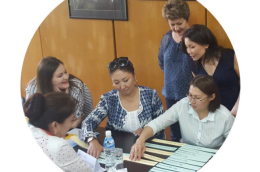
Gender equality is fundamental to responsive and accountable democratic societies. Women’s representation in elected institutions in equal proportion to men is key to the credibility and legitimacy of parliaments, national assemblies and local governments. Yet, globally, just over a fifth of members of parliament are women.
To combat discriminatory legislation and policies and improve gender equality outcomes in policymaking, elected representatives in countries in the region have established structures and strategic plans to improve women’s political participation and gender equality. UNDP has facilitated the creation of such structures in many countries, recognizing the important role they play in empowering women as parliamentary representatives, supporting the emergence of gender-sensitive parliaments, and adopting gender-sensitive policy and legislative frameworks. The UNDP Gender Equality Strategy 2014-2017 highlights the critical importance of gender equality and women’s participation in decision-making to sustainable development, and calls for the empowerment of women as voters, political actors and decision-makers.
This paper examines UNDP’s parliamentary assistance programming and support to existing gender equality initiatives in political participation, in particular, the role and impact of parliamentary structures for gender equality in the ECIS region. It illuminates existing and planned UNDP parliamentary assistance initiatives, highlights good practice and identifies entry points for replication or scaling up. Its findings are intended to assist members of parliament and parliamentary institutions as well as civil society organizations and international organizations in advancing gender equality in parliamentary practices. Click here for more information.