Parliaments & Representatives

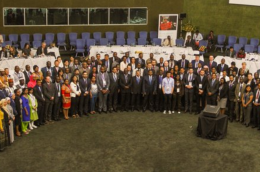
Despite a consistent presence in Iraq's political arena for nearly two decades, Iraqi women have yet to achieve substantial influence in shaping the nation's laws and policies, analysts say.

Since the fall of Saddam Hussein's regime in 2003, women have maintained a presence in Iraq's Parliament through five consecutive electoral cycles. Their participation has also included earlier governing bodies like the Governing Council and the interim and transitional governments. However, women have struggled to gain significant decision-making power or enact meaningful legislative changes despite this sustained involvement.

As the current parliamentary term nears its end, analysts' concerns about the lack of tangible progress for women in Iraqi politics persist.

International Frameworks and Women's Political Participation in Iraq

Global efforts to address the historical exclusion of women from political life have been grounded in international conventions and declarations that emphasize equality and the elimination of violence and discrimination against women. In its preamble, the Universal Declaration of Human Rights underscores the importance of "faith in fundamental human rights, the dignity and worth of the human person, and the equal rights of men and women." Several key international instruments, such as Article 25 of the 1966 International Covenant on Civil and Political Rights, explicitly affirm the right to equality between men and women in political and public life.

Read here the full article published by Shafaq News on 27 August 2024.

Image by Shafaq News


Trends in political preferences in Finland increasingly follow those in other western countries, where many men seem to prefer traditional economically right-wing or radical right forces, and women tend to opt for greener options to the left.

That's according to a new study out on Tuesday from the Kalevi Sorsa foundation.

The biggest gender gaps were recorded among younger age cohorts.

"Young men are more conservative than women, and women regard themselves as more liberal," said Hanna Wass, a Vice-Dean at the University of Helsinki's Social Science faculty who was one of the study's authors.

"This liberal-conservative axis divides young men and women the most. It is worth noting that on political policy questions the gender differences are smaller than when you ask about people's political identities."

The results of the survey suggest some implications for political parties as they pursue new voters, according to Wass.

Read here the full article published by Yle on 20 August 2024.

Image by Yle


In Ghana, the recent push for a gender equality bill is a crucial step toward enhancing women’s political representation. However, its effectiveness hinges on overcoming entrenched gender biases and ensuring robust implementation to truly transform the political landscape. 

On 30 July, Ghana’s parliament passed the Affirmative Action (Gender Equality) Bill, ending a process that began in 1998. Despite women constituting the majority of Ghana’s population, they hold less than 15 percent of parliamentary seats and remain underrepresented in managerial roles, even though they represent a majority in the service sector. The passage of the bill represents remarkable progress towards enhancing gender equality and inclusivity in the country and thus rightfully deserves all the attention it has garnered.

Additionally, this legislative milestone is especially significant for a country that has consistently ranked low on the Global Gender Gap Index in recent times. For example, in 2021, Ghana ranked 117 out of 156 countries; in 2022, 108 out of 146 countries; and in 2023, 100 out of 146 countries. What are the potential challenges that could impede the successful implementation of the bill (when it becomes law), and what are the prospects for this legislation in advancing gender equality and inclusivity in Ghana?

Read here the full article published by the Australian Institute of International Affairs on 20 August 2024.

Image by Australian Institute of International Affairs


The Deputy Speaker of Edo State House of Assembly, Mrs Lara Edeko has urged women to participate in politics in order to contribute towards good leadership and nation building.

Edeko made the call in Benin, the state capital while speaking at the University of Benin Inaugural Women’s Leadership Conference.

The deputy speaker, a panelist on the topic: “Women Leading the Way: Stories of Resilience and Success” said that women participation in politics would address the issue of under-representation.

She said that female elite and professionals should join active politics in order to gain access into leadership positions in the country.

“Many of the women in politics are illiterates, this is making it difficult for them to aspire for leadership positions,” she said.

Sharing the story of her journey from being a classroom teacher to a lawmaker, Edeko, said that women lacked genuine interest in politics.

“As women, we must come out to take our rightful place in governance and leadership. We must make a difference.

“Leadership is not just about occupying positions, it is about leaving lasting legacies.

Read here the full article published by Voice of Nigeria on 19 August 2024.

Image by Voice of Nigeria


How Instagram is failing women and public officials

New research by CCDH shows that Instagram failed to act on 93% of the abusive comments targeting high-profile US women politicians we reported, including death and rape threats.

Meta’s Instagram is becoming a weapon in this assault, failing to step up to make its platform safer as the US election approaches.

CCDH reported 1,000 abusive comments targeting women politicians running for office in 2024 including:

Democrat: VP Kamala Harris, Representatives Alexandria Ocasio-Cortez, Jasmine Crockett, Nancy Pelosi and Senator Elizabeth Warren.

Republican: Representatives Marjorie Taylor Greene, Maria Elvira Salazar, Anna Paulina Luna, Lauren Boebert and Senator Marsha Blackburn.

A week later, Instagram had taken no action against 926 of these hateful comments, which contained sexist and racist abuse, and death and rape threats.

An intro from CCDH CEO Imran Ahmed

Online spaces are now the primary places where societal norms and values are negotiated and normalized, and where we learn about and discuss current events, social issues, and politics. In 2024, with democracy hanging in the balance, social media platforms are under heightened scrutiny for their role in rising polarization, stoking division, and our increasingly toxic political environment. So how are they doing? In the case of Instagram, this report finds that they may as well not be trying at all. Abuse is endemic, and there is evidence they fail to act in over 9 in 10 instances even when alerted...

Read here the full report published by the Center for Countering Digital Hate on 14 August 2024.

Image by Center for Countering Digital Hate 


A report found that Instagram left up 93 percent of violent comments toward female candidates—the kind of online abuse that has led them to not seek office.

Pinned on vice president and Democratic presidential nominee Kamala Harris’ official Instagram page is a post featuring her alongside her running mate, Minnesota governor Tim Walz. In the comments, along with praise, criticism, and more than one “Trump 2024,” are several comments asking if Harris had offered Walz oral sex, with one calling her “Kamel toe.”

Harris has long been the subject of online abuse, which is likely to intensify as her campaign wears on. But a new report from the Center for Countering Digital Hate (CCDH), a nonprofit that tracks hate speech and misinformation online, found that Instagram failed to remove 93 percent of the 1,000 hateful and violent comments it flagged to the platform targeting both Republican and Democratic female politicians, including Harris.

In doing so, Imran Ahmed, CEO of CCDH, says that the platform is helping to create an environment that discourages women from seeking political office. “It’s an unconscionable, regressive barrier to women’s participation in politics,” he says.

Read here the full article published by Wired on 14 August 2024.

Image by Wired


Gender mainstreaming and gender budgeting are fixtures of the debates and documents of the international women’s movement. Politically active women all over the world have developed gender mainstreaming as a strategy to enable them to emerge from their powerlessness, both real and perceived, in relation to political actors. The purpose of these new strategies is to eliminate injustices in gender relations and to get rid of all forms of discrimination based on gender.

Gender mainstreaming and gender budgeting are strategies to be implemented by organisations and institutions, such as administrations. They lead to changes in decision-making processes in these organisations. The strategies are therefore not confined to special projects for women but rather to an organisation’s everyday operations. Such operations are scrutinised in terms of gender equality. This involves systematic procedures inside organisations ordered by management and implemented by all employees. The analysis of all operational domains and measures, all products and every part of an organisation forms the core of gender mainstreaming. Implicit in the concept of gender is that gender relations are culturally and socially determined and constantly reproduced. The question of how social structures contribute to the incessant reproduction of certain assignments and life situations for men and women is decisive. Gender analyses concern the production and specific characteristics of life and work situations in which men and women differ. A gender analysis, therefore, not only enquires about the differences between men and women in a particular group, but also about how these differences are produced and what contribution is made by the measures one is investigating. Gender budgeting is the application of the principle of gender mainstreaming to financial and budget policy: in other words, to public revenues and expenditures. The European Council defines gender budgeting as follows: Gender budgeting is the application of gender mainstreaming in the budgetary process. Gender budgeting means a gender-based assessment of budgets and incorporates a gender perspective at all levels of the budgetary process and restructuring revenues and expenditures in order to promote gender equality. Gender budgeting does not mean reserving a specific budget for women or for men, but investigating the effects of all budget decisions on gender relations and gearing those decisions to the aims of gender policy.

The Map, which presents latest data and global rankings for women in politics, reveals a mixed picture on gender equality in executive government and in parliament at regional and national levels.


This guide demonstrate that women’s collective efforts in the legislature are crucial not only because of their impact on public policies that effectively respond to citizens’ demands and interests, but also because of their effect on the consolidation and progress of women’s leadership. Nonetheless, cross-party work within the legislative branch faces many challenges: building consensus while maintaining equilibrium between commitment to gender issues and party visions; keeping gender issues on the public agenda; and creating a sustainable critical mass of women legislators committed to advancing a gender equality agenda.

Women in legislatures worldwide have used diverse practices to make progress on priority issues and decrease the gender gaps in their countries. This should serve as an incentive to increase the number of women in parliaments and support their efforts so they can propose actions that ensure the continuation of the achievements of their predecessors.