Parliaments & Representatives
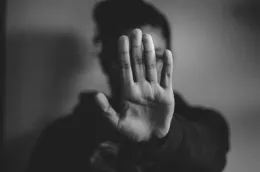
Online threats of death, rape, and physical violence against women in politics and public life have become alarmingly common, and the rise of artificial intelligence may further intensify the scale and reach of such online abuse, UN Women says in an explainer for the the International Day of Democracy on 15 September, and in the run-up to the 30th anniversary of the Beijing Declaration and Platform for Action for the achievement of gender equality.
“Having more women in policymaking has shown to help advance legislation on crucial issues, such as health, education, childcare, infrastructure and ending violence against women and serve as an inspiration for girls to pursue higher education and career opportunities.”
“In 2024 that is one of the biggest electoral years in recent history, 107 countries have never had a woman Head of State. In 2024, women held only 27% of seats in national parliaments and 35.5 of seats in local governments.”
The countries going to elections include some of the highest and lowest in terms of women’s participation in the parliament: Mexico and Rwanda are the only two countries with 50/50 representation of women and men.
Read here the full article published by Moonshot on 12 September 2024.
Image by Moonshot
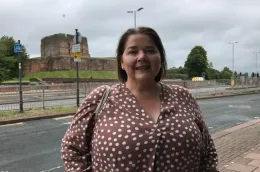
Women working in politics have spoken of the challenges of juggling work with their family life and caring duties.
Cumbria's constituencies are among the furthest away from London, adding to the demands on MPs who have caring responsibilities.
Julie Minns, MP for Carlisle and Lizzi Collinge, who represents Morecambe and Lunesdale, have spoken to BBC Radio Cumbria for a series looking at issues that affect women in politics.
They said balancing the demands of the job while caring for their families was challenging, but having diversity in politics was "fundamental".
Mrs Collinge's constituency straddles the border between Cumbria and Lancashire, where she lives with her husband and two children.
She said: "Travelling and being away from your family can be quite difficult for the kids and to be honest, I'm so busy in Westminster that it's easy to partition off, but you get the occasional pangs of missing your family."
'Diversity is fundamental'
Mrs Collinge said her casework often hits home, with recent examples including helping a homeless constituent and being involved with a debate around baby loss.
"This hits very close to me having lost a couple of pregnancies," she said.
However, she said diversity in Parliament was fundamental.
"I think if you only have one sort of person in Parliament then you don't get the action that's needed for everyone in the country," she said.
Ms Minns is an unpaid carer for her 90-year-old mother and her 99-year-old aunt and said she "hasn't caught her breath" since being elected in July.
Read here the full article published by the BBC on 7 September 2024.
Image credits: BBC
Abstract:
The media significantly influences the formation of public opinion as well as the development and maintenance of gendered stereotypes of men and women. Given this impact, understanding gender representation is crucial for evaluating news credibility and addressing gender stereotypes. In addition, media plays a key factor in the development of democratic societies. Apparently, women are underrepresented in the news, which suggests that although they make up about half of the world's population, they are not equally represented in the reality that the news generates. Thus, this study aims to investigate factors that might influence news reporting, especially about female politicians. Adopting a qualitative approach, 11 Malaysian journalists were interviewed on their journalism practices.
Read here the full article published by the Taylor's University on 6 September 2024.
Image credits: Taylor's University
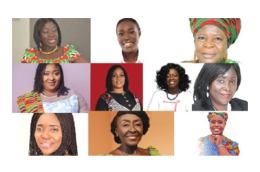
The representation of women in Ghana's Fourth Republic Parliament has remained notably low.
According to Table 1, the percentage of female parliamentarians elected in the 2020 election 40/275(14.55%) marked the highest figure since 1996.
Yet, it falls significantly below the global and sub-Saharan averages of 26.7 per cent and 27.1 per cent respectively. Without deliberate measures, this percentage is likely to decrease by the upcoming elections on December 7.
While both the NDC and the NPP have nominated 39 and 36 female parliamentary candidates (FPCs) respectively for the 2024 elections, indicating a higher number compared to the 2020 figures, the expected representation of female MPs following the upcoming elections is anticipated to decrease.
Female candidates
The question is: Why should this be the case? The increased number of FPCs suggests a likelihood of electing more female MPs. However, the dynamics are different this time. First, many incumbent FPCs lost their primaries in their party strongholds to male in-party contestants. Consequently, these seats are expected to be occupied by male in-party counterparts.
Second, a significant number of seats being contested by FPCs are not within their parties' traditional strongholds where victory would be more easily attainable. For instance, out of the 36 seats to be contested by NPP FPCs, only 13 (36.11%) are within their stronghold, while the corresponding figure for the NDC is 9 out of 39 (23%).
This suggests that many FPCs are contesting primarily to bolster the votes for their party's presidential candidates.
Read here the full article published by Graphic Online on 6 September 2024.
Image credits: Graphic Online
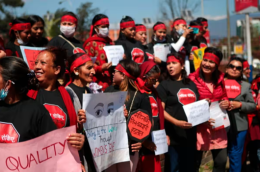
Once celebrated for its progressive strides towards gender equality in politics, Nepal is now witnessing a troubling regression. Despite constitutional guarantees, the representation of women in key political positions is declining, exposing the persistent grip of patriarchal norms and the superficial commitment of political parties to genuine gender inclusivity.
Nepal now needs to ensure that it sustains earlier gains. The percentage of women in its parliament remains above the global average of 25%, and over the past decade, women have held the positions of president, chief justice and speaker of the House of Representatives.
Compared with its South Asian counterparts, Nepal has progressive constitutional provisions for promoting gender equality. The Constitution of Nepal guarantees 33% participation of women at every level, and the local level election act mandates a minimum of 36.71% female participation.
The World Bank Women, Business and Law Index 2024 gives Nepal the highest score in the region for closing the gender gap. More broadly in the South Asia region, the picture is grim. Pakistan has reserved only 17% of its parliamentary seats for women; in Sri Lanka the figure is just 5.33%.
Across the globe, only 13% of countries apply effective gender quotas, according to the World Economic Forum's Gender Gap Report 2024. The study states that if the current trend continues, it will take 134 years to achieve full gender parity.
Read here the full article published by Nikkei Asia on 4 September 2024.
Image credits: Nikkei Asia
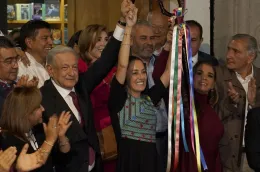
MEXICO CITY (AP) — In a U.S. electoral campaign punctuated by jibes about “childless cat ladies,” some might wish there were rules against mocking candidates based on their gender. Mexico — which just elected its first female president — has such a law but, surprise, it’s not that easy.
The debate centers around a hard-fought race between two female candidates for a Mexico City borough presidency. An electoral court overturned an opposition candidate’s victory, ruling that she had committed “gender-based political violence” against the losing, ruling-party candidate.
Outgoing President Andrés Manuel López Obrador suggested Monday the ruling could create a dangerous precedent, even though the losing candidate belonged to his own Morena party.
“We should be careful about this,” López Obrador said. “When insults, real or imagined, can be cause, or could be a cause, for overturning or nullifying a victory, that is something else altogether.”
The dispute arose after opposition candidate Alessandra Rojo won a narrow victory over Morena’s Caty Monreal in the race for the borough that includes downtown Mexico City. During the campaign, Rojo brought up the fact that Monreal’s father, Ricardo Monreal, is a leading Morena party politician, suggesting she may have been the candidate because of her dad’s influence.
Read here the full article published by the Associated Press on 3 September 2024.
Image credits: Associated Press