Parliaments & Representatives
THE HON JULIA GILLARD AC, HOST: Katy, it's not politics that brought you to Canberra, you were born and raised there, like no one's born and raised in Canberra. Can you tell me about that?
SENATOR THE HON KATY GALLAGHER, MINISTER FOR WOMEN: Yes, I'm one of those rare species at Parliament House that lives in the, you know, in the place where everyone comes to and then leaves. My parents came to Canberra in the late 60s. My dad had terrible asthma and had been told to leave the UK and he came and joined the parliamentary library actually and so started working there in the late 60s and I was born here in 1970. Yeah, it was a very small place and a place where a lot of people came to live, not where a lot of people had been born to live. But the kids that were born in the early 70s was sort of the first generation that were born and stayed. I mean, many went, but you know there's a good lot of us that were born in the 70s that stayed, and this became our home.
GILLARD: And tell me a little bit more about your mum and your dad. So, your dad's in the parliamentary library and I know that your mum has been honoured in a beautiful mural and through a mental health award that's named after her. Tell me about her story.
GALLAGHER: Yeah, so Mum was like this dynamo. She was born in the UK but I think had lived in a number of countries, so quite a kind of, for that time, probably someone who had you know all those international connections and found herself married with, in the end, four children, quite young, four under four, in the suburbs of Canberra with no car, no family, no friends and a husband that was working all the time. Very isolated. And instead of, I think, succumbing to that isolation, she turned around and started building a lot of connections and building up services and supports and really dedicated her life to that. Which is why, yeah, there's a mural of her close to where I grew up. But I think a lot of people when I'm going around and doing the work I do, always talk to me about how they remember my mum. Particularly services for women and women with children and people with a disability. She was just, she was one of those people that just rolled her sleeves up, got in, cause nobody else was doing it. And yeah, she was definitely a very powerful influence on all of our lives and many other peoples' as well.
Click here to hear the full interview published by the Department of the Prime Minister and Cabinet of Australia on 02 May 2024.
.
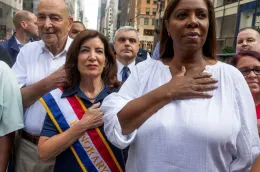
In recent years, the share of women in public office has surged.
*In 2000, just 65 women served in Congress. Today, the number is 151, more than a quarter of the total 535 voting members.
*Likewise at the state level, women now make up about a third of elected officials.
Yet despite these historic gains, women—who make up roughly half of the population—remain starkly underrepresented in government. And for women of color, the disparity is even greater.
No single factor created this gap, and no single change will fix it. But part of the problem is how campaigns are funded—and changing that will make a significant difference.
It’s expensive to run for office: Political ad spending in the 2024 election cycle is expected to exceed $16 billion. And the price of campaigning is a greater barrier for women, who typically have less access than men to the wealthy donors who provide most of this money.
Enter: public financing, a simple but powerful reform that uses public funds to boost small donations to candidates. It’s a policy that can help any candidate willing to engage with a broad base of voters—but some of its biggest beneficiaries are women, particularly women of color, who make up 25 percent of the country’s population but less than 10 percent of state and federal elected offices.
Read here the full article published by Ms. Magazine on 25 April 2024.
Image by Ms. Magazine
.
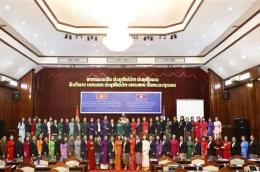
Vientiane (VNA) – Vietnamese and Lao female lawmakers on April 25 shared their experience in politics at a workshop in the northern Lao province of Luang Prabang.
In her opening remarks, Chairwoman of the Vietnamese National Assembly (NA)’s Social Affairs Committee Nguyen Thuy Anh said the workshop offers an opportunity for them to tighten their bonds.
She said the information, skills, and experience that they share on this occasion will help promote their common voices on issues relating to women, children, and gender equality at domestic and international forums, while building their images before the legislatures and voters of the two countries.
For her part, Chairwoman of the Lao NA's Committee for Cultural and Social Affairs Thummaly Vongphachanh said the workshop contributes to implementing the memorandum of understanding on cooperation between the two NAs, and strengthening the solidarity between the two countries, the legislatures, and the female lawmakers’ groups.
Read here the full article published by Vietnam Plus 25 April 2024.
Image by Vietnam Plus
.
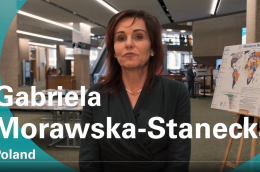
As part of the IPU series 'A conversation with...', we interview parliamentarians from all over the world to find out who they represent and what motivates them.
In this edition, we discover Gabriela Morawska-Stanecka, a Senator from Poland and a member of the IPU's Executive Committee.
Click here to listen the full conversation published by the IPU on 25 April 2024.
.
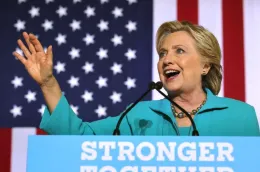
According to the U.S. Census, the majority of Americans are women, yet only 31% of Wisconsin State legislators are women. According to the Pew Research Center, there were 1 million fewer men enrolled in college than women this past winter. Yet women earn $0.84 for every dollar earned by a man.
The implications of changing gender roles, which seemingly should empower women, do nothing to counteract America’s structural and ideological underpinnings of women. As a young woman in university studying politics, I am inspired by women who hold political office, but it becomes obvious that female candidates must prove themselves to a further extent than male candidates.
Oppressive ideology, as well as the perception of women within our society, exemplifies that a woman must jump impossible hurdles to be America’s president. These hurdles are deeply rooted in American ideology and the policies that uphold a discrepancy of power between men and women.
Read here the full article published by The Cap Times on 23 April 2024.
Image by The Cap Times
.
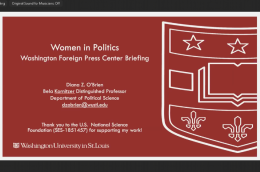
In this on-the-record briefing, Professor O’Brien discusses gender and politics. She also speaks about the impact of electing more women, the importance of women’s representation in the political and economic decision-making process, if the number of women running for office globally are increasing or decreasing, and gender differences in voter turnout.
Diana O’Brien is the Bela Kornitzer Distinguished Professor of Political Science at Washington University in St. Louis. Her teaching focuses on the causes and consequences of women’s political representation across the globe. Her areas of study are gender and political parties, legislative politics, executive branch politics, and citizens responses to women’s presence in politics.
MODERATOR: Hello and welcome to the Washington Foreign Press Center’s virtual briefing on Women in Politics. My name is Doris Robinson and I am the briefing moderator. Our briefer today is Diana O’Brien; she is the Bela Kornitzer Distinguished Professor in the Department of Political Science at Washington University in St. Louis. Her research and teaching focus on the – focuses on the causes and consequences of women’s political representation in high-income democracies, including Western Europe and the United States, as well as across the globe. Her areas of study are gender and political parties, legislative and executive branch politics, as well as citizen responses to women’s presence in politics.
And now for the ground rules. This briefing is on the record. We will post the transcript and a video of the briefing later today on our website at fpc.state.gov. And a quick reminder, please make sure that your Zoom profile has your name and media outlet that you represent. And finally, before Professor O’Brien makes opening remarks, just a quick reminder that she is an independent subject matter expert and the views expressed by briefers not affiliated with the Department of State are their own and do not necessarily reflect those of the U.S. Government. Their participation in FPC programming does not imply endorsement, approval, or recommendation of their views.
And with that, I will now invite Professor O’Brien to provide opening remarks. Over to you.
Read here the full briefing published by the USA Department of State on 16 April 2024.
Image by USA Department of State