Parliaments & Representatives
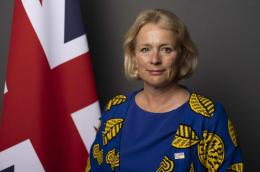
The rapid evolution of artificial intelligence (AI) has prompted many experts to warn about its impacts on democracy. To explore this issue further, the IPU is preparing a series of articles on the topic. In this fourth piece, British MP and Vice-Chair of the British Group of the IPU, Vicky Ford, talks about violence against women in politics (VAWIP), as well as the risks and opportunities of AI.
With the United Kingdom likely heading for an election in 2024, British MP Vicky Ford worries that the accelerating levels of online violence will discourage even more women from entering political life, distorting gender equality and democracy alike.
Online threats of death, rape and beatings have become a regular occurrence for MPs, especially women, all around the world, and this online aggression can have a real world impact too, says Ms. Ford. Within the last eight years, for example, two British politicians – Jo Cox and David Amess – have been murdered, and others have been lucky to escape with their lives.
Many now worry that AI will accelerate such trends.
Click here to read the full article published by the Inter-Parliamentary Union on 30 November 2023.
.
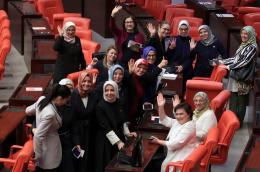
One of the first few countries to introduce suffrage for women and their election to office, Türkiye marks the 89th anniversary of the constitutional amendment, with more women in political offices though they are still outnumbered by men.
Nakiye Elgün’s message was simple: “We are a whole.” One of the first female lawmakers of the Turkish Parliament, Elgün noted in her speech in 1935 that men and women worked together in many fields but they were “honored” to be part of Parliament.
On Tuesday, Türkiye marks the 89th anniversary of a constitutional amendment that paved the way for women to exercise voting rights and to be elected into political offices, from municipal councils to Parliament. Elgün was among 17 female lawmakers elected into Parliament in 1935, one year after women were granted suffrage and about 11 years after the Republic of Türkiye was founded.
Click here to read the full article published by the Daily Sabah on 4 December 2023.
Image by Daily Sabah
.
Udora Orizu chronicles the noteworthy strides being made by the 10th House of Representatives towards improving women’s political representation and end gender based violence in the country.
The 10th House of Representatives, is rekindling hopes of Nigerian women following assurances of legislative reforms to improve women’s political representation, one of which is to revisit the five gender bills rejected during the alteration of the 1999 Constitution (as amended), in March, 2022.
These assurances, without doubt, are worthy of note, as it shows the lawmakers commitment towards ensuring that women’s rights are protected.
The rejection of the gender Bills during amendment of the constitution by the lawmakers sparked outrage and protests by women and fundamental rights groups.
Click here to read the full article published by This Day Live on 1 December 2023.
Image by This Daily Live
.
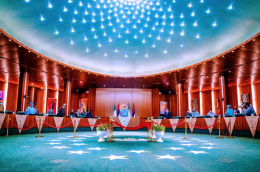
For a country with a significant female population, Nigeria has been poor in ensuring gender parity in elected and appointed leadership positions. Since 1979, the country has practiced a presidential form of government, with a devolved form of government across three tiers—federal, state and local levels. Yet, despite the number of elective constituencies available, there has been little to no women elected to these positions. Nigeria has never elected a female president, vice-president or a governor in any of its thirty-six states. Women elected to the national legislature have been a scant percentage in any of the ten constituted sessions of either chamber, with none emerging as president of the senate and a roughly five-month stint for the only woman to emerge speaker of the house of representatives (Polgreen, 2007).
Click here to read the full report published by the Centre for Democracy and Development on 27 November 2023.
Image by Centre for Democracy and Development
.
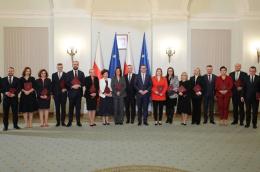
On Monday, President Andrzej Duda swore in the new government of Prime Minister Mateusz Morawiecki, who will have two weeks to secure a vote of confidence. Most of the ministers have been swapped, although some previously served as deputy ministers. Others headed various government agencies. The majority of the cabinet is made up of women, which has been praised by President Duda. Jarosław Kaczyński, the head of the Law and Justice party (PiS), which won the plurality of votes but struggles to find a coalition partner, expressed hopes that a cabinet including more experts and fewer politicians may be more palatable to the parliamentary majority.
Click here to read the full article published by TVP World on 27 November 2023.
Image by TVP World
.
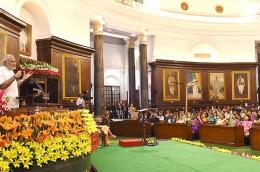
The Indian parliament passed a historic bill that necessitates the lower house of the parliament and the state legislatures to earmark one-third of their seats to women. In terms of women’s representation in politics, India ranks 141 out of 185, marking this reservation bill as a significant reform. Although the landmark legislature makes great strides for women, there are several impediments to the bill that will delay its discernible effects in Indian politics. Thus, the question begs, is this bill merely an empty promise made by the Modi-led government in the lead up to the 2024 general elections?
Women are significantly underrepresented in politics in India. Presently, 15.2% seats in the lower house of parliament are held by women, while it is merely 9% in the state legislatures. Globally, women hold a 26.5% stake in parliamentary office. The gender quota bill has been in the works for over 25 years, held back primarily due to demands for the inclusion of socio-economic factors in women’s reservation. In September 2023, however, it was welcomed almost unanimously by the Indian political scene.
Click here to read the full article published by The Geopolitics on 25 November 2023.
Image by The Geopolitics