Parliaments & Representatives

The current brouhaha surrounding comments made by two senior Jamaica Labour Party (JLP) parliamentarians about the physical attributes (or lack thereof) of a female People's National Party (PNP) constituency candidate has once again brought into sharp focus the oftentimes puerile and petulant posturing of our politicians who should know better.
Click here to read the full article published by the Jamaica Observer on 3 November 2023.
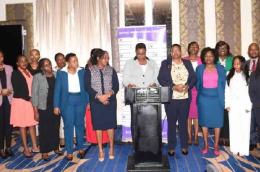
While celebrating 13 years since the promulgation of Kenya’s 2010 Constitution, Katiba Institute highlighted several achievements, some of which demonstrated a greater involvement of women in politics and decision-making. From no women governors in 2013 to seven in 2022, Kenya has undeniably witnessed gradual increase in election of female candidates in other political positions, including eight deputy governors, three senators, 115 MCAs and 29 MPs.
Click here to read the full article published by The Standard Digital on 2 November 2023.
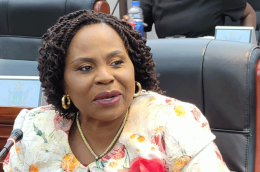
WOMEN’s Affairs minister, Monica Mutsvangwa, yesterday bemoaned the imbalance between men and women in politics saying this undermined the principles of democracy and social justice.
Mutsvangwa, who was opening the 5th edition of the Women in Local Government Forum congress, said the decline in women's participation showed that Zimbabwe remained a patriarchal society.
Click here to read the full article published by NewsDay Zimbabwe on 3 November 2023.
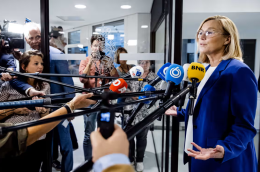
Six years after Sigrid Kaag was catapulted into the highest ranks of Dutch politics, police keep a constant watch over her home. Cameras sweep across the back of the property while every piece of mail sent to her is screened before she can open it.
“Most people would still have the tendency to say, ‘Oh well, this is part and parcel of politics,’” said Kaag, the first deputy prime minister of the Netherlands. “I don’t accept that.”
Click here to read the full article published by The Guardian on 3 November 2023.
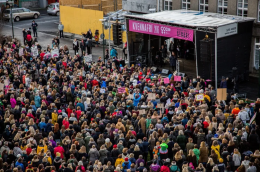
Hello, and welcome to the October 2023 edition of #WomenLead!
This month has seen legislative elections in several parts of the world. But alas, in so many of them, women’s representation has seen drops rather than gains. It has already been a tough year, so that is no good news.
In this edition, we bring you updates from Argentina, Iceland, India, Iran, Liberia, New Zealand, Poland, and Switzerland. In case you missed last month’s edition, you can read it here.
Click here to read the full article published by the Women Lead on 29 October 2023.

Are the preferences of women and men unequally represented in public policies? This simple yet fundamental question has remained largely unexplored in the fast-growing fields of women’s representation and inequality in the opinion-policy link. Our study analyzes gender biases in policy representation using an original dataset covering 43 countries and four decades, with citizens’ preferences regarding more than 4,000 country-year policies linked to information about actual policy change. Our analysis reveals clear and robust evidence that women’s policy preferences are underrepresented compared to those of men. While this skew is fairly modest in terms of congruence, women’s representation is driven mostly by the high correlation of preferences with men. When there is disagreement, policy is more likely to align with men’s preferences. Our analyses further suggest that women’s substantive underrepresentation is mitigated in contexts with high levels of female descriptive representation and labor market participation. In sum, our study shows that gender inequality extends to the important realm of policy representation, but there is also meaningful variation in unequal representation across contexts.
Click here to read the full article published by the Cambridge University Press on 26 October 2023.