Women's Leadership
That women in Nigeria who have been the backbone of community building, peace processes, and national development have not been well represented in the decision making and governance of the country is no longer a tale as the evidence abound for all to see.
Women representation in the National Assembly remains low, with only 4.2% (20 members out of 469) in the 10th Assembly (2023-2027), comprising 3 of 109 Senators and 17 of 360 members of the House of Representatives which is significantly below the global and African averages and is a result of factors like political party structures and male dominance.
It is trite knowledge that when it comes to political leadership, their voices are not only underrepresented, their contributions are undervalued due to cultural constraints in a society that is primarily patrilineal and patriarchal in nature. Unfortunately for Nigeria, evidence across the world shows that societies that embrace women’s participation in leadership record greater stability, deeper inclusivity, and stronger economic growth.
President Netumbo Nandi-Ndaitwah reaffirmed Namibia’s firm commitment to promoting gender equality across all sectors.
She emphasised that women’s emancipation is both a constitutional duty and a moral obligation.
During the 63rd Pan African Women’s Day celebration in Windhoek over the weekend, President Nandi-Ndaitwah highlighted Namibia’s leadership in gender equality on the continent, ranking first in Africa and eighth worldwide on the latest international gender parity index.
“This ranking underscores our nation’s continuous efforts to empower women through political representation, education, and economic participation,” she stated.
She praised Namibia’s 50/50 gender representation policy, known as the zebra style, championed by Swapo.
“This strategic policy has transformed gender balance within Swapo structures and the National Assembly, serving as a strong example for Africa,” she added.
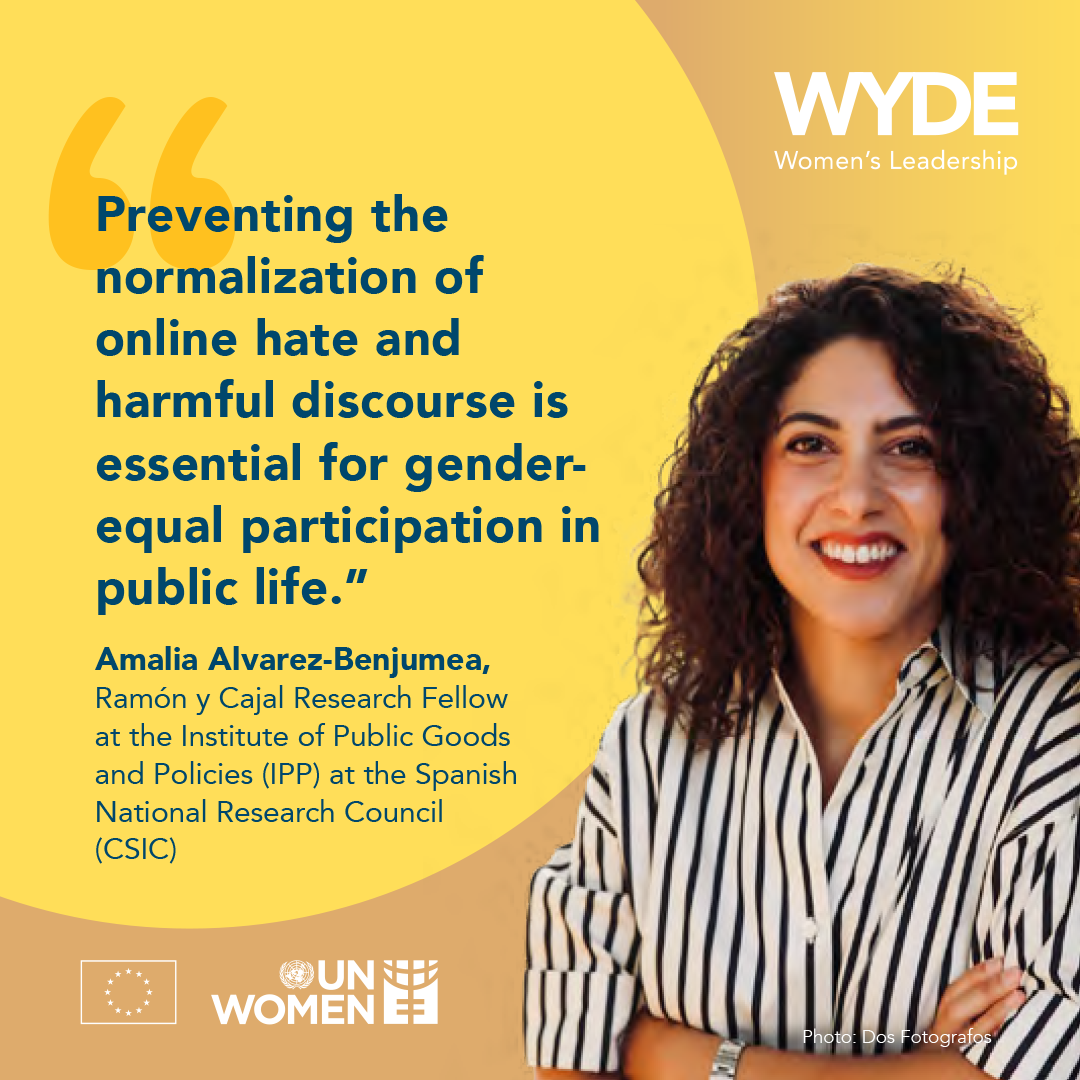
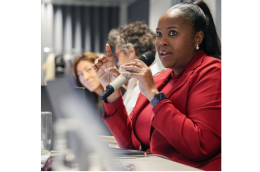
Amalia Alvarez-Benjumea is a Ramón y Cajal Research Fellow at the Institute of Public Goods and Policies at the Spanish National Research Council. Her research explores the emergence and evolution of social norms, particularly the impact of social feedback and contextual information on norm perception and conformity. Amalia Alvarez-Benjumea joined a two-day Expert Group Meeting organized by UN Women to address one of the most persistent barriers to gender equality in political and public life: discriminatory social norms. The event held on 4 and 5 February 2025, brought together feminist scholars, policymakers, activists, and practitioners to chart a path forward for transforming social norms and ensuring women’s full and effective political participation. This experts’ meeting was organized under the WYDE | Women’s Leadership, funded by the European Union, which is a collaborative global effort aimed at advancing women’s full and effective political participation and decision-making at all levels, especially those most often left furthest behind.
-
How do social norms shape the way we view women in politics?
This is a complex issue because social norms are part of broader cultural frameworks that include expectations, roles, and stereotypes. Unfortunately, gender norms and stereotypes often work against women in politics. There is a deeply rooted belief that women belong in the domestic sphere rather than the public one, or that they are not well-suited for positions of power, management and leadership.
Meanwhile, stereotypes about men tend to reinforce the idea that they are “naturally fit” for leadership roles, they are expected to excel in positions of power and be comfortable with decision-making authority. This contrast creates an uneven playing field, making it significantly harder for women to enter and succeed in politics.
Beyond that, when individuals step outside of societal expectations, they are often scrutinized and judged more harshly. Women in politics frequently have to prove themselves as more competent than average, while also facing disproportionate criticism if they make mistakes.
-
What are some of the biggest barriers women face when stepping into leadership roles, and how can they be addressed?
There are both material and societal barriers. Gender norms dictate that women should prioritize caregiving and domestic responsibilities such as taking care of the children, which directly impacts the time and resources they can dedicate to politics. The reality is that women often have fewer hours available for political engagement compared to their male counterparts.
Beyond time constraints, women in politics also face intense backlash, especially online. My research has shown that female politicians and activists, especially those involved in feminist movements, are frequent targets of harassment and hate speech on digital platforms. This hostility discourages women from fully utilizing online spaces for political engagement, limiting their ability to express opinions freely and harnessing the potential of digital platforms for political outreach.
To address these barriers, we need both systemic changes—such as policies supporting work-life balance and political representation quotas—and cultural shifts that challenge harmful stereotypes and normalize women’s leadership. Online harassment must also be tackled through platform regulations that are better designed and drawing from evidence, as well as stronger support networks for women in public life.
-
What lessons can we draw from your research to reduce sexism and biases in political and online spaces?
While not everyone actively confronts gender-based hate speech, there is always a segment of people who push back against it. Encouraging this kind of intervention is essential and has a very positive effect actually.
When individuals counteract sexist remarks, stereotypical statements such as “you belong in the kitchen”, whether online or in public discourse, they help reset societal norms. If someone publicly challenges statements like, “women don’t belong in politics,” it signals to bystanders and observers that this perspective isn’t universally accepted and should not be the norm. It reinforces the idea that women have every right to participate in political spaces and increases the likelihood of other bystanders to intervene as well. Creating and promoting these counter-narratives is a crucial strategy in dismantling biases and reducing discrimination. The more people speak up against sexism, the more we normalize gender equality in leadership.
-
How do intersecting identities—such as race, ethnicity, age, or disability—affect women’s experiences in political spaces?
Intersectionality plays a major role in shaping women’s experiences. A woman in politics is not just navigating gender norms—she is also navigating additional layers of stereotypes based on other aspects of her identity.
For instance, women from marginalized racial or ethnic groups, younger women, or women with disabilities often face compounded biases. If a woman also belongs to the LGBTQ+ community, she may be perceived as “deviating” from traditional gender expectations in multiple ways, making her even more vulnerable to scrutiny and discrimination.
These overlapping biases create unique challenges that require intersectional solutions. Representation matters—not just for women in general, but for diverse women from different backgrounds.
-
What advice would you give to young women entering politics, particularly regarding online harassment?
Despite the challenges, there are reasons to be optimistic. My advice would be: build a strong support network or a reference group. Identify the people you can rely on, whether it’s colleagues, mentors, or allies who share your values and who can create narratives that you can use when facing this sort of hatred.
Also, develop a set of prepared responses for moments when you face harassment or pushback. Having a “toolkit” of responses can help you navigate difficult interactions, online or in person. At the same time, make sure you have people who can step in to defend you when needed. The reality is that online harassment is a major issue, but by preparing for it and surrounding yourself with a reliable support system, you can focus on making an impact rather than constantly being on the defensive.
Original interview published on Capacity4Dev.
Abosede George-Ogan is the Founder of the Women in Leadership Advancement Network in Nigeria and a seasoned development professional with over 20 years of experience across the non-profit, private, and public sectors. Specialized in media and narratives, she also hosts a TV show focused on shaping the perception of women leaders in Nigeria with 17 million views. Her work centers on fostering women’s leadership across all levels. Abosede joined a two-day Expert Group Meeting organized by UN Women on 4-5 February 2025 to address one of the most persistent barriers to gender equality in political and public life: discriminatory social norms. This experts’ meeting was organized under the WYDE | Women’s Leadership, funded by the European Union, which is a collaborative global effort aimed at advancing women’s full and effective political participation and decision-making at all levels, especially those most often left furthest behind.
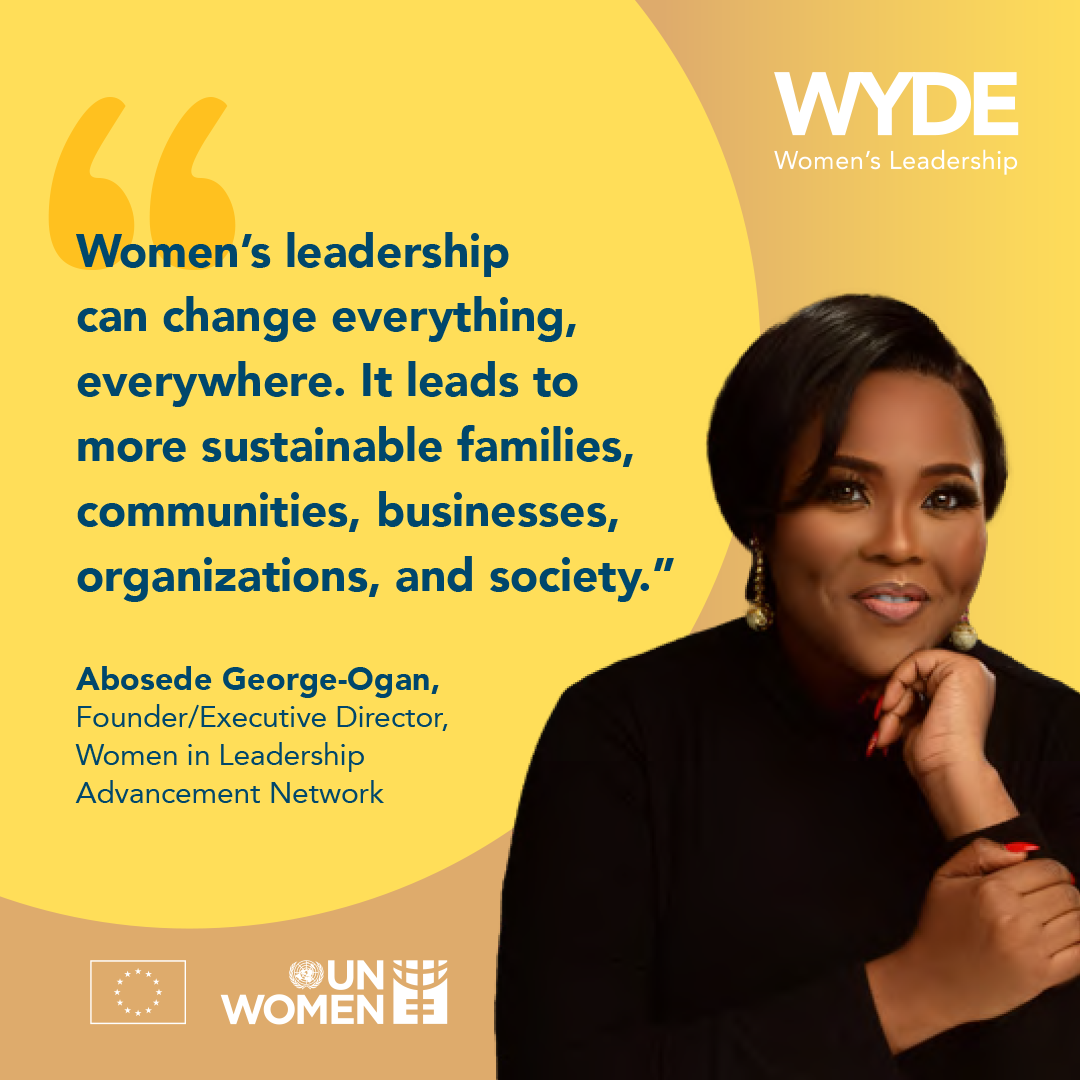
“The media plays a crucial role in shaping narratives and transforming gender and social norms. From a young age, we are constantly exposed to media, and today, with people consuming content directly through their phones, its influence is stronger than ever. This is why we must pay attention to how media shapes perceptions.
The reality is that media can have both a positive and negative impact. Unfortunately, we’ve seen it mostly reinforcing existing discriminatory social norms. However, there is a real opportunity to actively recruit the media as agents of change. Media have the power to reshape narratives and help society see the collective benefit of having women in leadership.
One major shift that needs to happen is in how the media portray women. Headlines must move beyond focusing on appearance or traditional caregiver roles and instead highlight women's competence, accomplishments, leadership, and abilities. Our Representation Matters campaign aims to demonstrate—through facts and compelling storytelling—that excluding women comes at a cost and that showing them in leadership role actually has a knock-on effect. The media becomes the vehicle to drive this message forward. We also produce a television show designed to spark conversations about gender norms and leadership in Nigeria. It encourages viewers to interrogate their own perceptions—where do these ideas come from? Why do people believe that leadership is a male domain? Why do they admire their mothers but struggle to see women as leaders? If our show gets people talking, it’s a win, because that’s how change begins.
If we want to reshape social norms, we must bring the media along. This means equipping them with the right language, tools, research so they can tell better stories. Lastly, it is not just about content—it is also about ownership. Who controls media platforms? Who has decision-making power? Media ownership remains largely male-dominated, and ensuring diversity in ownership will accelerate the change we want to see. We need more women entrepreneurs in the media space. Yet this is challenging, considering media is capital-intensive: you need infrastructure, equipment, and significant funding, which is why many women remain in supporting roles in media rather than taking the lead in media business ownership.
Ultimately, when women lead influential companies that employ thousands across various regions, they can shape media to offer more substantive, unifying, and enriching content. This can serve as a counterbalance to today’s political media, which often thrives on division and polarization. By reshaping the media landscape, we have the power to reshape society."
Original interview published on Capacity4Dev.
By Clarisse Sih and Bibbi Abruzzini
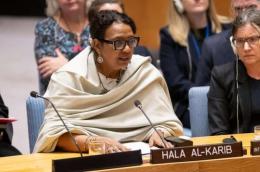
For over 30 years, women in the Horn of Africa have fought tirelessly against violence, discrimination, and systemic oppression. One of the leading voices in this struggle is Hala Al-Karib, a Sudanese activist and the regional director of the Strategic Initiative for Women in the Horn of Africa (SIHA).
At the heart of her work is a profound belief: “We are not just imagining power. We are claiming it.”
As part of the Forus March With Us campaign, Al-Karib shares her insights on the state of women’s rights, the barriers they face, and the unstoppable force of grassroots feminist movements shaping the future.
A life shaped by struggle and resistance
Growing up in Sudan, Al-Karib witnessed firsthand the deep inequalities and ethnic divisions that fueled systemic oppression. Her activism began early, inspired by the resilience of the women around her:
I learned early on that oppression exists in many forms — against women, against marginalized communities, against those who challenge power. And I also learned that to survive, we must resist.
Full article available here.
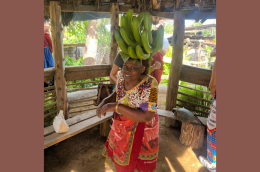
High on the slopes of Mount Meru, in Tanzania’s Arumeru District, lies the quiet village of Mulala. With just 2,000 residents, it is easy to miss — but it is here that one woman, known simply as Mama Anna, has reshaped what local development can look like.
Her transformation from subsistence bean farmer to community educator and entrepreneur began with one unexpected gift: a cow.
Mama Anna — Anna Pallangyo — is a Meru woman, a mother of six, and one of 717 women in the FAIDA Small Enterprise Promotion network. With only a primary school education and limited resources, she began by growing beans to support her family. But the returns were modest, and she saved what she could, determined to find another way.
When a development worker brought her a cow, she wasn’t sure what to do. “What can I do with a gombe [cow]?” she asked aloud. Then she learned to milk it.
Each day, she served milk to her family and friends. When the milk began to overflow, she made a decision: “I’ll sell the maziwa (milk).” Every morning, she walked down the long hill to town; every afternoon, she climbed back up, coins chattering in her pockets “like monkeys.”
Full article published here.
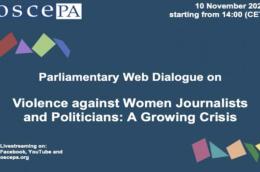
Special Representative on Gender Issues Hedy Fry (Canada) issued the 2021 Report today with a thematic focus on “Violence against women journalists and politicians: a growing crisis,” shedding light on intensifying and widespread offline and online violence against women in two public fields – journalism and politics.
The report, divided into two parts, explores the impact of such violence and its implications on the fields of journalism and politics, as well as democracy as a whole – outlining that the negative effect goes well beyond physical and mental health challenges. It examines the existing barriers to effective responses and possible ways forward that could be implemented to address this growing issue. Lastly, the report provides information on the dynamics of gender balance in the OSCE structures and its field offices.
Click here to read the full report published by OSCE on 12 August 2021.
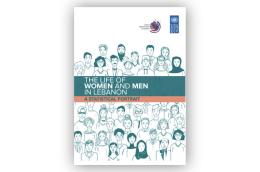
The compilation, analysis and dissemination of gender statistics are critical to capture the specific realities in the life of women and men. They are powerful tool to highlight aspects of gender inequality, and to provide an evidence base for developing and monitoring policies and programmes oriented towards reducing these inequalities. Gender data is key to achieve the 2030 Agenda and other national commitments. Government policies and programs in Lebanon articulate the need for measuring and monitoring gender equality, which has led to a substantial increase in demand for data producers to make available relevant and reliable gender statistics.
In response to the rising needs for more gender disaggregated data and indicators, and to better understand trends in gender equalities and inequalities over the past 15 years, CAS- with the support of UNDP- did a compilation of gender-disaggregated indicators based on official survey-based statistics and administrative data. The results were comprehensively presented in the report “The life of Women and Men in Lebanon: A Statistical Portrait”. This compilation provides a better understanding of the country’s progress on gender inequality and highlights critical gaps and disparities yet to be bridged. The report focused on six thematic areas: Demography, health, education, labor market, socio-economic conditions, and decision-making and human rights.
Click here to read the full report published by UNDP on 19 October 2021.
Decades of research has debated whether women first need to reach a “critical mass” in the legislature before they can effectively influence legislative outcomes. This study contributes to the debate using supervised tree-based machine learning to study the relationship between increasing variation in women's legislative representation and the allocation of government expenditures in three policy areas: education, healthcare, and defense. We find that women's representation predicts spending in all three areas. We also find evidence of critical mass effects as the relationships between women's representation and government spending are nonlinear. However, beyond critical mass, our research points to a potential critical mass interval or critical limit point in women's representation. We offer guidance on how these results can inform future research using standard parametric models.
Click here to read the full article published by Cambridge University Press on 21 September 2021.
Abstract
Social norms that legitimise men as political leaders, and undervalue women’s leadership, are a tenacious barrier to women’s representation globally. This article explores the circumstances under which women dynasty politicians, whose legacy connections have provided them with an initial pathway into politics, are able to disrupt these norms. We test a proposed typology of normative change – one that progresses from norm acceptance, to norm modification, then norm resistance – among women dynasty politicians in the Pacific Islands. We find that norms of masculinised political leadership are strong, and in many cases the election of wives, widows, daughters and other relatives of male political actors reinforces these norms through their positioning as ‘placeholders’. Yet some women dynasty politicians can, and do, challenge and extend social norms of leadership. This is especially the case when the ‘legacy advantage’ is a springboard from which women demonstrate – and their publics accept – their own articulation of political leadership.
Click here to access the paper.
This report reflects the main arguments presented during the high-level seminar, organized by UN Women in collaboration with the Italian Ministry of Foreign Affairs and International Cooperation, on “Strengthening women’s participation in peace processes: What roles and responsibilities for states?” in Rome, Italy, on 3 and 4 December 2019. The main arguments include the persistent barriers to women’s meaningful participation in peace and mediation processes and the opportunities that exist to remove them.
Specifically, seminar participants discussed challenges related to limited political will, the link between women’s underrepresentation in politics and their marginalization in peace processes, the complex balance between women’s representation and promoting gender equality, and the barriers to sustainable civil society involvement.
Second, the report highlights perspectives and lessons learned that representatives of the United Nations, Member States, regional organizations, and civil society shared on how to enhance women’s meaningful participation in peace processes. Two strategies were emphasized: the design of inclusive peace processes and the role of regional networks of women mediators in bridging peace processes across tracks. The case studies of Colombia, Syria, and Cyprus are also included, offering insights on some successful strategies to increase women’s participation.
Finally, the report describes the key policy recommendations that emanated from the seminar, with a view to addressing ongoing barriers to women’s participation and using innovative and comprehensive strategies to achieve more gender-responsive peace processes.
Source: UN Women

The global report on Gender Equality in Public Administration (GEPA) report provides an overview of key trends and analysis on women’s participation and leadership in public administration, based on evidence from UNDP and the University of Pittsburgh’s ground-breaking GEPA database. The first comprehensive in-depth research into the issue covering 170 countries, finds that though there has been progress on women’s representation overall in public administration, persistent gaps remain. Women continue to hit a glass ceiling and glass walls that stop them from advancing to positions at the highest levels of power and influence, including in the COVID-19 response. The report provides practical recommendations to help shatter these glass ceilings and glass walls and to reimagine and redesign more gender inclusive and diverse public administrations.
Source: UNDP