Women's Leadership
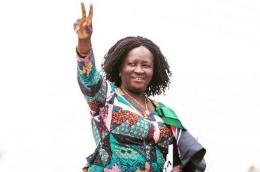
Prof. Naana Jane Opoku-Agyemang has officially assumed the role of Vice President of Ghana following her swearing-in on Tuesday.
The ceremony took place at the iconic Independence Square in Accra, where Chief Justice Her Ladyship Gertrude Torkornoo administered the oath of office.
Prof. Opoku-Agyemang, who served as the running mate to President-elect John Dramani Mahama during the 2024 general elections, has made history as Ghana’s first female Vice President.
Running alongside President-elect John Dramani Mahama, her historic win under the National Democratic Congress (NDC) banner in the 2024 elections has been widely celebrated as a groundbreaking achievement for gender representation in Ghanaian politics.
Read here the full article published by New National Star on 8 January 2025.
Image by New National Star
This is the second issue of our policy insight series on gender-inclusive conflict transformation. This paper explores the political re-conversion pathways that women ex-combatants pursue after the signing of a peace agreement. From 2022 to 2023, we engaged in focus group discussions, interviews, and peer-learning workshops with over 70 women ex-combatants from Colombia, El Salvador, and the Philippines. In this publication, we present their testimonies and analyse their experiences of continuing their engagement post-war through nonviolent means in both formal and informal political spheres.
Click here to read the full article published by Relief Web on 17 December 2024.
Image by Relief Web
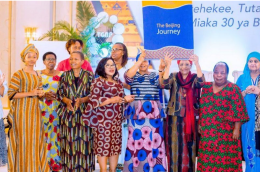
Following their victories in the recent Local Government Elections, newly elected female leaders are encouraging other women to pursue leadership roles despite the challenges.
Mtwara Ms Rukia Myachi, chairperson of Myegedi village in Mkunwa ward, emphasised the importance of resilience. "I faced many obstacles, from stereotypes to lack of support," she shared.
"But I persevered. This proves that women can lead effectively. Don't let challenges deter you. Step up and take on leadership roles to represent other women's voices."
Read here the full article published by The Citizen on 2 January 2025.
Image by The Citizen
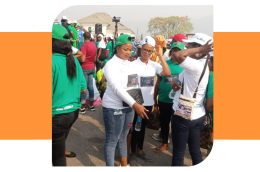
Women’s presence in politics is vital for shaping policy outcomes in the economic, social and cultural spheres. Despite progress over the past two decades, women remain under-represented in political leadership in Africa. This publication examines the factors motivating women’s participation and representation in politics on the continent, providing insights to enhance gender equality and empower women politically. Through interviews, it becomes clear that global and regional efforts for gender equality are key factors motivating women’s political participation. Women's movements and civil society groups have played a significant role in advocating for increased inclusion. However, social norms and practices often still hinder women from meaningful participation in decision making.
The report suggests that African governments should expedite the implementation of international and regional frameworks to enhance women’s political participation. Strengthening women’s capacity to engage in politics, improving access to finance and addressing violence against women in politics are essential measures to promote their representation.
Click here to read the full report published by IDEA International on 30 December 2024.
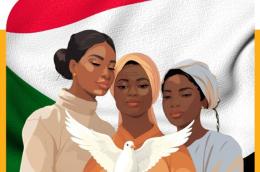
International IDEA organized in August 2024, in Kampala, Uganda, a roundtable with the Adeela Foundation to discuss and evaluate the role of Sudanese women in peace and ending war initiatives. The dialogue covered the war’s economic, social and political impacts on women’s groups. Also, it addressed the violations that Sudanese women are subjected to in a systematic and regular manner by all parties to the war without exception.
The participants discussed the role of Sudanese women in establishing women’s initiatives to stop the war and the role of Sudanese women in peace initiatives and ending the war led by regional and international institutions. Among the important topics discussed by the participants was the issue of the challenges and difficulties that hinder the participation of Sudanese women in building peace and restoring stability in Sudan. The participants agreed on practical, responsive and implementable recommendations. The dialogue results and the final recommendations were directed to local, regional and international policymaking institutions.
Click here to read the full report published by International IDEA on 20 December 2024.
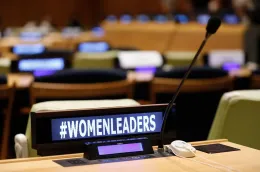
New York, 19 December, 2024 – Women's representation in political leadership remained critically low in 2024. Only five women were elected as Heads of State out of 31 direct presidential elections held worldwide. These women leaders represent Iceland, Mexico, Namibia, North Macedonia, and the Republic of Moldova. For Mexico, Namibia, and North Macedonia, these elections were historic, as they marked the countries' first-ever women presidents. Additionally, Mexico and the United Kingdom achieved significant progress in gender equality by forming gender-equal cabinets following their respective elections, setting an important precedent for inclusive governance.
Women's representation in parliament remained stagnant at 27% in 2024. Among 39 countries with available data, 15 recorded increases in the number of women elected, while 24 experienced declines. Legislated quotas proved to be a driving force for progress; for instance, stricter enforcement in the Dominican Republic resulted in an eight-point rise in women's representation. Conversely, 12 out of 16 countries without quotas experienced declines, underscoring the pivotal role such measures play in advancing gender equality in political representation.
Read here the full article published by UN Women on 19 December 2024.
This collaborative report between, Lokniti a programme of the Centre for the Study of Developing Societies and Konrad Adenauer Stiftung has attempted to look at women and politics from a multi-track perspective. While the assessment relied quite extensively on existing aggregate data on the theme and an exhaustive review of literature, the key focus of the analysis was the findings of a survey conducted among women across the country. The report is divided into eight chapters including the conclusion and the introduction and relies heavily on Lokniti’s survey data. Having chosen a sample of respondents that helped best mirror the larger `universe` it was meant to represent (Indian women), a range of questions on the patterns of political participation and representation were asked. The survey attempted to assess the perception of women to different dimensions of political participation and representation and the challenges in this regard. The survey findings have helped present the socio-economic and cultural context that define and decide the attitudes and perception of women to issues of political participation and representation. The varied factors that contribute to greater women’s participation in politics and the pathways to greater political representation were also assessed as part of the study. The study examines the perceptions of women to their role as voters. Their views on different dimensions of political participation and the barriers to the same are also studied. The impact of political socialization and the family are also analysed as part of the survey. Factors that influence voting decisions as well as womens’ perception of women as leaders, has also been attempted in this study.
Click here to see the academic article.
Research showing that there is strong correlation between increased female labor force participation and women’s political participation is essentially based on empirical data from Western, democratic, and developed contexts. In this article, we discuss whether these conclusions hold for non-Western, nondemocratic, and developing settings too. Through a study of Ethiopian women’s employment and political agency, we find that employment is actually not significantly related to the level of women’s participation in local political meetings and is negatively related to their interest in politics.
Click here to download the article.
In 2018, a record number of women were elected to Congress, but it’s a different story when you look at governorships. Today, only nine women serve as governor, tying a previous record first set in 2004.
Twenty states have never had a woman governor, whereas only one state has yet to send a woman to Congress. The numbers are even more stark when it comes to women of color and LGBTQ women: only two states have ever elected a woman of color governor, and there has only been one openly LGBTQ woman elected governor.
When running for executive office, women face obstacles that men running simply do not. The Barbara Lee Family Foundation has consistently found that voters have been more comfortable seeing women serve as members of a legislature than they have been electing them to executive offices—positions where they will have sole decision-making authority.
This research, which asks about hypothetical Asian Pacific Islander American, Black, Latina, lesbian and white women candidates of the two major political parties, comprehensively examines what it takes for a woman to prove to voters she is ready to serve in executive office. For context, it also includes some of the lessons learned from interviews with 2018 gubernatorial candidates and their campaign staffs.
Click here to see the report.
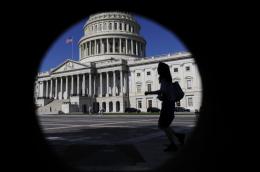
Americans elected more than 100 women to office in the 2018 midterm elections, but women still hold less than a quarter of the seats in Congress.
Why are women so poorly represented? Theories include: women are less politically ambitious; there is a lack of support from political parties and donors; voter prejudice and a dearth of information about female politicians influence votes.
UCLA Anderson’s Melanie Wasserman was interested in a less-understood piece of the puzzle: Do women breaking into politics react differently to an electoral loss than men? If so, does this contribute to the low percentage of women who hold office?
Her analysis of 11,466 candidates in closely won local races in California between 1995 and 2014 (including city, county, and school districts) finds women new to politics were less likely than men to run again within four years of losing a close race. For men, losing an initial election caused a 16-to-19 percentage point decline in the probability of their running in another election within the next four years. Women exhibited an additional 7-to-11-percentage point decrease in the probability of running again, relative to the male candidates.
Click here to read the full article published by UCLA Anderson Review on 1 November 2019.
Political parties act as gatekeepers, meaning that improvements in the representation of women depend on parties’ willingness to nominate women candidates. Previous research suggests that party characteristics and gender quotas largely explain women’s nominations, but overlooks the political context in which parties operate. This study highlights the gendered outcomes that occur when parties make nomination decisions in times of public discontent, namely increasing political distrust and increasing perceived corruption. We theorize that parties hold similar biases to voters: gender stereotypes that regard women as more trustworthy and honest should advantage women as political trust falls and perceptions of corruption rise. We hypothesize that parties nominate larger percentages of women in these circumstances. Using two waves of data from over 100 political parties in 18 Latin American countries, we find that parties nominate more women when a large proportion of the public distrusts the national legislature, providing support for the theory.
Click here to see the academic article.
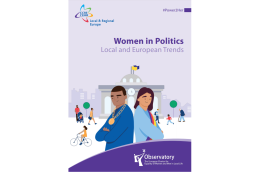
From mayors to MEPs: new study reveals women’s representation across Europe.
Women make up half of humanity, yet account for only 1/3 of political decision-makers in Europe and around 15% of mayors. A new study by the Council of European Municipalities and Regions (CEMR) shows that despite some gains, politics remains a man’s world.
One-of-a-kind, “Women in Politics: Local and European Trends” provides in-depth analysis of women’s representation in 41 European countries and all levels of government, from local councils all the way up to the European Parliament.
Covering a ten-year period, the study breaks down the data by country, shows where and how women have made gains and provides recommendations on how to make further progress.
Click here to see the report.