Seeing women govern encourages support for women in politics – with no apparent backlash among men
Source: The Conversation
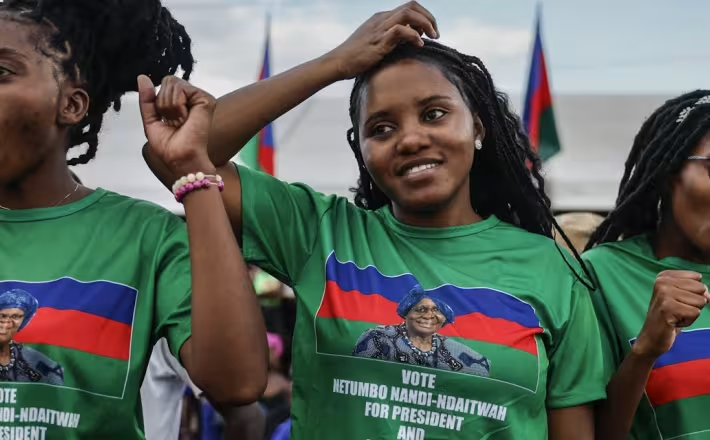
Quotas designed to bring gender parity to parliaments have an overall positive impact on support for female political leadership – especially after women members of parliament take office. Furthermore, there is no evidence of a backlash among men.
That’s what I found in a study published in October 2025 looking at the impact of gender-parity quotas in Namibia, in sub-Saharan Africa.
In 2013, Namibia’s dominant political party, the South West Africa People’s Organization, or SWAPO, quietly rewrote its internal rules. From that point forward, every spot on its parliamentary candidate list would alternate between a man and a woman.
Most prior research on measures to encourage gender parity in politics focuses on national or legislative policies rather than voluntary party quotas. Namibia offers an unusually “clean” case in that SWAPO is electorally dominant and did not face grassroots pressure to adopt its quota policy. That makes it possible to isolate the effects of the quota itself, rather than any preexisting trend in public attitudes.

Hear from women leading change in the political space share their experiences and insights.

Explore a wide-range of audio-visual resources on key topics of gender equality.

Hear from a diverse list of panelists and guests as they reflect on critical issues pertaining Women in Politics.