Women's Leadership
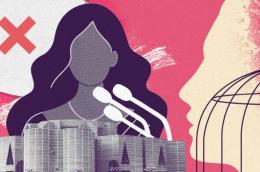
"Women are excluded because politics is hostile, and politics remains hostile because women are excluded."
Bangladesh is not short of women in leadership, be it in business, government offices, or academia. It is short of women in electoral politics.
Over the past two decades, women’s presence across public life has expanded steadily and measurably. Girls now outnumber boys in secondary education. Maternal and child mortality have declined sharply. Women’s economic agency has grown through microfinance and the ready-made garment sector, both of which rely overwhelmingly on women’s labour. These gains were not incidental, but the result of sustained state policy, long-term NGO engagement, and deliberate investment in women as economic and social actors.
Women’s representation has also grown within the state itself. Bangladesh has 495 upazilas, and today roughly one-third of all upazila nirbahi officers are female. Women now serve across administrative tiers: as assistant commissioners, additional deputy commissioners, and senior field-level officials—roles that were overwhelmingly male a generation ago. This shift matters because it shows something crucial: when institutions are rules-based, women advance at scale. But when it comes to party politics and elections, the numbers collapse.
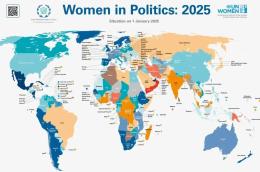
Reframing the ratio of women in government affects attitudes and action.
Gender disparity in political leadership is seldom cast as the overrepresentation of men (71 percent in the United States and worldwide). Rather, in public discourse, the gender imbalance in positions of power is framed as the underrepresentation of women. Social psychologists at the New York University Social Perception, Action, and Motivation Lab find in their 2024 study, "Women underrepresented or men overrepresented?" Framing the gender gap in political leadership as "men's overrepresentation" heightens emotional reactions and motivates efforts for change.
Read More here.
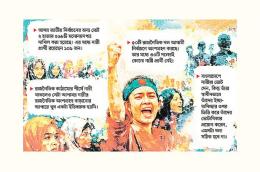
The political structure and processes in Bangladesh remain predominantly patriarchal and under male control. The patriarchal society of Bangladesh does not favour women's participation in the country's political framework, resulting in low female representation at all levels of political parties. Selim Jahan explores where women stand in the upcoming elections.
After the July 2024 uprising, a question that emerged was, "Where are the women warriors of July?"
This question had context. During the July uprising, women were at the forefront of the struggle—leading, demanding, and visible. There is no doubt that women's participation was a significant catalyst in the success of the July movement.
Historically, this is not new in our country. In the 1971 Liberation War of Bangladesh, women fought shoulder to shoulder with men—directly on the battlefield and indirectly across the nation.
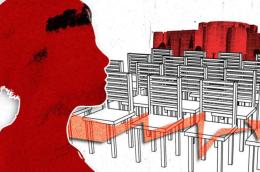
Across the world, women are underrepresented. Globally, fewer than one in four parliamentarians are women. In many Asia–Pacific countries, including Bangladesh, systemic barriers continue to limit women’s political participation. Social norms, structural bias, and unequal access to political networks constrain both candidacy and success. Yet, without women’s meaningful representation in politics and decision-making spaces, gender balance at work is not possible. Upcoming elections highlight this critical juncture: unless parties actively support women candidates, workplace policies that enable equality will remain underdeveloped and inequitable.
It is a direct correlation. Women in Bangladesh face barriers in entering formal employment, remaining in workplaces, and advancing to leadership. Many are concentrated in informal, low-paid, and insecure jobs, often exiting the labour market due to lack of childcare, unsafe commuting, or rigid working arrangements. These workplace realities are shaped by political choices—decisions about budget allocation, labour laws, social protection, and urban safety—made predominantly by male leadership.

It is worth repeating that women constitute half of society. Any decision-making without the equal participation of women is truncated and illegitimate from a democratic point of view. In addition to the principle of equality, the inclusion of women brings unique perspectives and experiences that improve the quality of decisions. At the local level, where policies directly affect the daily lives of citizens, women's participation is essential to address the real needs of the population.
Thanks to legal quotas and numerous efforts, the representation of women in Kosovo's municipal assemblies has increased over the years, but still remains below the target level. Meanwhile, in local leadership positions, such as mayors, women are almost absent. This is not only an injustice, but also a loss for society: ignoring half of the population in decision-making means leaving aside half of the social potential - of talent, ideas and possible solutions.
Personal observation from the field has shown me that when women actively participate in politics, the decision-making agenda is enriched with new ideas. I noticed a significant phenomenon while monitoring municipal budget hearings: in cases where only men were present, the demands made revolved mainly around asphalt and sports halls - as if these were the only solutions to society's problems. In general, in these cases, it seems that the vision of development begins and ends with concrete and sports. However, when women were also present, the panorama changed significantly. Their demands went beyond that, towards the most fundamental issues for the quality of life: opening daycare centers for children, installing solar panels in schools, or financing training programs for parents of children with autism. Ideas that had a great multiplier effect and improved life both now and in the distant future.
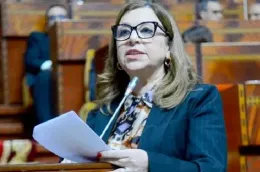
The Minister of Solidarity, Social Inclusion and Family, Naïma Ben Yahia, announced on Monday in Rabat the upcoming launch of a nationwide awareness campaign promoting women’s political participation and tackling discrimination and stereotypes in politics.
Answering oral questions in the House of Representatives, Ben Yahia said the initiative is part of the «Moucharaka» programme, which aims to strengthen women’s participation in the political process ahead of the 2026 and 2027 electoral deadlines.
The programme will include training sessions for women members of political parties, in coordination with the leaders of women’s party structures, as well as research projects carried out with universities to identify ways to improve women’s political representation. These studies will also assess electoral processes through analyses conducted before and after legislative elections, with the results to be made public.
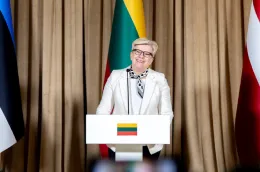
Significant and, arguably, profound changes took place in Baltic high politics over the past four years. The peak pandemic years — 2020 and 2021 — proved quite pivotal for both Lithuania and Estonia, as both saw the emergence of the first most gender-balanced cabinets in the history of these countries, with Latvia following in 2022. The Estonian parliament elected the first woman prime minister, Kaja Kallas, whose cabinet had the largest number of women ministers. For almost a year, Estonia’s top political positions — the presidency and prime ministership — were held by two women, making Estonia the only parliamentary democracy ruled by elected women. Meanwhile, the Lithuanian prime minister, Ingrida Šimonytė, was the second woman to hold this position. Unlike her predecessor, Danutė Prunskienė, who served as the first woman prime minister of Lithuania more than 30 years ago (1990-1991) and was the only woman in her all-male cabinet, Šimonytė’s cabinet was the most gender-balanced in the modern history of the country. With the election of Evika Siliņa in September 2023 as Latvia’s prime minister, all three Baltic prime ministerships were held by women for about ten months — a historical first in the Baltic states’ politics.
Read here the full article published by the Foreign Policy Research Institute on 19 December 2024.
Image by Foreign Policy Research Institute
Introduction
Gender equality has been a point of debate in the recent past. This is based on the ability to accord equal rights and opportunity for both genders where discrimination and prejudice are prevented. In Nigeria, gender equality and related issues are prevalent in different cases.
This is where the female gender is facing different inequalities and challenges, which are making it hard for them to cope and become effective in community participation and development (. This is based on the rise of various forms of conflict in the region, such as the Boko Haram and Harder-Farmer conflicts.
These are negatively impacting the country’s economy, and they are also affecting women and gender dynamics in the area. Therefore, this research outlines the way such conflicts have led to issues impacting women, such as gender-based violence, and also impacts the roles of women in society. Also, the discussion outlines the relationship between conflict and political participation of women in the country and the post-conflict challenges and opportunities available in the case of women in Nigeria.
Read here the full article published by The Vanguard on 7 January 2025.
Image by The Vanguard
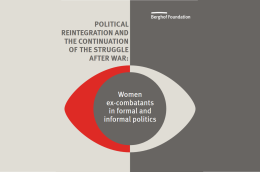
This is the second issue of our policy insight series on gender-inclusive conflict transformation. This paper explores the political re-conversion pathways that women ex-combatants pursue after the signing of a peace agreement. From 2022 to 2023, we engaged in focus group discussions, interviews, and peer-learning workshops with over 70 women ex-combatants from Colombia, El Salvador, and the Philippines. In this publication, we present their testimonies and analyse their experiences of continuing their engagement post-war through nonviolent means in both formal and informal political spheres.
Click here to read the full article published by Relief Web on 17 December 2024.
Image by Relief Web
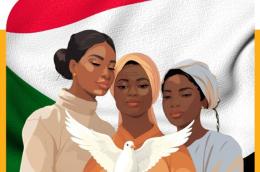
International IDEA organized in August 2024, in Kampala, Uganda, a roundtable with the Adeela Foundation to discuss and evaluate the role of Sudanese women in peace and ending war initiatives. The dialogue covered the war’s economic, social and political impacts on women’s groups. Also, it addressed the violations that Sudanese women are subjected to in a systematic and regular manner by all parties to the war without exception.
The participants discussed the role of Sudanese women in establishing women’s initiatives to stop the war and the role of Sudanese women in peace initiatives and ending the war led by regional and international institutions. Among the important topics discussed by the participants was the issue of the challenges and difficulties that hinder the participation of Sudanese women in building peace and restoring stability in Sudan. The participants agreed on practical, responsive and implementable recommendations. The dialogue results and the final recommendations were directed to local, regional and international policymaking institutions.
Click here to read the full report published by International IDEA on 20 December 2024.
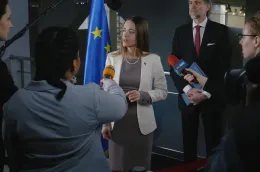
Despite some progress over the past decade, women's representation in political leadership remains limited globally. As of 1 January 2024, only 27 out of 159 countries are led by women – a modest increase from just 18 countries a decade ago (United Nations Women Headquarters Office 2024). Women represent 23% of cabinet members heading ministries worldwide in 2024; in Europe and Northern America, this share is 33%.
On the one hand, these numbers hint at the long road ahead to reach the United Nations’ Sustainable Development Goal of gender equality (SDG 5), which aims to ensure equal opportunities for leadership at all levels of decision-making in political, economic, and public life (United Nations 2015). On the other hand, they underscore the need to understand to what extent the underrepresentation of women politicians matters for policy choices, especially in times of crises.
Read here the full article published by the Centre for Economic Policy Research on 12 November 2024.
Image by Centre for Economic Policy Research
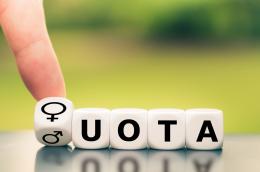
Gender quotas have become an important mechanism for promoting gender equality in political representation. This blog post explores their impact on women’s political empowerment, particularly in Malta, by discussing the historical context, current situation, and future prospects for gender equality in Maltese politics.
Understanding Gender Quotas
Gender quotas are affirmative measures designed to increase women’s participation in politics by reserving a certain proportion of seats for them. According to the European Institute for Gender Equality (EIGE), the goal is to provide a clearer pathway for women to enter political leadership, as they have historically been underrepresented. This is particularly relevant in Malta, where, despite advancements in other areas of gender equality, political representation remains unequal.
A Historical Overview of Women’s Political Participation in Malta
Women’s political participation in Malta has a long history, tied to the broader socio-political developments of the nation. Women were first granted the right to vote and run for office in 1947, preceding Maltese men who received this right three years later. However, significant measures aimed at improving female political representation only came in the 21st century. The Gender Corrective Mechanism, introduced in 2021, was a landmark policy. It mandates an increase in parliamentary seats if female representation falls below 40%, ensuring that women have a stronger foothold in Maltese politics.
Read here the full article published by Gender On The Ballot on 11 November 2024.
Image by Gender On The Ballot