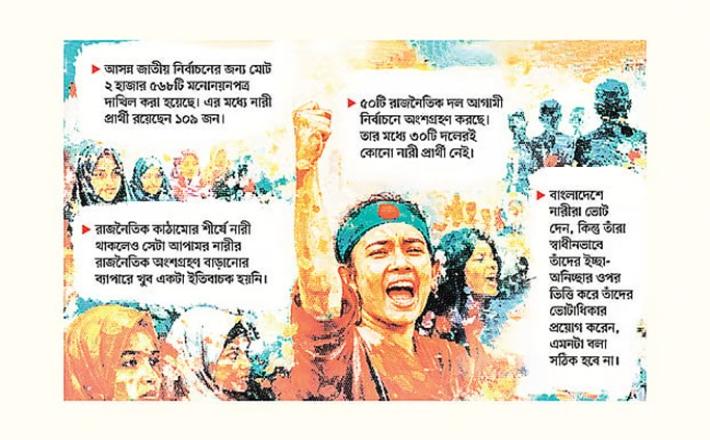
The political structure and processes in Bangladesh remain predominantly patriarchal and under male control. The patriarchal society of Bangladesh does not favour women's participation in the country's political framework, resulting in low female representation at all levels of political parties. Selim Jahan explores where women stand in the upcoming elections.
After the July 2024 uprising, a question that emerged was, "Where are the women warriors of July?"
This question had context. During the July uprising, women were at the forefront of the struggle—leading, demanding, and visible. There is no doubt that women's participation was a significant catalyst in the success of the July movement.
Historically, this is not new in our country. In the 1971 Liberation War of Bangladesh, women fought shoulder to shoulder with men—directly on the battlefield and indirectly across the nation.

Hear from women leading change in the political space share their experiences and insights.

Explore a wide-range of audio-visual resources on key topics of gender equality.

Hear from a diverse list of panelists and guests as they reflect on critical issues pertaining Women in Politics.