Women's Leadership
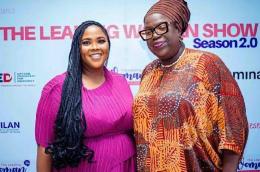
In a deliberate effort to encourage more women to pursue leadership roles, WILAN Global is set to launch a documentary on women, who contested elections into various offices in Nigeria’s 2023 general elections.
The documentary, which premieres on Channels Television on August 31, will delve into the compelling stories of women who participated in the last general elections.
Titled, ‘Her fight, our future: Women in Nigeria Politics,’ the insightful documentary captures their journeys, highlighting their struggles, joy and pains as they navigate the political landscape. The documentary provides an intimate look at the experiences of the courageous women, shedding light on the challenges they faced and the triumphs they achieved.
It also aims at inspiring future generations of women leaders by showcasing the resilience and determination of those who dared to make a difference in Nigeria’s political arena.
The founder and executive director, Abosede George-Ogan, expressed excitement about the documentary.
“We are thrilled to bring these powerful stories to the forefront. This documentary is not just about politics; it’s about the strength, passion, and unwavering spirit of women who stepped into the political spotlight to create change. Their experiences are a testament to the impact women can have in shaping the future of our nation,” she enthused.
Read here the full article published by The Sun on 11 August 2024.
Image by The Sun
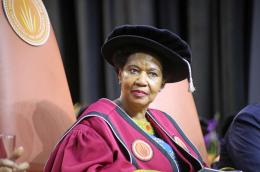
Globally, history has shown that politics is predominantly male dominated, where women were not expected to hold significant political views or opinions. This reality is also evident in Africa, where men occupy most major political positions in African countries.
However, in South Africa, the political landscape has evolved significantly toward greater inclusivity since the end of Apartheid.
While there have been advancements in terms of inclusivity, women are still under-represented in nearly all major political parties and top positions in South Africa, perpetuating gender inequalities across various sectors of the country.
Increasing women’s participation in politics will help address and advocate for women’s rights, challenge gender stereotypes, and promote gender equality.
There is a common misconception that women are incapable of effective leadership due to perceived weaknesses in decision-making, leading to unreliable outcomes.
However, women’s political participation is crucial for a healthy democracy, and it is time for women to step up and claim their rightful place in the political arena. Women in politics can also serve as role models for young girls, inspiring them to aspire to leadership positions.
Factors such as age, education level, influence, financial strength, and access to health facilities encourage women to engage fully in political activities. Conversely, illiteracy, lack of capital, and discouragement from spouses, among others, can hinder women’s political participation.
Read here the full article published by The African on 9 August 2024.
Image by The African
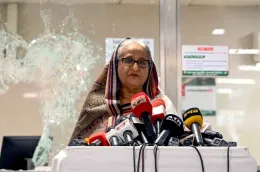
Bangladesh’s Prime Minister Sheikh Hasina has reportedly resigned and fled the country in the face of ongoing protests.
The longtime leader of the country has boarded a military helicopter, an aide told Al Jazeera, after crowds ignored a national curfew to storm the prime minister’s palace in Dhaka.
Close to 300 people have died amid weeks of protest the authorities have sought to crush. Following a night of deadly violence that killed close to 100 on Sunday, tension had remained high on Monday as protesters called for a march on Dhaka and the army prepared to address the nation.
By early afternoon, however, media reported that the mood on the streets had turned to one of celebration after the news of Hasina’s departure spread.
Chief of Army Staff General Waker-Uz-Zaman has cancelled his planned address and is instead holding talks with major political parties, including the opposition Bangladesh Nationalist Party (BNP).
Images on national television showed thousands of people breaking into the prime minister’s official residence. It also showed large crowds of protesters out in the street in scenes of jubilation as the news of the departure of Hasina started spreading.
Al Jazeera’s Tanvir Chowdhury, reporting from Shahbag Square – the epicentre of the student protesters – said he has “never witnessed something like this” in the capital.
Read here the full article published by Aljazeera on 5 August 2024.
Image by Aljazeera

A long time ago, there were almost no female political prisoners in Russia.
At that time, there were not many male political prisoners either, but gradually they started to appear. And when the number of men increased, the authorities began to target women as well.
Everything followed the classic rules of repression. First, they came for some people, then for the others. It was gradual, creeping – and then it turned out that everyone was imprisoned, and there were no more rules or safeguards.
In the early Putin years, particularly troublesome women, such as journalists, were dealt with without the help of judges and investigators. For example, the world-famous Anna Politkovskaya was shot – and, like in a classic Soviet film, it was done by "people not from our district." Everything was blamed on the Chechens. Who ordered it is another question, which the Russian Federation wisely did not pursue to avoid implicating itself.
Then the regime began to indulge in classic repressions and started imprisoning women who could be labeled as marginal activists in the public opinion. For example, Darya Polyudova went through all the circles of the Dantean criminal correctional system of the Russian Federation. She was accused of separatism, extremism, and anything else, all just for her words. The local justice in Kuban broke her life, like an arm, in several places.
But society swallowed it because who knew where Kuban was or who these activists with a march for its federalization were? Society was unclear.
Read here the full article published by MEMRI on 5 August 2024.
Image by MEMRI
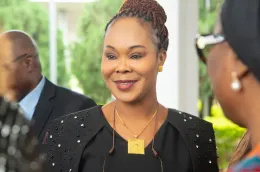
Nigeria’s Minister of Women Affairs, Uju Kennedy Ohanenye, has emphasised the need for greater inclusion of women in politics and governance, acknowledging their crucial role in the country’s socio-economic development.
The Minister made this statement at the closeout and dissemination ceremony of the Women’s Voice and Leadership (WVL) project in Abuja, the nation’s capital. The WVL project, a five-year initiative funded by Global Affairs Canada and supported by ActionAid Nigeria, aims to empower women and promote gender equality in the Federal Capital Territory (FCT).
Represented by the Principal Social Welfare Officer of the Ministry, Mr. Alake Olaniran, the Minister reiterated the ministry’s commitment to supporting women’s rights and helping them achieve their goals.
“Women’s Voice and Leadership, WVL has increase women participation in leadership and key decision making process in respective states driven by this project, as women have been able to utilize their leadership and negotiation skills to address overwelming issues of governance in their community in their state and the country in general,” Ohanenye stated.
She expressed gratitude to ActionAid Nigeria and their implementing team for their significant achievements and urged continued support to ensure gender equality.
The President of the Nigerian Association of Women Journalists (NAWOJ), Aisha Ibrahim, highlighted the project’s aim to tackle barriers to gender equality and empower women and girls by providing financial and technical resources to local feminist and women’s rights organisations in Nigeria. She noted that the initiative had yielded positive results.
Read here the full article published by News Central TV on 4 August 2024.
Image by News Central TV
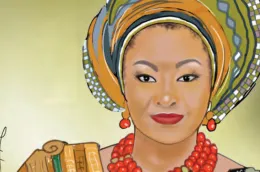
The personal is political” is a popular feminist slogan that emerged in the late 1960s and became central to the feminist movements of the 1970s. This concept fundamentally changed how personal experiences and societal structures were perceived, arguing that personal experiences are often rooted in broader social and political contexts.
Often attributed to Carol Hanisch, a feminist activist who wrote an influential essay of the same title in 1969, Hanisch herself noted that the phrase was coined as a rallying cry during feminist consciousness-raising sessions. These were gatherings where women shared their personal experiences, realizing common patterns that highlighted systemic issues rather than isolated personal problems. This sharing helped uncover the political nature of seemingly personal issues, like domestic labour, childcare, and reproductive rights.
As humans, we are all products of our socialization. Hence, personal experiences often reflect the political structures that we belong to and the ideologies that we project. Personal experiences, particularly those of women, are often shaped by broader social, political, and economic structures. For example, issues like domestic violence, workplace discrimination, and reproductive rights are not just individual concerns but reflect systemic inequalities and power imbalances.
Read here the full article published by the Nigerian Tribune on 1 August 2024.
Image by Nigerian Tribune
This report reflects discussions held during the May 2018 Expert Group Meeting hosted by UN Women on women’s meaningful participation in negotiating peace and the implementation of peace agreements. The meeting included some 50 experts from a diverse range of countries and contexts, including Bosnia, Colombia, Kenya, Kosovo (under UNSCR 1244), Georgia, Mozambique, Myanmar, Philippines, South Sudan, Syria, and Yemen.
The report highlights how far the international community and Member States have come in advancing women’s meaningful participation in conflict resolution since the adoption of UN Security Council resolution 1325 (2000). The report highlights the aims and outcomes of the convening, which included:
- the exchange of current research and good practice on women’s representation and “meaningful” participation in peace processes;
- the exploration of the concept of “meaningful participation”—what it includes and how the United Nations, Member States, civil society, and other relevant actors can best effectively advocate for it and consistently operationalize it;
- discussion of the barriers to women’s meaningful participation; and
- assessment of the trends and challenges in gender-responsive provisions of peace agreements and their implementation.
The report includes a menu of actions for relevant actors and recommendations that reflect on nearly 20 years of implementation of the women, peace, and security agenda.
Click here to see the report.
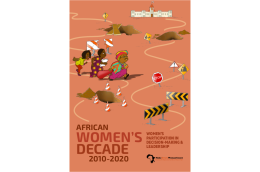
Considering that equal access of men and women to power is a necessary precondition for democracies to flourish, the African women’s decade 2010-2020: Women’s participation in decision-making & leadership 2017- 2018 report focuses on women’s role in decision-making and leadership in key positions and at all levels. Nowadays, women leaders have an enormous potential to influence decision-making, by promoting fairer policies and practices in governments, parliaments, the judiciary and the private sector. Even though women play a crucial role in all the above fields, previous reports have mainly focused on women in governments and parliaments. In other words, this report goes beyond limitations and seeks a holistic approach with regard to women’s participation in all spheres of decision-making such as women MPs, women ministers, women in the judiciary, women in the private sector.
Make Every Woman Count (MEWC) has been compiling a yearly report, tracking the progress of the African Women’s Decade (AWD) since 2011. This is achieved by presenting each country on the continent with a background and a presentation of progress and developments made within different areas during each year of the African Women’s Decade 2010-2020.
Click here to see the report.

In October 2018, the highest number of gender parity cabinets was achieved. Six out of the current ten gender-balanced cabinets were formed in 2018.
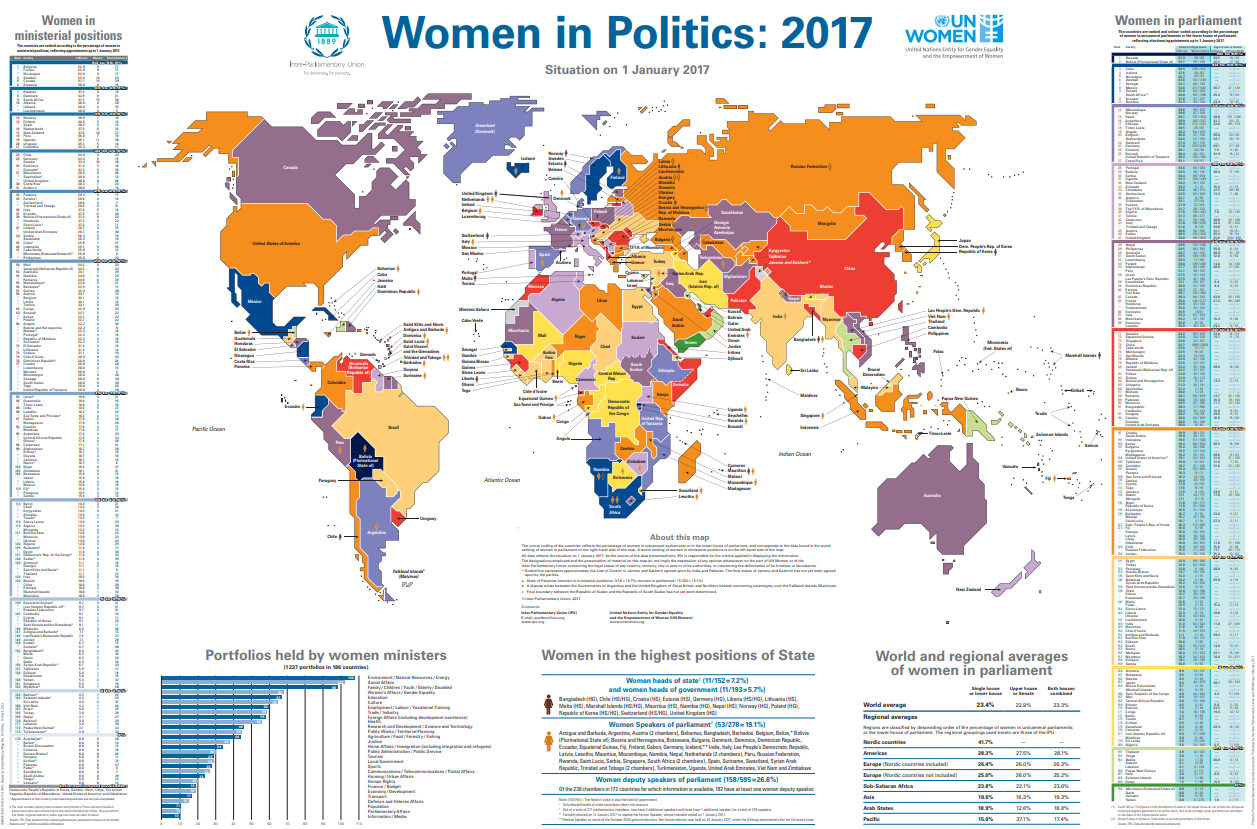
In January 2014, UN Women and the Inter-parliamentary Union (IPU) reported only three countries with at least 50 percent of women ministers (Nicaragua, Sweden, and Finland). This figure went up to five countries in 2015 (Finland, Cabo Verde, Sweden, France, and Lichtenstein) and to six countries in 2017 (Bulgaria, France, Nicaragua, Sweden, Canada, and Slovenia). The recent appointment of gender-balanced cabinets in Ethiopia and Rwanda brings the list of countries with at least 50 percent of female ministers to ten.
1. Canada
In November 2015, Prime Minister Justin Trudeau gave Canada an unprecedented young, ethnically diverse, and gender-balanced government team. In his July 2018 cabinet reshuffle, gender parity stayed intact with a total of 17 women and 17 men ministers.
2. Colombia
In August 2018, President Iván Duque of Colombia announced his new cabinet, which for the first time in the country’s history included as many women as men. Women head the ministries for justice, interior, labor, and mining and energy among others.
3. Costa Rica
In April 2018, President Carlos Alvarado of Costa Rica presented his cabinet, which made national history with the inclusion of 14 women and 11 men and the appointment of Epsy Campbell as the first woman to lead the country's foreign relations.
4. Ethiopia
In October 2018, Prime Minister Abiy Ahmed of Ethiopia appointed a cabinet marked by gender parity with ten women and ten men.
5. France
In May 2017, President Emmanuel Macron of France formed a gender-balanced government with 11 of 22 ministries led by women. In October 2018, he announced a new 34-strong cabinet with 17 women.
6. Nicaragua
In January 2017, President Daniel Ortega of Nicaragua formed a cabinet with nine women and eight men. Many women ministers lead traditionally men-dominated portfolios such as defense, environment and energy and mines.*
7. Rwanda
In October 2018, President Paul Kagame of Rwanda unveiled a new gender-balanced cabinet with 13 women ministers out of a total of 26.
8. Seychelles
In April 2018, President Danny Faure of Seychelles announced a new cabinet comprised of five women and five men ministers in addition to the President and the Vice president.
9. Spain
In June 2018, Prime Minister Pedro Sanchez of Spain announced a new cabinet with 11 women ministers and five men. Key ministries such as justice, economy, defense and education are headed by women.
10. Sweden
Sweden has the world’s first self-proclaimed feminist government. In 2014, Stefan Löfven appointed a cabinet including 12 women and ten men ministers.
The global average for women holding ministerial positions is 18.3% (as of January 2017). See UN Women and IPU’s 2017 Map on Women in Politics for more information.
Did we miss something? Please let us know at connect@iknowpolitics.org.
* Source: Permanent Mission of Nicaragua to the United Nation in New York, 23 October 2018
This article conceptualizes an innovative understanding and measurement of women’s political leadership, theoretically justifies its application, and analyzes contemporary variation in its patterns through comparative case studies. In recent years, scholars of comparative government have studied with great interest the election of female prime ministers and presidents (e.g., Derichs and Thompson 2013; Jalalzai 2013) and cross-national variation in female members of parliaments (MPs) and cabinets (e.g., Bauer and Tremblay 2011; Paxton and Hughes 2017; Suraj, Scherpereel, and Adams 2014). Yet, when it comes to regions beyond Europe and the Americas, comparative empirical analysis of women’s political leadership (WPL) across national level governments has been largely neglected. Addressing this gap in the literature, University of Cambridge offers a new index that they believe has multiple advantages over the most commonly applied proxies for WPL.
Click here to see the academic article.

In the present report, the Special Rapporteur on violence against women, its causes and consequences analyses the issue of violence against women in politics, including in parliament and elections, and outlines her conclusion and recommendations on preventing and combating such manifestations of gender-based violence.
It is submitted by the Special Rapporteur on violence against women, its causes and consequences, Dubravka Šimonović, pursuant to General Assembly resolution 71/170. In section II, she provides an overview of her mandate’s initiative to develop institutional links and thematic cooperation between independent global and regional mechanisms on violence and discrimination against women. The activities carried out by the Special Rapporteur during the reporting period are included in her thematic report to the Human Rights Council (A/HRC/38/47). In section III, she analyses violence against women in politics and the main challenges to addressing it. In section IV, she outlines her conclusion and recommendations on preventing and combating violence against women in politics
Click here to see the report.
UN Women, the Office of the High Commissioner on Human Rights (OHCHR), and the UN Special Rapporteur on violence against women, its causes and consequences (Special Rapporteur), in collaboration with the Inter-Parliamentary Union (IPU) and the National Democratic Institute for International Affairs (NDI), co-organized an Expert Group Meeting (EGM) on violence against women in politics (VAWP) on 8–9 March 2018 in New York. More than 40 experts attended the meeting, including Members of Parliament and local government, academics, gender equality advocates, and representatives of regional human and women’s rights monitoring mechanisms, electoral management bodies, UN agencies, and civil society organizations.
Convened at a time when gender-based violence against women (GBVAW) was in the global spotlight, the EGM provided the space for a diverse, specialized and influential group of experts to identify institutional, advocacy, and legal means to enable women to fully realize their political rights, and end impunity for those who seek to stifle or suppress them.
This report provides a summary of the EGM discussions. It contains key points and priority actions to inform partners’ interventions, particularly the Special Rapporteur’s thematic report on VAWP to the 73rd regular session of the UN General Assembly.
Click here to see the report.