Women's Leadership
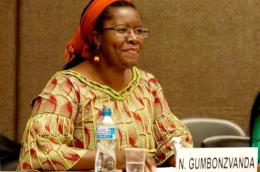
United Nations Assistant Secretary-General and UN Women Deputy Executive Director, Ms Nyaradzayi Gumbonzvanda, is in Zimbabwe from January 12 to 16 on a mission to strengthen national efforts to advance gender equality.
She is accompanied by the UN Women Deputy Regional Director for East and Southern Africa, Ms Adama Moussa.
UN Women said the visit is aimed at reaffirming the agency’s commitment to Zimbabwe, deepening partnerships with government and civil society, and mobilising support to sustain gains in women’s rights.
According to the agency, the strategic engagement will also seek to safeguard and accelerate progress on gender equality and the empowerment of women.
During the five-day visit, Gumbonzvanda is expected to advocate stronger integration of global gender frameworks including the Convention on the Elimination of All Forms of Discrimination Against Women (CEDAW), the Beijing Platform for Action and Sustainable Development Goal 5 — into national policies.
During the fight against apartheid in South Africa, the African National Congress (ANC), home party of leader Nelson Mandela, considered what a future free society would look like and how that goal should be achieved, says historian Rachel Sandwell.
ANC members weren’t just focused on ending apartheid racism, “although that was obviously foundational,” said Sandwell, assistant professor of history in the College of Arts and Sciences. “They were also trying to define a future where men and women, Black and white, were equal and liberated to live well.”
Women played a major role in these debates, according to Sandwell’s new book, “National Liberation and the Political Life of Exile: Sex, Gender, and Nation in the Struggle against Apartheid.” Through an analysis of women’s diplomatic work and their advocacy for policies on sexual education, birth control, family life and child care, Sandwell challenges traditional narratives that have ignored or minimized women’s contributions.
The College of Arts and Sciences spoke with Sandwell about the book.
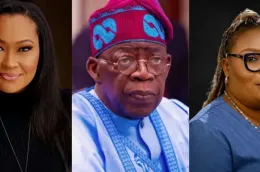
Discussions around gender issues, especially women’s representation in parliament, intensified in Nigeria in 2025.
A legislative proposal, widely known as the Special Seats Bill or Reserved Seats Bill, was the primary focus of the discussion.
The bill, which has received widespread support from civil societies and state governments, including the Governors’ Forum, “signals a rare cross-sector push for institutional change,” Mabel Ade, founder of Adinya Arise Foundation (AAF), noted.
Ms Ade described 2025 as a “catalytic year,” because old promises were interrogated.
“The real test ahead is whether Nigeria will translate the Beijing+30 momentum into enforceable laws, institutional reforms, and measurable increases in women’s political representation and safety,” she said.
Lydia Umar, the director of Gender Awareness Trust, corroborated Ms Ade’s opinion.
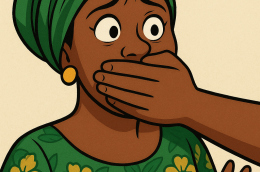
In March 2025, Nigeria’s political scene was jolted when Senator Natasha Akpoti-Uduaghan publicly accused Senate President Godswill Akpabio of sexual harassment. Rather than prompt a serious investigation, the Senate responded by suspending her for six months on the grounds of “unruly and disruptive” behavior—an action widely perceived as punitive and silencing.
In interviews with the BBC, Natasha detailed how Akpabio would “squeeze my hands in a very suggestive way,” joked that her missing wedding ring was an “invitation to treat,” and remark that “your husband must be really enjoying… you’d be able to make good movements with your waist.” When she spoke up, the Nigerian Senate Chamber laughed. “People don’t understand what it means to carry this,” she said. “Maybe we don’t talk about it enough in Nigeria or Africa… I just want a place where I would just work. I thought the worst was over, but for a woman, it’s never really over.”
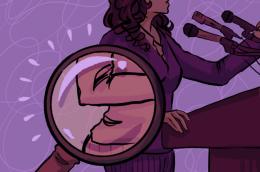
Women in politics are, historically speaking, newcomers to a field built without them in mind.
Women may now hold seats at political tables, but those tables were never designed for them, and the violence, scrutiny and hostility they face are not anomalies but symptoms of systems still shaped by exclusion.
In Mexico, President Claudia Sheinbaum, celebrated as the nation’s first woman elected to the role, was sexually assaulted in broad daylight during a public event.
The assault was shocking, but perhaps more alarming was how quickly some dismissed it as just another hazard of public life. Her experience exposes the ongoing physical vulnerability women leaders continue to face, as well as the troubling tendency to minimize violence against them as inevitable rather than unacceptable. Power does not insulate women from misogyny; in many cases, it makes them more visible targets.
Closer to home, Montreal’s women mayors navigate a political terrain that looks welcoming on paper but feels far less in practice.
Their experiences show how the everyday labour of governing becomes gendered; from constant online harassment to double standards that shape expectations of tone, behaviour and even wardrobe. Their professionalism is evaluated alongside irrelevant criteria, sending the same persistent message: you can sit at the table, but don’t get too comfortable.
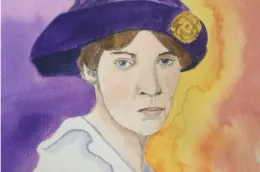
Milestones: Gina Raimondo became the first woman governor of Rhode Island (2015); Marian Anderson is the first African American woman to sing at the Metropolitan Opera; Ella Grasso became the first woman governor of Connecticut (1975); Anna Pauline “Pauli” Murray is the first African American woman ordained to the Episcopal priesthood (1977); Kay A. Orr, became the first woman governor of Nebraska (1987); Sen. Aaron Sargent introduced a resolution, written by Susan B. Anthony, to Congress for Women’s Suffrage Amendment (1878); Madeleine M. Kunin, first Jewish woman governor and first woman to serve three terms as governor in Vermont; Victoria Woodhull, first woman to address a House Committee, argues for women’s suffrage (1871); and Amelia Earhart makes the first solo flight from Hawaii to North America.
Birthdays for notable women: Kate McKinnon, actor and LGBTQ activist; Katie Couric, journalist; Zora Neale Hurston, author (1891); Kaia Los Huertos; Kate Stewart, Montgomery County Council; Carrie Chapman Catt, suffragist and peace activist (1859); Sian Leah Beilock, former president of Barnard College and current president of Dartmouth; Sarah Jane Higginbotham, co-founder of Harrison Clark LLC and the National Women’s Defense League; Anna Kellar, national organizing director at Rank the Vote; Alice Paul, Quaker, suffragist, author of the Equal Rights Amendment (1885).
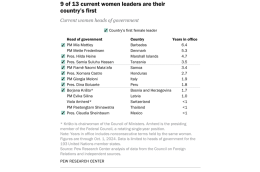
Women currently serve as the head of government in just 13 of the 193 member states of the United Nations. This includes Mexico, where President Claudia Sheinbaum was sworn in as the country’s first female executive this week.
Mexico is one of nine countries where the current woman head of government is the country’s first, according to a Pew Research Center analysis.
Overall, 60 UN member states (31%) have ever had a woman serve as head of government. The first was Sri Lanka, then called Ceylon, where Sirimavo Bandaranaike began her first term as prime minister in 1960. Two other countries – India in 1966 and Israel in 1969 – saw their first women leaders during that decade.
Worldwide, the number of countries that have had women leaders has risen steadily since 1990. The biggest single-year increase occurred in 2010, when five countries – Australia, Costa Rica, Kyrgyzstan, Slovakia, and Trinidad and Tobago – were led by a woman for the first time.
60 countries have ever had a woman leader
Mia Mottley, the prime minister of Barbados, is the longest serving woman currently in office. Mottley has been in power for more than six years.
The title of longest-serving woman head of government in modern history is held by former Bangladeshi Prime Minister Sheikh Hasina. Hasina spent more than 20 total years in power but resigned and fled Bangladesh earlier this year, when mass protests against a quota system for government jobs turned into a more violent movement against her government. (She was also the oldest woman leader, according to a separate Pew Research Center analysis.)
Read here the full article published by the Pew Research Center on 3 October 2024.
Image credits: Pew Research Center
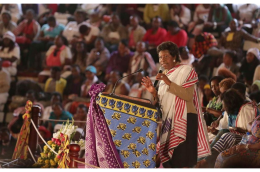
What you need to know:
-
Women politicians face steep costs, both financial and personal, as they navigate a landscape fraught with cultural barriers, discrimination, and systemic challenges.
-
Despite progress made since the 2010 Constitution, women's representation in Kenyan politics remains low.
-
Resilient leaders like Eddah Njeri, Naisula Lesuuda, and Myllene Bosibori encountered multifaceted obstacles, from exorbitant campaign expenses to sexual harassment and societal prejudices.
-
While initiatives to support them show promise, the road to equal representation remains long, calling for comprehensive reforms and a shift in cultural attitudes.
The sun had barely risen over Embu town when Eddah Njeri unlocked the door to one of her M-Pesa shops. As she arranged the day's float, her mind wasn't on mobile money transactions. Instead, it raced with campaign strategies, voter outreach plans, and the daunting financial hurdles that lay ahead. The successful businesswoman, had recently made the bold decision to run for the Kirimiri Ward seat in Manyatta Constituency.
Being a greenhorn in politics, she says, nothing had prepared her for the challenges to expect on the campaign trail and how she would overcome them.
As she embarked on her campaign journey, she would soon face a gauntlet of challenges that would test her resolve, drain her resources, and force her to confront deeply entrenched societal biases.
Read here the full article published by The Nation Africa on 20 September 2024.
Image credits: The Nation Africa
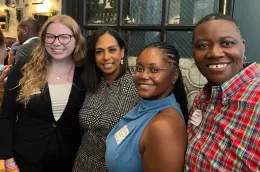
The struggle for gender parity in politics is far from over, but this week I felt a surge of hope for the future. This optimism stems not only from the increasing prominence of women in political leadership, exemplified by the potential for a woman to win the 2024 presidential election but also from a powerful gathering I attended on Tuesday.
Organized by RepresentWomen and Vote Run Lead, the luncheon was held as an ancillary event to the Democratic National Convention. "Women are the Winning Strategy: Solutions from the States" featured influential speakers such as Rep. Barbara Lee (D-Calif.) and policy advocate Maya Harris, along with women leaders from across the country.
The gathering not only highlighted the critical role of women in shaping the political landscape but also provided a fertile ground for fostering female leadership and activism.
A shared mission
RepresentWomen and Vote Run Lead are united in their commitment to dismantling the barriers that have historically hindered women's participation in politics.
RepresentWomen focuses on structural reforms, including ranked-choice voting and gender quotas, aiming to create a political environment where women can thrive. Vote Run Lead complements this mission by offering training and resources to women aspiring to run for office, equipping them with the skills needed to navigate and succeed in political campaigns.
The synergy between these two organizations is a powerful force in the movement for gender parity. RepresentWomen tackles the systemic issues that keep women out of politics, while Vote Run Lead empowers individual women to step into the political arena with confidence and competence. Together, they are not just advocating for change — they are actively creating it.
Read here the full article published by The Fulcrum on 23 August 2024.
Image by The Fulcrum
Executive Summary
In August 2013, RepresentWomen launched the Gender Parity Index (GPI) to help researchers and advocates track progress toward gender-balanced governance and identify opportunities for increasing women’s political representation in the U.S. Each year, we assign all 50 states a Gender Parity Score, letter grade, and ranking according to their proximity to parity. One of the key takeaways from this exercise is that progress toward gender balance is slower and less stable than it first appears.
In the first GPI, 40 states earned a “D” grade (< 25.0) or worse (< 10.0); the remaining 10 states were split evenly between “Cs” (< 33.0) and “Bs” (< 50.0), and no state achieved an “A” (50.0 and above). Eleven years later, two states (Oregon and Maine) have earned “A” grades, 22 states have earned “Bs” and “Cs,” and 26 states received a “D.” For the first time ever, no state has received an “F.”
However, great improvements in women’s representation often overshadow smaller changes that occur year-to-year. The 2024 Index reflects our complex political landscape, suggesting progress in women’s political representation may stagnate or even backslide. Every year shows differences both in the changes themselves and the magnitude of change. This Index shows the most movement for women at the state and local levels: Louisiana elected two new woman state executives, and Indiana elected nine new women to local offices.
Overall, women are still underrepresented at every level of government in the U.S., comprising over 50% of the population but holding just under one-third of all elected positions. To make lasting progress in women’s representation, we must take a systems-level approach that creates opportunities for women to enter the political sphere and supports the women already in office.
Read here the full report published by RepresentWomen on 30 July 2024.
Image by RepresentWomen
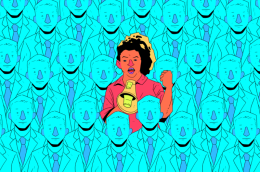
São Paulo witnessed a historic change in the 2020 municipal elections. Four Black women were elected as councillors — over 72 years, the capital of São Paulo state has elected only six Black women councillors in total.
However, the proportion of women among the 55 members of the City Council — the largest in Brazil — is still below that of the general population. In São Paulo, for every 10 councillors, two are women. When taking into account all of the metropolitan region, the average falls to one woman councillor for every 10 deputies in the town halls.
When looking at municipal councils, the situation seems even more difficult: only three of the 39 cities in Greater São Paulo have women mayors.
According to the platform TSE Women, of the High Electoral Court, women comprise more than half (52 percent) of the electorate in Brazil. However, the number of votes won by women candidates between 2016 and 2022 was 33 percent, with 15 percent of them being elected.
A few months before new elections in the 5,565 Brazilian municipalities, scheduled for next October, Agência Mural talked to councillors, community leaders, and experts about why it is so difficult for women, especially from peripheral, poorer areas, to enter institutional politics, and also about the journeys of those who were elected.
Read here the full article published by Global Voices on 18 June 2024.
Image by Global Voices
The Global Gender Gap Index annually benchmarks the current state and evolution of gender parity across four key dimensions (Economic Participation and Opportunity, Educational Attainment, Health and Survival, and Political Empowerment). It is the longest-standing index tracking the progress of numerous countries’ efforts towards closing these gaps over time since its inception in 2006.
Read here the full report published by the World Economic Forum on 11 June 2024.
Image by WEF