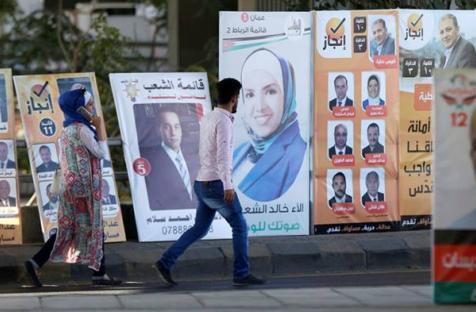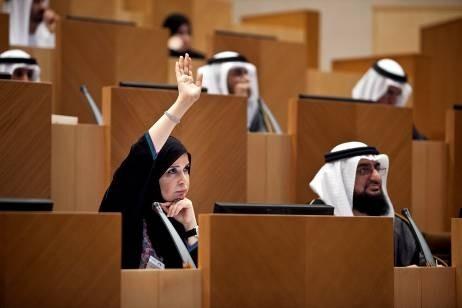
The new European Parliament hasn’t only tilted right-wing, it’s also even more male-dominated.
Democracy and the equal participation of men and women in the political arena are closely intertwined. No parliament or any decision-making body can claim to be representative without the participation of both men and women. As stated in the Universal Declaration on Democracy adopted by the Inter-Parliamentary Union’s Member Parliaments in 1997, "The achievement of democracy presupposes a genuine partnership between men and women in the conduct of the affairs of society in which they work in equality and complementarity, drawing mutual enrichment from their differences."
Recent years have seen a steady increase in the number of women in parliament, though the world average of less than 22 percent remains far from the goal of parity between women and men. The election of women to the highest positions of state and government in several countries has also contributed to the changing face of politics.
While the road to election is a difficult one, the challenges for women do not stop there. Once women enter parliament or other bodies, they are faced with many new challenges. Parliament is traditionally a male-oriented domain where the rules and practices have been written by men. It is, therefore, an ongoing challenge to transform parliament into a gender-sensitive environment, to ensure that actions are gender-sensitive and to guarantee that gender is mainstreamed throughout the legislature.
Up to 63.8 percent of the 80 members of the newly elected Rwandan Chamber of Deputies, the lower house, are women, a list from the National Electoral Commission (NEC) has shown.
There are too many accomplished women in the democracy reform movement whose voices go unheard—which perpetuates misrepresentation in U.S.
The Speaker of the House Papalii Lio Masipau made a bold statement about why he thinks gender inequality exists in politics. He views the matai system and customs as prohibiting women from traditional governance impacting their chances to run for office.
The underrepresentation of Nigerian women in governance and politics has been a longstanding issue in political discourse.
NPR's Ari Shapiro talks to University of Houston's Mirya Holman about why women in political leadership tend to be referred to by their first names more often than their male counterparts.
Shirley Chisholm, a Democratic congresswoman, was the first African American woman to run for president of the United States.
Less than four months out from the election, Vice-President Kamala Harris found herself in a difficult position.
Tamika Davis is a first-term MP from Jamaica, part of the historic high of 29% of incoming women MPs in the House of Representatives and the first woman to be elected in her constituency.