Disabled by social norms not impairments: The frontiers and barriers for women with disabilities in politics
Source: International IDEA
Globally, an estimated one in five women have a disability. While there are no concrete statistics on the proportion of women in political leadership positions, an analysis of many parliaments and local authorities does not indicate their proportionate representation in leadership positions.
Equal participation of women with disabilities in politics is often ‘othered’ to adhere to normative frameworks or policies. Their inclusion in political participation is mostly superficial with little or no genuine meaningful approaches to create platforms for their voice, choice and control. Systemic marginalisation and structural barriers to meaningfully include women with disabilities in political participation and representation are driven by social norms. These then translate to the low representation of women with disabilities in political decision-making positions.
The milestone adoption of the Convention on the Rights of Persons with Disabilities in 2006 and its domestication thereof in many countries is commendable. Yet, burgeoning experiences from women in politics with disabilities has revealed a multitude of obstacles for them to be in elected office. The glaring barrier for women in politics with disability is the intersection with violence. This is often pronounced during election campaigns where in some instances the campaign terrain infrastructure is set up to deliberately frustrate women in politics with disabilities. Their limitation to access some facilities, including polling stations as well as materials is turned into a tool for abuse by some of the male politicians. The media reporting on women in politics with disabilities is sometimes a form of secondary victimisation to the women politicians with disabilities. Training of media practitioners on inclusive reporting for political participation and representation is a remedy.
Full article available here.
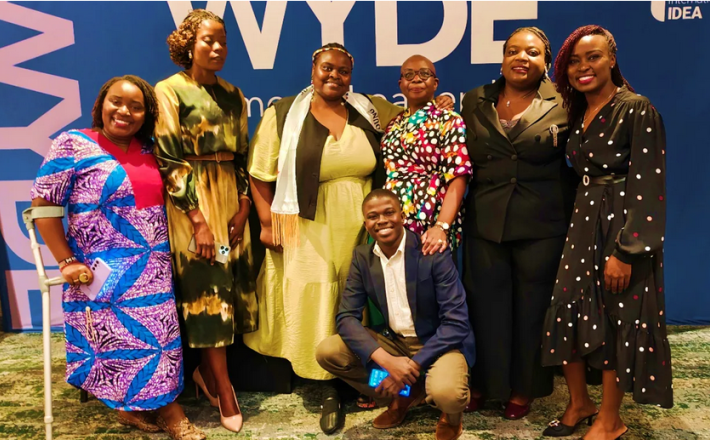

Hear from women leading change in the political space share their experiences and insights.

Explore a wide-range of audio-visual resources on key topics of gender equality.
Hear from a diverse list of panelists and guests as they reflect on critical issues pertaining Women in Politics.