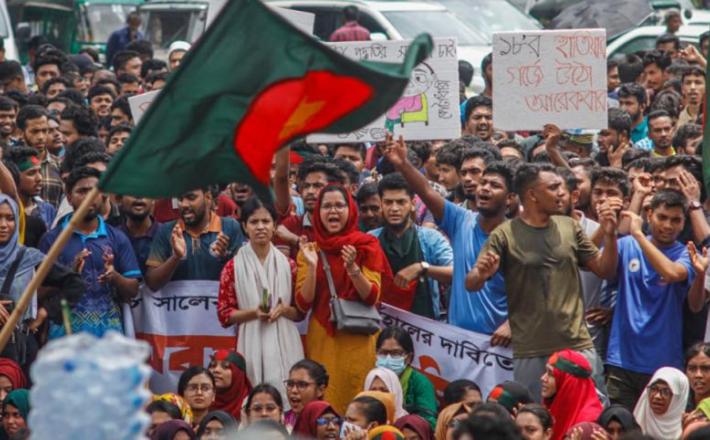
Women were at the forefront of the July 2024 uprising, but in the subsequently formed political structures, insecurity and social backlash gradually pushed them aside. Female students from universities across the country, including Dhaka University, were not only leading participants in the uprising, but they also became victims of attacks and lawsuits by law enforcement agencies. However, the number of female candidates in the post-uprising Dhaka University Central Students’ Union (DUCSU) election remained limited, and those who did contest faced extensive cyberbullying.
There were only 62 female candidates in the DUCSU election, accounting for merely 13 percent of the total candidates, even though 48 percent of DUCSU’s voters are female students.
Women’s participation in the Liberation War of 1971 was similarly undervalued in the post-war era. The title Birangana, rather than honouring their contributions, foregrounded the trauma and humiliation they had endured, while obscuring the critical roles they had played on the frontlines. This reflects a long-standing social failure to recognise women’s agency, a problem that persists to this day.

Hear from women leading change in the political space share their experiences and insights.

Explore a wide-range of audio-visual resources on key topics of gender equality.

Hear from a diverse list of panelists and guests as they reflect on critical issues pertaining Women in Politics.