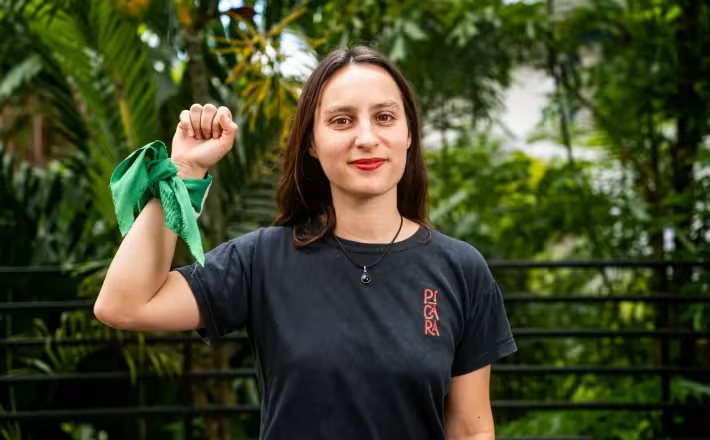
Verónica Franco: “Media and language are tools for transformation. Women and gender-divers individuals’ experiences need to be named to be recognized and heard.”
Source: UN Women
Working in feminist communications and advocacy, Verónica sees media not simply as a profession, but as a powerful political tool. The creation of Pícara emerged from a sense of exclusion and the need to confront violence, challenge stereotypes, and reshape public narratives around women and gender-diverse people. When Verónica and her classmates graduated with degrees in communication, traditional media environments felt unwelcoming and unsafe. “It was as if we didn’t belong there,” she recalls, and participation often meant exposure to “multiple forms of violence.” Rather than accepting those conditions, they decided to create a feminist communication space that could operate differently — one that would actively work to “break stereotypes and debunk some myths.”
What united the founders of Pícara was a shared belief that communication could drive social change. They connected with other feminist colleagues who viewed media as “a tool for transformation,” and from that collective vision, Pícara was born.
Central to Verónica’s work is the power of language. “We focus primarily on the use of language as a tool for transformation,” she explains, emphasizing how words shape how experiences are named, understood, and addressed. In Argentina, feminist movements have long fought to change the narratives surrounding violence against women. One of the most significant shifts was moving away from describing the murder of women as crimes of passion to naming them as femicides.

Hear from women leading change in the political space share their experiences and insights.

Explore a wide-range of audio-visual resources on key topics of gender equality.

Hear from a diverse list of panelists and guests as they reflect on critical issues pertaining Women in Politics.