Women’s Political Participation in South Asia
-
Why Women’s Political Participation and Representation Matters
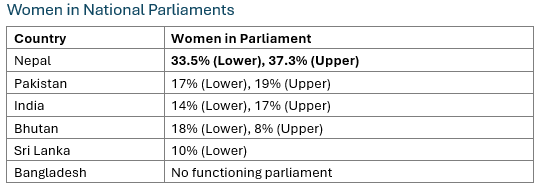
Women’s equal participation and representation in political life is fundamental to inclusive democracy, responsive governance, and sustainable development. Despite global commitments and some progress, women across South Asia remain significantly underrepresented in decision-making roles particularly in legislative leadership, executive office, and youth political spaces.
At the current pace, gender parity in national legislatures will not be achieved before 2063, and parity among Heads of Government may take until 21501.
-
Key Facts & Regional Snapshot
Global & South Asia Overview
-
Women in national parliaments (global): 27.2%
-
South Asia average:
-
Lower/Unicameral Houses: 14.7%
-
Upper Houses: 19.9%
-
-
South Asian countries with women in top government leadership: India, Sri Lanka
Key Takeaway
Advancing women’s political participation and representation in South Asia requires more than quotas. Sustainable change depends on transforming social norms that fundamentally define the role of women in the politics. Only through transformative gender social norms can we address critical issues like violence against women in politics, and create an inclusive political space for all, contributing to a strong democratic system.
Full snapshot available here.
-
UN Commission on the Status of Women 65th Session on Women’s full and effective participation and decision-making in public life, as well as the elimination of violence, for achieving gender equality and the empowerment of all women and girls: agreed conclusions E/CN.6/2021/3

Hear from women leading change in the political space share their experiences and insights.

Explore a wide-range of audio-visual resources on key topics of gender equality.

Hear from a diverse list of panelists and guests as they reflect on critical issues pertaining Women in Politics.