Descriptive and Substantive Representation: The Case of Japan’s First Female Prime Minister
Source: APJJF
Abstract: The election of Sanae Takaichi as Japan’s first female prime minister in October 2025, coupled with the Liberal Democratic Party’s historic supermajority in the February 2026 lower house election, invites examination of what women’s political leadership actually means for gender equality. We provide an overview of the key gender-related issues surrounding Takaichi’s rise to power and the broader legislative landscape, arguing that her impressive political triumphs underscore a tension long recognized by political scientists: descriptive representation (i.e., who holds office) does not necessarily improve substantive representation (i.e., whose interests are advanced through policy). Takaichi’s time as prime minister, we argue, can be understood as a test case for the limits of descriptive representation, as voters appear to substitute descriptive and symbolic satisfaction with demands for substantive representation.
Keywords: gender equality, descriptive representation, substantive representation, female leadership, Sanae Takaichi
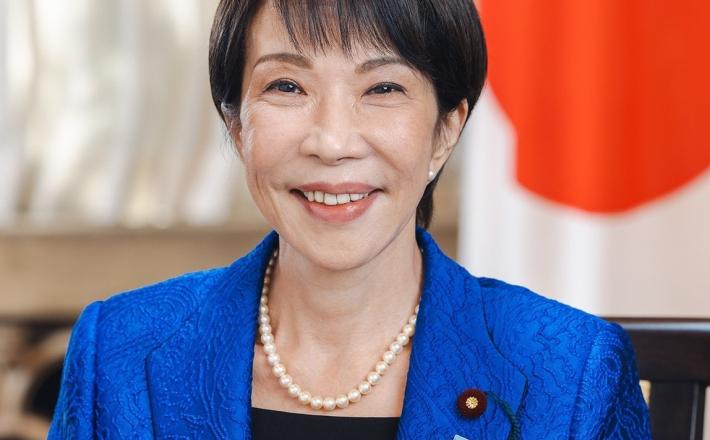
On February 8, 2026, Prime Minister Sanae Takaichi successfully led the Liberal Democratic Party (LDP) to the largest majority any single Japanese party has secured in the lower house in the postwar era. The LDP won 316 of 465 seats, a historic supermajority that will help Takaichi enact her campaign promises and has also silenced many of her critics. It can be argued that Japan’s first female prime minister now commands more legislative authority than any of her (male) predecessors.
This electoral outcome raises important questions about representation. When she first won the prime ministership on October 21, 2025, Takaichi had broken what commentators have liked to describe as “the ultimate glass ceiling” in a country that ranks 118th out of 148 economies in the World Economic Forum’s Global Gender Gap Report 2025, which is lower than Uzbekistan (#110) and only a bit higher than Jordan (#122). In stark contrast to Japan’s international gender ranks, an October 2025 Kyodo News poll found that 86 percent of Japanese considered it “desirable” or “somewhat desirable” to have a female prime minister. These data align with other polling done by the Stanford Japan Barometer in the last several years, which has consistently shown that the Japanese public prefers female elected officials. But it’s not clear exactly why this is the case. Do they value female politicians, or Takaichi specifically, or the policies that a female politician might promote, or both? The answer matters here because it helps us understand what Japanese voters think about gender and gender-related policies.

Hear from women leading change in the political space share their experiences and insights.

Explore a wide-range of audio-visual resources on key topics of gender equality.

Hear from a diverse list of panelists and guests as they reflect on critical issues pertaining Women in Politics.