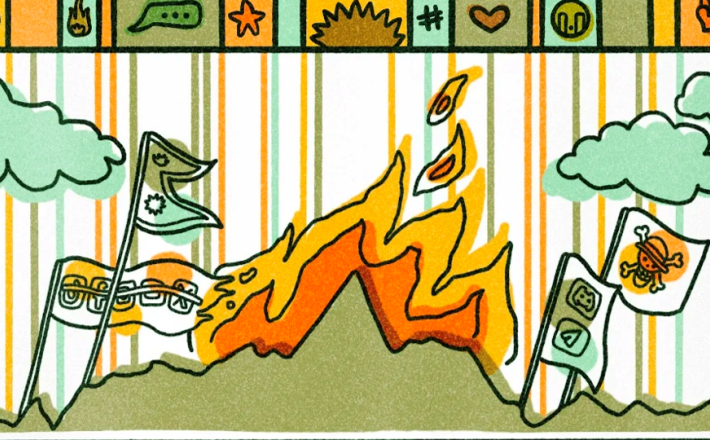
The Gen-Z-led uprising in Nepal did not erupt out of nowhere – it emerged from intersecting pressures that had been quietly building for decades. The first was a collective discontent with entrenched political corruption and nepotism – a system where bribery has long been normalised, taxpayer money is routinely embezzled into private pockets, and political leaders live lavish lives with little accountability. This simmering resentment found a visual language on TikTok, where young Nepalis began mirroring a trend seen across Asia: publicly calling out the children of politicians by exposing their designer clothes, luxury travel, and elite lifestyles.
The second trigger came when the Nepali government abruptly banned major social media platforms including TikTok, Instagram, Facebook, YouTube, and X, citing regulatory failures. Many citizens however, believed the ban was an attempt to suppress the growing anti-corruption discourse ahead of elections. These two forces collided on 8 September 2025 as tens of thousands took to the streets in protest. What began peacefully turned deadly by the afternoon, when police fired live rounds into crowds. In the days that followed, the total death toll rose to 76, with over 2,000 people injured.i
The public’s anger proved uncontainable over the next two days. Protesters set fire to businesses, the parliament building, and several politicians’ homes. Prime Minister K.P. Sharma Oli and Home Minister Ramesh Lekhak resigned. The unrest eventually subsided only after the military assumed control, imposing a curfew of three days. Meanwhile, over 100,000 people, mainly from Gen Z, discussed and debated on Discord groups about potential interim leaders.ii
Sushila Karki, Nepal’s first female chief justice, emerged as the most popular choice due to her strong anti-corruption stance and was subsequently elected as interim Prime Minister through formal political channels, making her the first woman in Nepal’s history to hold the highest political office. Her rise was not just a response to crisis, but a reflection of how public trust, digital momentum, and political urgency began to align. These events can be explored further through three critical lenses: digital mobilisation, diaspora involvement, and gendered visibility.

Hear from women leading change in the political space share their experiences and insights.

Explore a wide-range of audio-visual resources on key topics of gender equality.

Hear from a diverse list of panelists and guests as they reflect on critical issues pertaining Women in Politics.