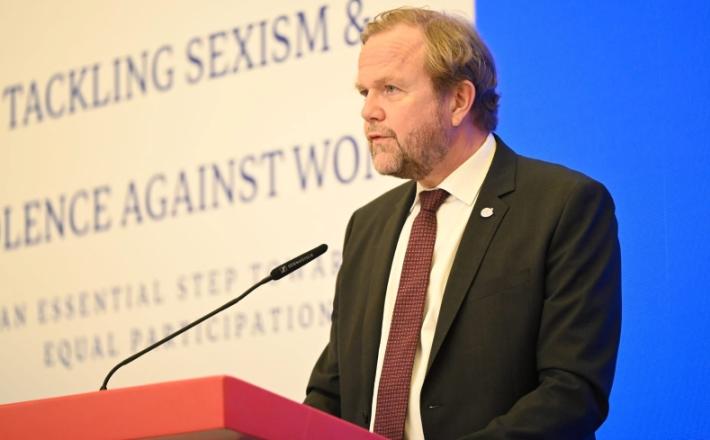
Opening the annual conference of the Gender Equality Commission, the Deputy Secretary of the Council of Europe Bjørn Berge emphasised that “only 27 countries around the world have a woman serving as Head of State or Government and 103 countries have never had a woman in their top executive office. And even where women occupy ministerial roles, they are largely outside of the powerful portfolios such as defence, foreign affairs or finance. There has been, not only a failure to advance, but a regression in gender equality.”
Despite progress in gender equality, women in politics continue to face disproportionate levels of harassment, exclusion, and violence. While gender quotas and anti-discrimination laws have helped increase women’s representation in public life, problems persist. Sexism and violence – both online and offline – continue to deter women from entering or remaining in politics. These threats not only violate human rights but also undermine the foundations of democratic governance.
“Advances in technology and artificial intelligence mean exponential increases in the amount of intimidation, humiliation and disinformation women are subject to. No longer a whisper in a corridor, but an artificially manipulated video or photograph, gone viral in seconds. We cannot say that we have true democracy if half the population does not experience equal access to the public life, experience violence or is effectively silenced,” Deputy Secretary Berge said.
Full article here.

Hear from women leading change in the political space share their experiences and insights.

Explore a wide-range of audio-visual resources on key topics of gender equality.

Hear from a diverse list of panelists and guests as they reflect on critical issues pertaining Women in Politics.