Parliaments & Representatives

Women in Nigeria have called for more opportunities to encourage their active participation in policymaking and to support female candidates during elections.
In a survey conducted in Oyo, Ogun, and Kwara, the women also unanimously supported the call for a Bill for Special Legislative Seats for Women in Parliament.
Folasade Aladeniyi, a former chairwoman of the Nigerian Bar Association, Ibadan branch, said women’s participation in politics was not only a matter of equality but a necessity for balanced and effective governance.
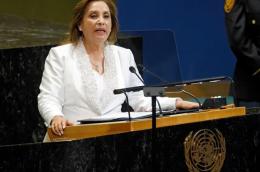
Dina Boluarte, the president of Peru, was removed from office on Thursday after a late-night congressional vote in which parties across the political spectrum called for her ouster.
Boluarte has been under investigation for months over various allegations including bribery and involvement in a deadly crackdown on protesters in 2022.
She has denied all allegations and refused to attend the vote on Thursday, where Congress approved her removal, citing “permanent moral incapacity” to face the onslaught of organized crime in the country.
The president of Congress, 38-year-old José Jerí Oré, will act as interim president and must now call elections, under the constitution.
Boluarte becomes the latest in a long line of disgraced Peruvian leaders. Since the turn of the millennium, no fewer than seven presidents have been brought to trial or faced legal challenges relating to allegations of corruption or human rights abuses. An eighth shot himself dead when police were closing in.
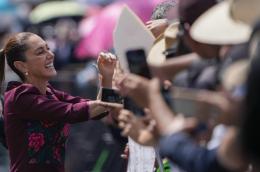
Mass mobilizations have been a feature of Claudia Sheinbaum’s first year presiding over Mexico, and to finish her first “accountability” tour of Mexico and mark one year of governance, she had her biggest yet. More than 400,000 people came out to watch her speak for nearly an hour on Sunday, October 5, reflecting on her and the party’s achievements in the first year of her term, and the continued “fourth transformation” of Mexico.
In recent weeks, Sheinbaum has visited all 31 states of Mexico, outlining her administration’s current projects, plans and results in each state.
The communication strategy of MORENA, the governing party, is very front-facing, with both Sheinbaum and her predecessor Andrés Manuel López Obrador hosting daily press conferences from Monday to Friday, and then generally traveling to one or two parts of Mexico over the weekend. This has proven extremely effective in countering the narratives from the large press corporations that own and operate the majority of Mexican media outlets, as well as of course maintaining closer communication and accountability with the people of Mexico.
Sheinbaum has faced significant challenges in her first year, most notably due to relations with the administration of US President Donald Trump, with problems ranging from tariff threats even to members of his administration suggesting unilateral military intervention against Mexico. While Trump has threatened Mexico with tariffs at every turn, Sheinbaum’s firm but open stance has proved effective in negotiations with Trump and today the country has managed to achieve important exceptions to the aggressive tariff regime.
Sheinbaum arrives at one year in charge with historic levels of approval, depending on the poll you choose your approval rate is somewhere between 72% and 79%. While other countries around the world aren’t as comprehensive in approval polls as Mexico, this likely makes Sheinbaum the most popular leader in the world.
Full article here.
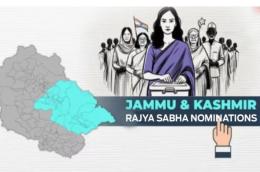
As Jammu and Kashmir gears up for another round of Rajya Sabha nominations, a familiar question returns, and once again, it risks being ignored: will a woman finally find a place at the table? For more than seventy years, the answer has been an unbroken no. Not a single woman from Jammu and Kashmir has ever been nominated to the Rajya Sabha. It is a silence that stretches across decades and governments, across promises and slogans and it reveals something far deeper than administrative neglect. It reflects how power in J&K, despite moments of progress, continues to exclude women from its highest echelons.
The story of women’s political participation in Jammu and Kashmir is one of paradoxes. At the grassroots, women have been the backbone of community resilience, leading self-help groups, panchayats, and local welfare initiatives, often in the most trying conditions. They have mediated between conflict and community, kept families and neighbourhoods together when institutions faltered, and quietly shouldered the work of peacebuilding.
Yet, when it comes to formal political representation to the spaces where laws are written and policies debated, their presence vanishes.
Even at the national level, the record is bleak. The only woman from Jammu and Kashmir to enter Parliament was Krishna Mehta, nominated to the Rajya Sabha in 1962 for her humanitarian work. Her selection symbolised hope, a gesture that recognised women’s role in rebuilding society. But in the six decades since, not one woman from the region has been nominated to the Rajya Sabha. The silence speaks for itself.
Full article here.
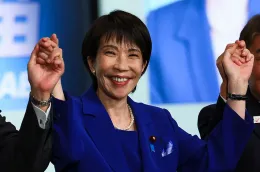
Sanae Takaichi just broke Japan’s highest glass ceiling.
The country’s ruling Liberal Democratic Party on Saturday voted Takaichi to be the party’s next leader, which is also effectively Japan’s next Prime Minister, setting her up to be the first woman to lead the country.
According to public broadcaster NHK, Takaichi, 64, secured 185 of 341 votes cast from the party’s sitting parliamentarians and current members. The race, much like last year’s party leadership contest that Takaichi initially led but ultimately lost to Shigeru Ishiba, went to a run-off vote between Takaichi and the would-be youngest-ever Prime Minister, 44-year-old Shinjiro Koizumi.
“Instead of just celebrating, I know the real challenge starts now,” Takaichi said. “I believe there is a mountain of work ahead and we must tackle it together with everyone's support. With all of you, I will strive to fire up the LDP and make it a positive party, which turns people's anxieties into hope.”
Following a premiership vote in Japan’s parliament, Takaichi will presumably take over from Ishiba, who resigned last month after the LDP suffered two election defeats since he took office in 2024. The party and its coalition partner lost majorities in both chambers of parliament for the first time since 1955, and are now operating under a minority government. The LDP’s successive election failures were in part caused by several political scandals that have in recent years tarnished the party’s reputation.
Takaichi, a more far-right pick for the typically center-conservative party, takes charge amid growing calls for the party to reform itself as Japanese voters have increasingly gravitated toward right-wing political movements.
Full article here.

NEW DELHI: India’s Muslim women politicians have been chief ministers, constituency managers, party faithfuls, party hoppers, managers of important ministries– in short, capable of every quality shown by men to be go-getters and parliamentarians. Missing from the House (Juggernaut), a new book by journalists Rasheed Kidwai and Ambar Kumar Ghosh, however, has come up with a shocker.
Since the first general elections of 1951-52, there have been, until 2024, only 690 women MPs. Of this only 18 have been Muslim women. Out of the 18 Lok Sabhas constituted till 2025, there were five that did not have a single Muslim woman member.
“Equally shocking is the fact that the number of Muslim women elected to Parliament in one tenure, never crossed a mark of four in the 543-seat Lower House of Parliament,” they write in the book.
Speaking at the book launch organised by Juggernaut Books and the Prabha Khaitan Foundation at Delhi’s India Islamic Cultural Centre on Wednesday, Iqra Hasan, Samajwadi Party’s Kairana MP, spoke of “having to play by the rules set”, but underlined the “need for reservations within the party’s workforce” for an organic leadership to emerge so that there are enough women around to benefit from the 33 per cent reservation in Lok Sabha that the Women’s Reservation Bill 2023 promises.
Full article here.
Recent conversations prompted by the #MeToo and #TimesUp movements have put issues of workplace sexism, sexual harassment and sexual assault into the global spotlight. This paper examines how members of the Australian Liberal Party made sense of, and responded to, accusations by female Liberal MPs of bullying and intimidation in their party. Transcripts of media interviews identified by searching the ParlInfo database (between August and September 2018) were analysed using a critical discursive psychology approach. Two discursive repertoires were routinely mobilised in Liberal politicians’ accounts: (1) a gender-neutral repertoire whereby reported incidents of bullying were argued to apply equally to men and women, and (2) a ‘politics is tough’ repertoire that served to downplay and legitimise bullying and intimidation as normative and unproblematic. We argues that such repertoires functioned to silence talk about the relevance of gender and the persistence of inequality. The bullying and intimidation experienced by women may continue to be the cost of their political engagement unless systemic change occurs that acknowledges the ongoing relevance of gender in politics.
Click here to access the paper.

In celebration of International Women's Day, we review the history of women in politics in Mexico. Gender parity electoral laws, leaders who value women's inclusion, and fierce women who have propelled Mexico's gender equality movement forward have altogether helped realize the major strides in women's representation, especially since the turn of the century. Women have not only vied for more elected positions; they have also secured a historic number of governorships and legislative seats, effectively reaching gender parity in Congress. President Lopez Obrador has also made a point to promote women to appointed positions, both in his cabinet and in the Supreme Court. While Mexico still has a way to go in reaching full gender equality and equity, gender quotas have had the positive effect of normalizing women's active role in politics and of welcoming them as viable and worthy contenders in the political arena, moving the needle in a necessary and positive direction.
Click here to read the full article published by The Wilson Center on 7 March 2022.
This is a House of Commons Committee report, with recommendations to government. The Government has two months to respond.
While there is still some way to go to achieve equal representation of women in the House of Commons, and in the wider political and public sphere, in recent decades the focus has broadened to encompass “gender sensitivity” in the House of Commons as a workplace. Steps have been taken to make the House a more welcoming and accommodating place for women. For example, there has been focus on its working hours and practices, and support for MPs who are parents. The planned restoration and renewal of the Palace of Westminster is an opportunity to design in greater accessibility and inclusion, for women and other underrepresented groups.
Click here to access the report.
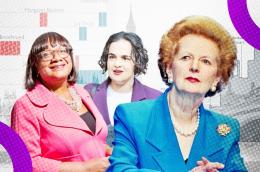
Today’s parliament has more female MPs than ever but they remain a minority. What do they think is needed for equality in the corridors of power?
Viscountess Nancy Astor was the first woman to take a seat in parliament, receiving 2,000 letters a week from female voters desperate to finally have their voices heard.
More than 100 years later, women account for just a third of seats in the Commons and only a quarter of sitting peers in the House of Lords.
Click here to read the full article published by The Times on 8 March 2022.

The number of women in parliament is consistently low throughout the Asia-Pacific region. Many factors contribute to this situation, but studies suggest that one major factor relates to the way that women are treated on social media. This report aims to identify how women politicians fare against their male counterparts on social media and to evaluate whether women in politics face a greater challenge than men.
Overall, there were four times as much problematic content related to the Facebook pages of male politicians compared to their female counterparts. It is important to note that the vast majority of the problematic comments aimed at women politicians were in the sexist category. Compared to their male colleagues, female politicians are treated in a less serious manner on Facebook. Comments on their posts touch on their appearance and personal qualities rather than their politics.
Click here to access the report.

The world walked into 2021 with the shadow of COVID-19 looming large over its head. As well as posing a major health risk, the pandemic had also caused economic and social upheaval. Political life had been affected too, from the challenge of holding elections safely to ensuring the smooth working of parliaments. Though many of these difficulties endured in 2021, and in some cases were compounded, there were fewer delays1 in elections when compared with the previous year.
Click here to access the report.