Parliaments & Representatives

The Speaker of the House of Representatives, Hon. Tajudeen Abbas, has declared that the persistent issue of women’s underrepresentation in Nigeria’s political space will soon become a thing of the past, as renewed efforts are underway to address it through collective action and legislative reform.
Speaking at the 9th Voice of Women Conference and Awards (VOW2025) themed ‘Nigerian Women and the Power of Collective Action’, Abbas reaffirmed the National Assembly’s commitment to the passage of the Reserved Seats Bill for Women.
Represented by the Chairman, House Committee on Women Affairs, Kafilat Ogbara, Abbas stated that: “The issue of women’s underrepresentation will soon be the tale of the past. We are engaging with our colleagues one-on-one. Whether in Abuja or in their constituencies, we are making sure they understand that the time is now. There is no better time than now.”
The speaker emphasized the importance of collective advocacy and legislative reform, saying: “The Reserved Seats Bill, which I am proud to co-sponsor, seeks to create 37 additional seats for women across the National Assembly, including three seats per senatorial district at the state level.”
He highlighted the recent national public hearing on the bill held on September 22, where Nigerian women turned out in overwhelming numbers to show solidarity.
Full article here.
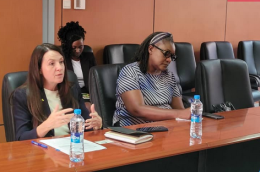
CANADIAN High Commissioner to Zambia Emily Burns says some women in politics whom the Canadian government supports have been expressing concerns about some of the proposed constitutional reforms. Burns also says Canada is upgrading its presence in Zambia to a full High Commission. Speaking during a courtesy call to the Ministry of Justice, Thursday, Burns said she wanted the government’s thoughts on the concerns of women in politics. “I will be going to Chipata. It will be my first visit to announce winners and support women who are aspiring or in active political leadership so that they can develop projects in the municipality.
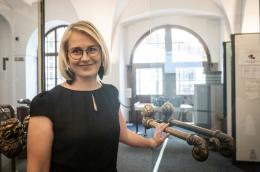
Czech lawmaker Martina Ochodnicka is quitting after a single term, upset with hateful, misogynistic comments and a general lack of support for women politicians.
The 41-year-old deputy head of the right-wing coalition party TOP 09 is one of several women leaving parliament after serving four years, ahead of this weekend's general election.
"Women in Czech politics face unnecessary obstacles," Ochodnicka, who has looked to raise awareness of the attitudes and other issues women face, told AFP.
Rather than over her role as a lawmaker, she was under public scrutiny as a mother of three, said Ochodnicka, who had worked as a village mayor before becoming a lawmaker in 2021.
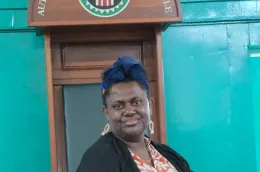
Theonila Roka Matbob, one of the most prominent female candidates in the Bougainville election, has lost her seat.
Matbob, the member for Ioro in Central Bougainville - a region encompassing Panguna - was "very confident" of holding the seat despite being up against ten male candidates.
She was one of 34 women out of a field of more than 400 candiates contesting seats in the Bougainville House of Representatives.
In 2020, she was one of only two women to win an open seat.
Matbob was a vocal advocate who led a successful campaign to have Rio Tinto, a mining multi-national, to consider the damage caused by the mine it used to own.
She was at the forefront of the push for an assessment into the damage caused by the troubled Panguna gold mine - one of the world's largest copper and gold mines - in the autonomous Papua New Guinea region.

Women face an uphill battle to political election, and they continue to confront barriers to success afterward. But the type of legislature in their states can make a difference.
A new study from Virginia Commonwealth University researcher Jatia Wrighten, Ph.D., and colleagues finds that women are more effective lawmakers than men when serving in professional state legislatures, which are generally in session full-time, than when serving in part-time legislatures that have lower barriers to entry, lower salaries and fewer staff.
Once elected, women in professional legislatures are often more effective even when given less notable committee assignments, Wrighten finds. She said that means that voters in general are better served by professional legislatures, where more diverse voices, including those of women, are represented. Wrighten, an assistant professor in VCU’s Department of Political Science in the College of Humanities and Sciences, recently spoke about her findings, which were published in The Journal of Politics.
What does it mean for a state legislator to be effective?
Legislative effectiveness can be measured in several ways. In our article, we measure legislative effectiveness by the lawmaker’s ability to “act for” their constituents in policymaking. In other words, are women able to have their voices heard in legislatures, does their committee work matter, and do resources constrain them due to the level of professionalism in the legislature?
What roadblocks do women face before and after election?
As one can imagine, living in a patriarchy, women who run for office face sexism, which manifests in many ways. Many voters hold women to a higher standard than men who run for office and do not see them as leaders. Women running for office have been critiqued on their physical appearance, criticized for their voices being “too high” or “annoying,” questioned for their ability to both run for office and manage their families, and questioned when they do not have families. Once women are elected, they face much of the same from their male peers. They are also placed on lower-ranked committees, which have fewer resources than other committees, and are relegated to those labeled as focusing on “women’s issues,” such as education, criminal justice or health.

An apparent bottleneck exists in women’s participation in politics: the number of female party members exceeds the number of female candidates, which in turn is almost double the number of women elected, who, on average, account for less than one-fifth of all winners at the polls. This is shown by a survey conducted by Valor based on data from the Superior Electoral Court (TSE).
This pattern, repeated in every election, is not restricted to a particular ideology. It occurs in parties on both the right and the left and is unrelated to party size; from the largest to the smallest, the funnel phenomenon remains.
To become a candidate, a woman must first be a party member. Gender inequality in politics begins there. Women account for an average of 46.4% of party members—a figure that may seem high but does not reflect the reality of Brazil’s population. According to the 2022 Demographic Census, 51.5% of the population is female.
This regional study seeks to take the initial findings of a 2016 IPU report further, focusing specifically on the situation in parliaments in Europe. It is the result of close collaboration between the IPU and the Parliamentary Assembly of the Council of Europe (PACE), and is the first in a series of regional studies that the IPU wishes to conduct on the subject. The study also broadens the scope of the research to include harassment and violence against female parliamentary staff.
Based on interviews with 123 female MPs and parliamentary staff in Council of Europe member States, the survey continues the work already carried out to provide figures and document a range of sexist and violent behavior against women in parliaments. It also seeks to assess the extent and highlight the particular forms of such abuse in Europe. The study therefore aims to break the silence and persistent taboos and to contribute to the fight against gender-based behavior and violence wherever they occur.
Click here to see the report.
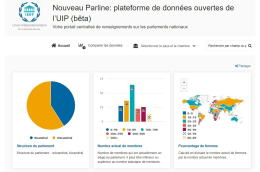
IPU launched New Parline, a new version of its online open data platform on national parliaments. The platform is intended for MPs, academics, civil society, the media, and all those interested in parliaments as the core institution of democracy.
The IPU has been collecting data on parliaments since its inception in 1889, including information on women’s participation in politics since 1945. Through New Parline, the IPU has pooled all of its data into one hub, allowing the user to see trends over time, as well as compare progress or regression between different regions of the world.
New Parline contains information on the structures of parliament’s working methods, including the representation of women and youth. Much of the data is unique. Most of the information on the platform comes from national parliaments directly. The IPU updates it regularly to take into account changes that result from elections and other circumstances. The data covers a wide range of themes; for example, the number of chambers, the number of women MPs, the number of laws initiated by parliament and the average age of MPs.
Click here to see the database.
The International Congress of Parliamentary Women's Caucuses took place on 9-10 September 2018 in Dublin Castle, Ireland.
The conference brought together parliamentarians from across the globe to discuss issues facing women and how parliamentarians can work to address them. Parliamentarians came from more than 40 countries, including Argentina, Malawi, Mongolia, New Zealand, Pakistan and the United States. The keynote speaker was the Right Honourable Harriet Harman QC MP, of the UK Labour Party, and the congress also heard from Professor Mary Beard. A panel chaired by author Martina Devlin discussed their vision for women in 2118.
The attendees at the Congress adopted the Dublin Declaration, a proposal for action on women in politics. The declaration includes a commitment to working across party and ideological lines in pursuit of gender equality.
Click here to read the Dublin Declaration.
This paper in the Journal of Economic Behavior & Organization - Volume 151 examines in what roles women have an impact on corruption by focusing on female labor force participation and their presence in the parliament. Since much of the corruption literature is plagued either by the lack of instruments or weak instruments, this paper makes a methodological contribution by drawing inferences based on Moreira’s (2003) conditional likelihood ratio approach. We provide robust evidence that women’s presence in parliament has a causal and negative impact on corruption while other measures of female participation in economic activities are shown to have no effect. Further, this negative relationship between women’s presence in government and corruption is also found to hold in a regional analysis of 17 European countries alleviating concerns that the relationship is driven by unobservable country-fixed characteristics. Finally, we show that this relationship does not disappear when women gain similarity in social status.
For further information, please click here.

The second Global Parliamentary Report is jointly produced by United Nations Development Programme (UNDP) and the Inter-Parliamentary Union (IPU). It focuses on parliament’s role in oversight of government, and parliament’s power to hold government to account for its actions and decisions.
Oversight is a core function of parliament. It is essential for building effective, accountable, and inclusive institutions as envisioned by Agenda 2030 and Sustainable Development Goal 16 (Peace, Justice and Strong Institutions). Parliaments’ oversight of government is critical for ensuring that people receive essential services, and is thus critical for building accountability. Parliament, through its representative mandate, is the appropriate entity through which oversight should be led.
The analysis, conclusions and recommendations in the report are grounded in parliamentary practice and experience: 150 national parliaments contributed to the preparation of the report. The report includes numerous examples of how parliaments and Members of Parliament (MPs) carry out oversight in their countries, as well as tips for MPs on ways to approach oversight.
The report is intended to stimulate action to strengthen parliament’s oversight role. The future positive development of parliaments and their ability to contribute to achievement of the SDGs depends, in large part, on what oversight can deliver for the populations they serve. UNDP works to strengthen parliaments to help them become fit for purpose for the delivery of Agenda 2030 in some 70 partner countries, and will implement the lessons learned from the report in this work.
Click here to see the report.
The Sex and Power series was first published by the Equal Opportunities Commission fifteen years ago, then taken over by the Equality and Human Rights Commission for several years, and then for 5 years up to 2015 the ‘Counting Women in Coalition’ collected and collated data on women’s representation across different areas of public life.
In 2018, the centenary year of (some) women first getting the vote in parliamentary elections, and to coincide with the first statue of a woman in Parliament Square, the Fawcett Society has now brought together a new edition of that Sex and Power dataset.
One hundred years on from when the first women gained a say in how the country is run, it is an assessment of where the UK has made progress on representation – and where we have not.
In the report you will find:
- A breakdown of percentages of women in power across politics, business and public life
- Analysis of women's representation in politics, businesses, the arts and more
- Conclusions and recommendations, including a time-limited use of quotas across public bodies and the boards of large corporate organisations.
For further information, please click here.
Download report here.