
Parliaments & Representatives

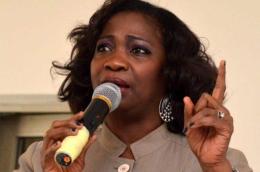
The Chairman and CEO of the Nigerians in Diaspora Commission (NiDCOM), Abike Dabiri-Erewa, has urged Nigerian women to actively participate in politics to shape national discourse and contribute meaningfully to the country’s development.

Dabiri-Erewa made the appeal while delivering a keynote address at the 2026 International Women’s Day celebration organised by Zenith Bank at the Civic Centre, Lagos.

Speaking on the theme, “Take It, You Own It,” she encouraged women to support one another and work collectively towards nation-building, stressing that unity and collaboration among women would strengthen their voices in leadership and governance.

Full article.

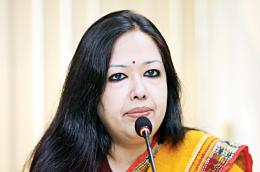
The vision of an inclusive democracy, forged on the streets during the July uprising, has collided with a formidable structural wall.

While the movement promised to remove discrimination from society, including those enforced by patriarchy, the February 12 election this year has instead exposed a pattern of systemic exclusion.

Initial ambitions for gender parity were incrementally diluted, with demands for 100 direct seats eventually shrinking to just 84 female candidates contesting the election, of whom only seven secured seats -- a disparity that reflects a failure to penetrate the country’s true epicentre of political influence.

Ahead of International Women’s Day today, The Daily Star sat with five female candidates, a professor of women and gender studies at Dhaka University, and a senior leader from Bangladesh Jamaat-e-Islami.

Their collective experiences surrounding the recent national polls reveal that the structures of power remain guarded by deeply entrenched patriarchy, which manifests through immense capital, systemic muscle power, and coordinated digital warfare.

Full article.

As usual, Congress gathers around this time of year to try to extract some electoral advantage from International Women’s Day. Close to March 8, lawmakers typically hold a joint effort to approve measures aimed at female voters—initiatives that, on their merits, few would oppose. They include important proposals to combat violence and femicide and to promote health programs specifically focused on women. But it is necessary to scratch beneath the surface.

Amid interruptions and ongoing threats, misogyny remains a constant in parliamentary relations. There will be relatively few female candidates for state governorships and, at the national level, after many years the presidential election will not feature a woman’s name on the ballot.

This is not unique to Brazil. A recent report by the Inter-Parliamentary Union (IPU), an international organization founded in 1889 that brings together legislatures from 183 countries, shows that as of January 2026 women hold only 27.5% of the seats in the 49 parliaments that underwent renewal, a slight increase compared with the 27.2% recorded a year earlier. According to the organization, the positive fluctuation repeats the pace observed in 2024, marking the slowest growth since 2017 for the second consecutive year.

Full article.

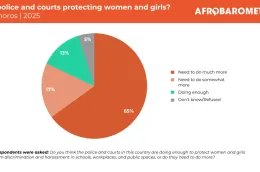
In Comoros, gender equality and women’s rights are upheld by the Constitution and the  2017 National Policy on Gender Equality and Equity. Gender issues are also addressed in the  country’s development roadmap, Comoros Emerging Plan 2030, which promotes the empowerment of women and girls across all sectors (Madjid, 2023). 

However, gender inequality is a pressing concern in the country. Comorian women have  notably lower literacy rates than men (67% compared to 73%). They are less likely than men  to attain post-secondary education and more likely to have no formal schooling (Union of  the Comoros, 2022). 

Women’s economic participation is significantly lower, with just 39% of working-age  Comorian women actively engaged in the labour force, compared to 58% of men (Union of  the Comoros, 2023). This disparity heightens their vulnerability to abuse. Among 78 reported  cases of economic violence from April to June 2025, 64% involved women (United Nations  Children’s Fund, 2025a). 

Full article.

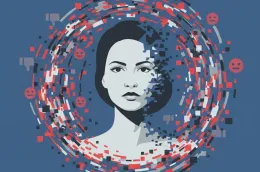
On International Women's Day 2026, the Friedrich Naumann Foundation for Freedom (FNF) is publishing a series of studies on gendered disinformation in Mexico, Lebanon, and the Philippines. The series follows earlier policy papers on Czechia and Slovakia.

Gendered disinformation is used worldwide to attack women who are involved in politics and public life. It takes many forms, from sexualized defamation and targeted reputation damage to threats and harassment. The aim is to push these women out of the public debate and to intimidate and deter others.

Country studies

The studies are based on data, expert assessments, and the experiences of those affected. They reveal both recurring patterns and country-specific approaches.

At the same time, they are more than just an inventory of damage and risks: they show the resilience of those affected and develop concrete approaches to counteract it – from political measures and platform responsibility to journalistic diligence and civil society engagement.

  • Mexico: EON Institute builds on findings from an FNF collaboration that examined the use of generative AI in Mexico's 2024 elections and elaborates on the Mexican perspective in expert panels and dialogues with young women.
  • Lebanon: Samir Kassir Eyes Center and InflueAnswers analyze gender-related disinformation in Lebanon based on in-depth interviews with women in politics and journalism, comprehensive literature research, and international comparisons.
  • Philippines: The Center for Liberalism and Democracy analyzes gendered disinformation using prominent case studies in the Philippines and classifies it using different theoretical approaches

Relevant for those affected and for democracy

The findings show that gendered disinformation is neither solely a women's issue nor solely a question of digital rights, but rather a challenge for liberal democracy as a whole. Because those who want to silence women want to weaken democracy.

Full article.

HAVANA TIMES – Women’s political participation in Latin America and the Caribbean has increased over the last 25 years, especially in the legislative branch, but this rise has been accompanied by more discrimination and violence, amplified and accelerated by cyberspaces.

A report by the United Nations Development Program (UNDP) notes that, despite the progress, the region “is still far from achieving gender parity,” since, “as female participation grew, so did the challenges women face.”

“Among the persistent barriers, digital political violence has become an increasingly significant obstacle,” the report states.

In its most recent Graph For Thought, the regional UNDP emphasizes that in 2024, the Latin American and Caribbean region registered the highest proportion worldwide of Congressional seats held by women, with 36.5% of the total seats.

That statistic places them above the 33.3% overall Congressional participation of women in the OECD countries (Organization for Economic Cooperation and Development), which are mostly industrialized nations, as well as the global average of 27%.

That same year, the proportion of women magistrates in supreme courts was five times higher than in 1998, rising from 5.5% to 28.2%. Representation in national Parliaments and municipal councils also doubled during that period.

Meanwhile, the percentage of women holding Cabinet-level positions increased from 17.1% to 30.4%. Some local spaces showed greater resistance to change, however: in 2024, only 15.9% of mayors in the region were women, making this the area with the lowest female representation.

Full article.

Just in time for International Women's Day on 8 March, the brochure "Democracy needs women to help shape it" is being published.

After the election is before the election. Women are still underrepresented in local politics in Saxony-Anhalt - especially in rural regions, equal participation is still a long way off. To counteract this, the municipal equal opportunities officers of the Börde and Jerichower Land districts and the independent city of Dessau-Roßlau are publishing the brochure "Demokratie braucht Frauen zum Mitgestalten. A practical guide for female local politicians in Saxony-Anhalt".

The guide is the result of the joint pilot project "Municipal Action Programme - Women in Politics" and is aimed at women who want to get involved in local politics. It provides practical tips, insights into everyday political life and encourages women to find their place in the political landscape. Interested women should not wait until shortly before the next local elections to become active - it is worth making initial contacts now and setting the course for political involvement.

The municipal equal opportunities officers will continue to campaign for more women in politics beyond the duration of the project. The guide is intended as a practical "guide" that is available both online and in printed form.

Click here for the guide "Democracy needs women to help shape it"

Article published by Landkreis Börde on 4 March 2025.

Image by Landkreis Börde


Newly appointed Minister of State Niamh Smyth has conceded the Government has a “big body of work” ahead of it in arresting a gender divide in politics after less than a quarter of ministerial posts were assigned to women.

The Cavan-Monaghan TD was one of six women to be appointed to minister of state roles by Taoiseach Micheál Martin yesterday with the remaining 17 positions going to their male counterparts.

That followed three out of 15 full cabinet positions which went to women less than a week earlier, figures which meant just 24pc of the 38 posts which were up for grabs went to females.

Ms Smyth had been widely touted for promotion following her eye-catching performances as chair of the Oireachtas Media Committee during various RTÉ payments controversies last year.

Read here the full article published by the Irish Independent on 31 January 2025.

Image by Irish Independent


The Transform Digital Threats and Public Participation Landscape Assessment Methodology reflects the collaboration and contribution of many people  and organizations engaged in preventing, responding to, and mitigating Technology-Facilitated Gender-Based Violence. All sources have been cited. Contributors of individuals remain unnamed here for their confidentiality and safety.

Technology-facilitated gender-based violence (TFGBV) is a global threat to health, safety, and political and economic wellbeing—not just to those who experience it, but to society as a whole. Indeed, the 67th session of the Commission on the Status of Women (2023) highlighted the deep impact of technological change on the empowerment of all women and girls and the ability to achieve gender equality. Nearly 40% of women globally have experienced TFGBV, with research highlighting certain groups of women that are at higher risk of attack, including women in politics, women journalists, women human rights defenders, and women in other public facing roles. This assessment centers women in politics and public life,  and the nuanced ways TFGBV threatens and impacts them. TFGBV is an increasingly prominent form of violence against women in politics and public life (VAWPP), which is defined as an “act, or threat, of physical, sexual or psychological violence that prevents women from exercising and realizing their political rights and a range of human rights.”  Much like other forms of gender-based violence (GBV), there is clear data to indicate that TFGBV is a universal problem that affects women in all their diversity regardless of socioeconomic class, educational status, religious affiliation, or other social identities. TFGBV reinforces gendered stereotypes and rigid patriarchal social norms and harms the well-being of those who experience as well as witness it. TFGBV also exacerbates other forms of harm directed at women, girls and LGBTQIA+ persons based on racialized ethnicities, caste, [dis]ability and other intersecting identities. However, TFGBV is uniquely able to amplify and persist in perpetrating harm against women and gender diverse individuals with highly visible online presence due to their occupation or activism, resulting in the systematic silencing of women in public spaces such as politics, journalism, and civic activism—a phenomena known informally as the “chilling effect.” 

Read here the full report published by the USAID funded Transform Program on September 2024.


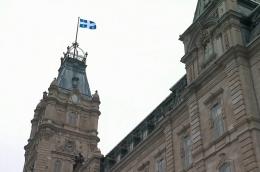
Women are voluntarily leaving politics not because of sexism, double standards or work-life balance, but because they feel under-utilised, according to a new study.

Historian Alexandre Dumas was commissioned to conduct the study titled “Why do women leave politics?” by the women's committee of the Cercle des ex-parlementaires de l'Assemblée Nationale after a wave of departures in 2022.

According to his interviews with 21 former elected women, they had the impression of playing the “office plant”, he explained in parliament, borrowing the famous expression of former CAQ MNA turned Conservative Claire Samson.

At her last press briefing in June 2022, Samson shocked many by declaring that MNAs were treated "like plants" in the Salon bleu and that she had personally toiled harder as a 17-year-old at Da Giovanni.

According to Dumas, Samson — who was outraged at having to ask pre-scripted questions in parliamentary committee — “perfectly illustrates the frustration provoked by the feeling of playing a ceremonial role.”

“Women who leave politics ... feel that their skills are not recognised and that they have no other use than to be present in the House to ensure a quorum, ... in other words, to play the role of 'office plant'”, Dumas wrote.

Read here the full article published by CTV News on 11 October 2024.

Image credits: CTV News


Abstract:

The media significantly influences the formation of public opinion as well as the development and maintenance of gendered stereotypes of men and women. Given this impact, understanding gender representation is crucial for evaluating news credibility and addressing gender stereotypes. In addition, media plays a key factor in the development of democratic societies. Apparently, women are underrepresented in the news, which suggests that although they make up about half of the world's population, they are not equally represented in the reality that the news generates. Thus, this study aims to investigate factors that might influence news reporting, especially about female politicians. Adopting a qualitative approach, 11 Malaysian journalists were interviewed on their journalism practices.

Read here the full article published by the Taylor's University on 6 September 2024.

Image credits: Taylor's University


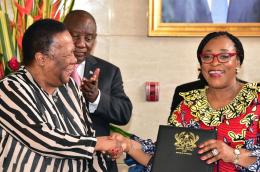
In Ghana, the recent push for a gender equality bill is a crucial step toward enhancing women’s political representation. However, its effectiveness hinges on overcoming entrenched gender biases and ensuring robust implementation to truly transform the political landscape. 

On 30 July, Ghana’s parliament passed the Affirmative Action (Gender Equality) Bill, ending a process that began in 1998. Despite women constituting the majority of Ghana’s population, they hold less than 15 percent of parliamentary seats and remain underrepresented in managerial roles, even though they represent a majority in the service sector. The passage of the bill represents remarkable progress towards enhancing gender equality and inclusivity in the country and thus rightfully deserves all the attention it has garnered.

Additionally, this legislative milestone is especially significant for a country that has consistently ranked low on the Global Gender Gap Index in recent times. For example, in 2021, Ghana ranked 117 out of 156 countries; in 2022, 108 out of 146 countries; and in 2023, 100 out of 146 countries. What are the potential challenges that could impede the successful implementation of the bill (when it becomes law), and what are the prospects for this legislation in advancing gender equality and inclusivity in Ghana?

Read here the full article published by the Australian Institute of International Affairs on 20 August 2024.

Image by Australian Institute of International Affairs